

-1
150
30
Blog: Energy
My opinion: I take a look at some cases where it makes sense to use non-battery methods to store energy.

Blog: Manufacturing & Prototyping
The images that come out of this model are ready to be used to train segmentation models. In a sense, it’s doing microscopy without a microscope.

Blog: Manufacturing & Prototyping
Meet perovskite. The synthetic semiconducting material has the potential to convert substantially more solar power than silicon at a lower production cost.

Blog: Design
A system for generating interactive 3D environments, Holodeck generates a virtually limitless range of indoor environments, using AI to interpret users’ requests.

Blog: Design
Researchers merged origami and modern materials science to create a soft robot that bends and twists through mazes with ease.

Blog: Materials
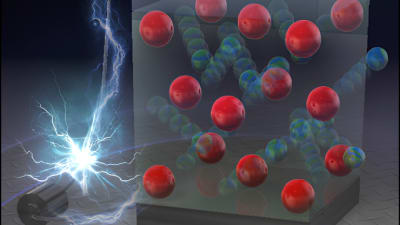
Researchers used X-ray absorption analysis and theoretical calculations to explore the fine details of changes in the structure of the cathode material caused by introducing different dopant elements.
Blog: Design
The team demonstrated that the sliding suction is a low-cost, energy-efficient, high-payload, and clean adhesive locomotion strategy, which has high potential for use in climbing robots, outdoor inspection robots, and robotic transportation.

Blog: Energy
My opinion: We need a holistic approach to energy storage — we should start with the general category and then analyze the pros and cons of different technologies to solve different problems.

Blog: Medical
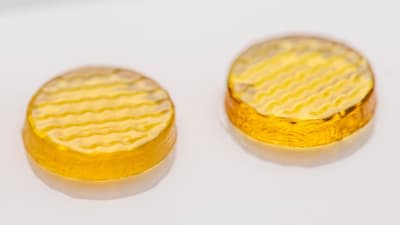
Researchers from the University of Nottingham have led work that has fabricated personalized medicine using Multi-Material InkJet 3D Printing (MM-IJ3DP).
Blog: Robotics, Automation & Control
Whereas prior works have focused on leveraging LLMs directly for planning in symbolic spaces, this work uses LLMs to guide the search of task structures and constraints implicit in multi-step physical demonstrations.

Blog: Design
Researchers have created and demonstrated a method of universalizing blood-glucose detection technology as a way of rapidly and inexpensively creating sensors that can monitor the dosing of chemotherapies and other drugs in real time.

Blog: Design
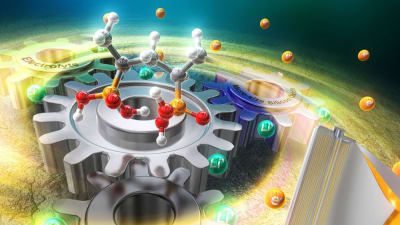
The work involved fabricating electrodes containing PVPA, PAA, and PVDF as binders, and their performance was assessed through electrochemical experiments and density functional theory.
Blog: Manufacturing & Prototyping
Manufacturing elastomers that can be shaped into complex 3D structures that go from rigid to rubbery has been unfeasible until now.

News: Green Design & Manufacturing
The Communities Taking Charge funding opportunity extends access to electrification opportunities beyond existing Joint Office–supported programs to more communities across America. Funding is available to academic, non-profit, for-profit, and government entities for planning, demonstration, and/or deployment projects that drive innovation in equitable clean transportation.
Blog: Design
A new robotic suction cup which can grasp rough, curved, and heavy stone, has been developed by scientists at the University of Bristol. The team studied the structures of octopus biological suckers, which have superb adaptive suction abilities enabling them to anchor to rock.

Blog: Energy
Research shows that the next generation of lithium-sulfur batteries may be capable of being charged in less than five minutes, instead of the current several hours it takes.

Blog: Manufacturing & Prototyping
An international team has developed a "brain phantom," which was produced using a high-resolution 3D printing process.
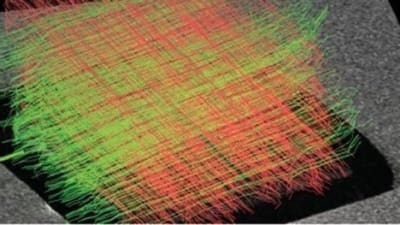
Blog: Green Design & Manufacturing
A process of heating carbon nitride to the required degree of crystallinity, maximizing the functional properties of this material for photocatalysis.
Blog: Sensors/Data Acquisition
The Industrial Internet of Things (IIoT) gave birth to the Internet of Things (IoT), but applications of the IoT are growing at an uneven pace due to real-world constraints beyond the capabilities of the technology.

Blog: Design
The predictive system uses a small set of data from demographics and personal judgments such as aversion to risk or loss.

Blog: Green Design & Manufacturing
A commonplace chemical used in water treatment facilities has been repurposed for large-scale energy storage in a new battery design by researchers at the DoE’s Pacific Northwest National Laboratory.

Blog: Medical
A team of Georgia Tech researchers in Aaron Young’s lab has developed a universal approach to controlling robotic exoskeletons that requires no training, no calibration, and no adjustments to complicated algorithms. Instead, users can don the “exo” and go.
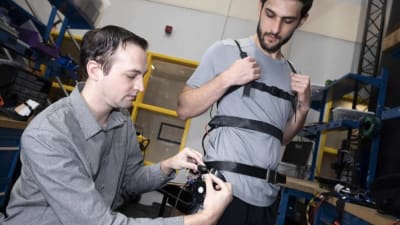
Blog: Energy
Engineers at the University of California San Diego have developed a new cathode material for solid-state lithium-sulfur batteries that is electrically conductive and structurally healable — features that overcome the limitations of these batteries’ current cathodes.

Blog: Data Acquisition
Researchers from the University of Waterloo used artificial intelligence (AI) tools to help capture and analyze data from NHL games faster and more accurately than ever before; the work has big implications for the business of sports.

Blog: Power
The electrification of practically everything these days calls for much more attention to be paid to the transmission system — the electric power grid.

Blog: Power
Purdue University researchers are testing a patented Tesla valve-inspired injection manifold design that could improve the performance of rotating detonation engines (RDEs).
Blog: Medical
New research shows the possibility of using 3D ice printing to help create structures that resemble blood vessels in the body. 3D ice printing generally involves adding a stream of water to a very cold surface.

Blog: Imaging
To find poison ivy before it finds you, University of Florida scientists published a new study in which they use artificial intelligence (AI) to confirm that an app can identify poison ivy.

Blog: Power
A team at Cornell University created a new lithium battery that can charge in under five minutes — faster than any such battery on the market — while maintaining stable performance over extended cycles of charging and discharging.

Top Stories
 Blog: Design

Aerial Microrobots That Can Match a Bumblebee's Speed
 Blog: Energy

My Opinion: We Need More Power Soon — Is Nuclear the Answer?
 Blog: Electronics & Computers

Turning Edible Fungi into Organic Memristors
 Blog: Semiconductors & ICs

Revolutionizing the Production of Semiconductor Chips
 Blog: Robotics, Automation & Control

Microscopic Swimming Machines that Can Sense, Respond to Surroundings
 Quiz: Energy

Webcasts
 Upcoming Webinars: Power

Hydrogen Engines Are Heating Up for Heavy Duty
 Upcoming Webinars: Transportation

Advantages of Smart Power Distribution Unit Design for Automotive...
 Upcoming Webinars: Unmanned Systems

Quiet, Please: NVH Improvement Opportunities in the Early Design...
 Upcoming Webinars: Power

A FREE Two-Day Event Dedicated to Connected Mobility
 On-Demand Webinars: Automotive

E/E Architecture Redefined: Building Smarter, Safer, and Scalable Vehicles
 Podcasts: Unmanned Systems

How Sift's Unified Observability Platform Accelerates Drone Innovation