-1
270
30
Blog: Wearables
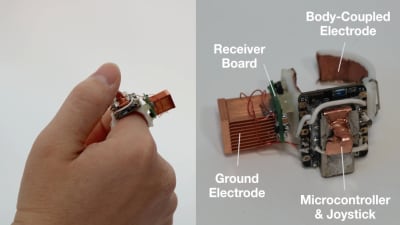
To free wearable tech from their burdens, researchers developed Power-over-Skin, which allows electricity to travel through the human body and could one day power battery-free devices from head to toe.
INSIDER: Motion Control
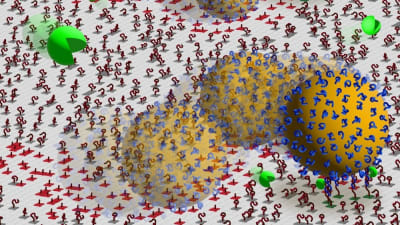
DNA-nanoparticle motors are exactly as they sound — tiny artificial motors that use the structures of DNA and RNA to propel motion by enzymatic RNA degradation. Essentially,...
INSIDER: Data Acquisition
In the future, autonomous drones could be used to shuttle inventory between large warehouses. A drone might fly into a semi-dark structure the size of several...

INSIDER: Motion Control
New NASA technology works within satellite swarms. This technology, called Distributed Spacecraft Autonomy (DSA), allows individual spacecraft to make independent...

INSIDER: Automotive
Roundabouts are an increasingly common feature of U.S. roads, in part because they reduce both traffic delays and accidents. However, they rely on the judgment of drivers to ensure traffic flows...

Blog: Energy
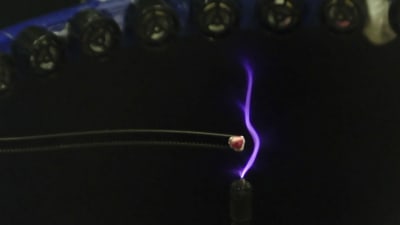
Researchers have uncovered a way of transporting electricity through air by ultrasonic waves. The level of control of electric sparks enables them to be guided around obstacles, or to hit specific spots, even into non-conductive materials.
Blog: RF & Microwave Electronics
Researchers have introduced a new approach, MiFly, that enables a drone to self-localize in indoor, dark, and low-visibility environments.

Quiz: Software
In the last decade or so, sports engineering has become very popular across the world. How much do you know about it? Take this quiz to test your knowledge.

Blog: Manufacturing & Prototyping
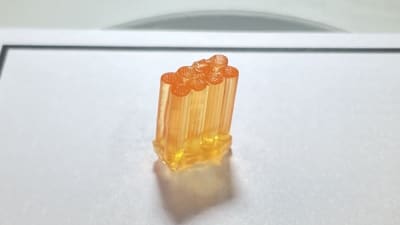
Auxilium Biotechnologies has successfully deployed its 3D bioprinter aboard the ISS. The platform is the first of its kind, making history by printing eight implantable medical devices simultaneously in just two hours.
Quiz: Electronics & Computers
An oscilloscope’s main purpose is capturing information on electrical signals for debugging, analysis, or characterization. The displayed waveform can then be analyzed for properties such as amplitude, frequency, rise time, and myriad others. How much do you know about oscilloscopes? Find out with this quiz.

Blog: Design
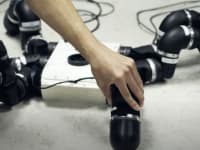
A modular worm robot built by the Organic Robotics Lab and a jellyfish that was a collaboration with the Archer Group, both in Cornell Engineering, demonstrate the benefits of “embodied energy.”

Quiz: Manufacturing & Prototyping
Almost everyone has a microwave oven, but do you really understand how they work? How much do you know about microwave heating? Test your knowledge with this quiz.

Blog: Energy
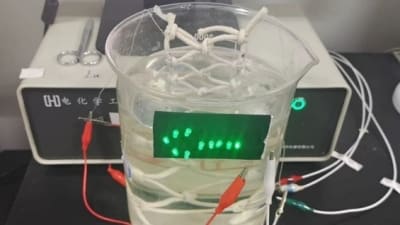
Researchers have developed a yarn-like battery prototype that works when immersed in seawater.
INSIDER: Packaging & Sterilization
Researchers at the University of California, Irvine and New York’s Columbia University have embedded transistors in a soft, conformable material to create a biocompatible sensor implant that monitors...
INSIDER: Nanotechnology
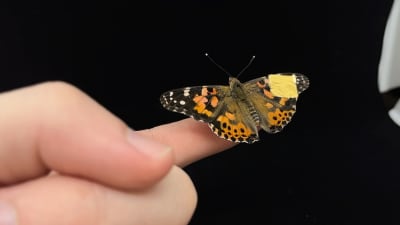
The electronics industry is approaching a limit to the number of transistors that can be packed onto the surface of a computer chip. So, chip manufacturers are looking to build up rather than out.

INSIDER: Sensors/Data Acquisition
Existing computer systems have separate data processing and storage devices, making them inefficient for processing complex data like AI. A Korea Advanced Institute of Science and...

Blog: Physical Sciences
A team of scientists has created a new shape-changing polymer that could transform how future soft materials are constructed.

News: Robotics, Automation & Control
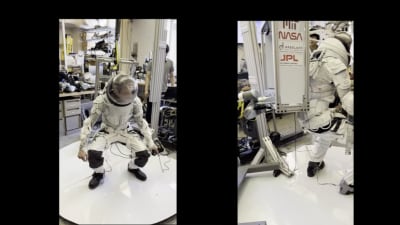
Watch this video to learn more about three new robotic technologies: A soft robot developed at NC State University; a pair of wearable robotic limbs developed by MIT engineers; and a camera inspired by the human eye developed at the University of Maryland.
Blog: Unmanned Systems
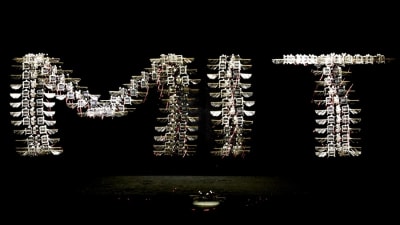
MIT researchers are developing robotic insects that could someday swarm out of mechanical hives to rapidly perform precise pollination.
INSIDER: Photonics/Optics
Seven early-stage startup companies have been selected to compete for a top prize of $10,000 at the 15th annual SPIE Startup Challenge at Photonics West Tuesday, January 28.

INSIDER: Photonics/Optics
The SPIE Photonics West 2025 technical conference and exhibition returns to San Francisco's Moscone Center, January 25 to 30, providing attendees the opportunity to learn...

Blog: Semiconductors & ICs
Researchers have developed a new type of infrared photodiode that is 35 percent more responsive at 1.55 µm, the key wavelength for telecommunications, compared to other germanium-based components.

Blog: Wearables
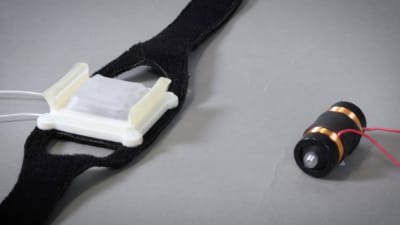
Researchers have developed cutaneous electrohydraulic (CUTE) wearable devices to greatly expand the haptic sensations that can be created by future consumer products.
Blog: Design
A research team from DGIST has developed a lithium metal battery using a “triple-layer solid polymer electrolyte” that offers greatly enhanced fire safety and an extended lifespan.
Blog: Robotics, Automation & Control
RAVEN (Robotic Avian-inspired Vehicle for multiple ENvironments) is designed based on perching birds that frequently switch between air and land. Its multifunctional robotic legs allow it to take off autonomously in environments previously inaccessible to winged drones.

INSIDER: Aerospace
Led by postdoctoral research fellow Somayeh Hussaini, alongside Professor Michael Milford and Dr Tobias Fischer of the Queensland University of Technology...

INSIDER: Sensors/Data Acquisition
Cornell researchers in physics and engineering have created the smallest walking robot yet. Its mission: to be tiny enough to interact with waves of visible light and still move...

INSIDER: Sensors/Data Acquisition
The world is currently facing significant environmental challenges and complex demands related to infrastructure and natural ecosystems. To address these issues, viable solutions that are both...

Blog: Energy
There will be a surging need for more electric power in the coming years. The problem is that we will quickly need to upgrade the grid to provide for it. Reconductoring can be a good start.

Top Stories
 Blog: Lighting

A Stretchable OLED that Can Maintain Most of Its Luminescence
 Blog: Energy

Batteries that Can Withstand the Cold
 INSIDER: Energy

Advancing All-Solid-State Batteries
 Blog: Power

My Opinion: We Need More Power Soon — Is Nuclear the Answer?
 Quiz: Power

 Blog: Data Acquisition

Webcasts
 Upcoming Webinars: Test & Measurement

From Spreadsheets to Insights: Fast Data Analysis Without Complex...
 Upcoming Webinars: Aerospace

Cooling a New Generation of Aerospace and Defense Embedded...
 Upcoming Webinars: Sensors/Data Acquisition

Beyond AI-Copy-Paste Engineering: Advanced AI-Integration Success...
 Upcoming Webinars: Energy

Battery Abuse Testing: Pushing to Failure
 Upcoming Webinars: Power

A FREE Two-Day Event Dedicated to Connected Mobility
 Upcoming Webinars: RF & Microwave Electronics

Choosing the Right N-Port Strategy: Multiport VNAs vs. Switch...