33
-1
60
30
Briefs: Electronics & Computers
There are times when scientific progress comes in the form of discovering something completely new. Other times, progress boils down to doing something better, faster, or more easily. New research from the lab of Caltech’s Lihong Wang, the Bren Professor of Medical Engineering and Electrical Engineering, is the latter. Read on to learn more.

Briefs: Electronics & Computers
Mimicking the easy, instantaneous image processing power of the human eye, Penn State electrical engineering researchers created a metasurface, an optical element akin to a glass slide that uses tiny nanostructures, placed at different angles to control light.
Briefs: Imaging
Researchers from Japan have developed DPPFA–Net, an innovative network that overcomes challenges related to occlusion and noise introduced by adverse weather.

Briefs: Sensors/Data Acquisition
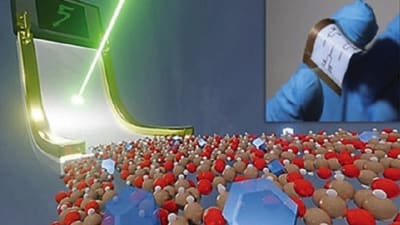
Researchers from Tokyo University of Science (TUS) led by Associate Professor Takashi Ikuno have developed a flexible paper-based sensor that operates like the human brain. The researchers fabricated a photo-electronic artificial synapse device composed of gold electrodes on top of a 10 μm transparent film consisting of zinc oxide (ZnO) nanoparticles and cellulose nanofibers (CNFs).
Briefs: Medical
Detector can identify radioactive isotopes with high resolution.

Briefs: Robotics, Automation & Control
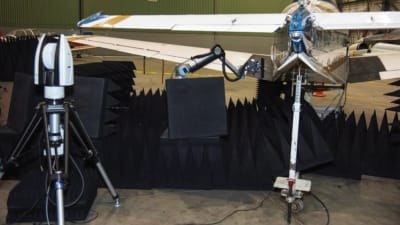
Innovators at the NASA Glenn Research Center have developed the PLGRM system, which allows an installed antenna to be characterized in an aircraft hangar. All PLGRM components can be packed onto pallets, shipped, and easily operated.
Briefs: Electronics & Computers
A team of scientists has successfully created a new synthetic metamaterial with 4D capabilities, including the ability to control energy waves on the surface of a solid material. These waves, called mechanical surface waves, are fundamental to how vibrations travel along the surface of solid materials.

Briefs: Design
A pair of earbuds can be turned into a tool to record the electrical activity of the brain as well as levels of lactate in the body with the addition of two flexible sensors screen-printed onto a stamp-like flexible surface.

Briefs: Electronics & Computers
The atom-by-atom approach to MOF design enabled by AI will allow scientists to have what Argonne Senior Scientist and Data Science and Learning Division Director Ian Foster called a “wider lens” on these kinds of porous structures.

Briefs: Electronics & Computers
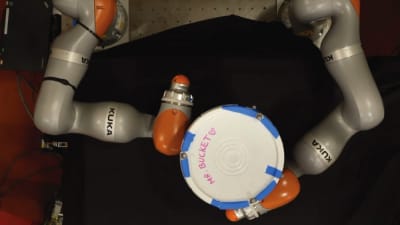
Humans are generally good at whole-body manipulation, but robots struggle with such tasks. Now, MIT researchers have found a way to simplify this process, known as contact-rich manipulation planning.
Briefs: AR/AI
In the future, the researchers want to derive simple, rule-based insights from their neural model, since the decisions of the neural network can be opaque and difficult to interpret. Simpler, rule-based methods could also be easier to implement and maintain in actual robotic warehouse settings.

Briefs: Energy
UC Santa Cruz Assistant Professor of Electrical and Computer Engineering Yu Zhang and his lab are leveraging tools to improve the efficiency, reliability, and resilience of power systems, and have developed an artificial intelligence (AI)-based approach for the smart control of microgrids for power restoration when outages occur.

Briefs: Manufacturing & Prototyping
A multi-institutional project led by a Penn State researcher is focused on developing an all-in-one semiconductor device that can both store data and perform computations. The project recently received $2 million in funding over three years as part of the new National Science Foundation Future of Semiconductors (FuSe) program.

Briefs: Lighting
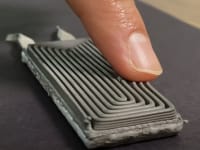
A research team led by Lawrence Berkeley National Laboratory (Berkeley Lab) has developed “supramolecular ink,” a new technology for use in OLED (organic light-emitting diode) displays or other electronic devices.

Briefs: Electronics & Computers
MIT researchers have developed a quantum computing architecture that aims to enable extensible, high-fidelity communication between superconducting quantum processors.

Briefs: Electronics & Computers
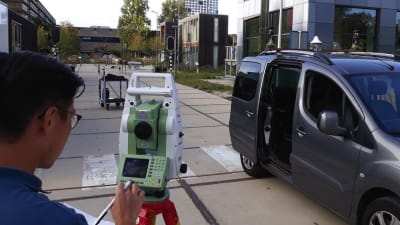
This new technology — developed by engineers at Delft University of Technology, Vrije Universiteit Amsterdam, and VSL, and which can achieve an accuracy of 10 centimeters — is important for the implementation of a range of location-based applications, such as automated vehicles, quantum communication, and next-generation mobile communication systems.
Briefs: Electronics & Computers
IO-Link is a digital advancement combining the essential electrical and electronic characteristics of other connectivity methods. The resulting devices and architecture are enabling designers to create more intelligent equipment, streamline installation, and reduce overall costs.

Briefs: Nanotechnology
The nanoscale electronic parts in devices like smartphones are solid, static objects that once designed and built cannot transform into anything else. But a team from University of California Irvine has reported the discovery of nanoscale devices that can transform into many different shapes and sizes even though they exist in solid states.

Briefs: Design
This advancement, one of the first of its kind, enables a useful new capability for a variety of applications, including improved prostheses, haptics for new modalities in augmented reality (AR), and thermally modulated therapeutics for applications such as pain management. The technology also has a variety of potential industrial and research applications.

Briefs: Materials
The miniscule wires — the size of transistors on silicon chips or one thousandth of the breadth of the finest human hair — are made completely of natural amino acids and heme molecules, found in proteins such as hemoglobin, which transports oxygen in red blood cells.

Briefs: Electronics & Computers
Engineers at the University of California San Diego have developed electronic “stickers” that measure the force exerted by one object upon another. The force stickers are wireless, run without batteries and fit in tight spaces. That makes them versatile for a wide range of applications.

Briefs: Robotics, Automation & Control
A research team has successfully overcome the limitations of soft strain sensors by integrating computer vision technology into optical sensors. The team developed a sensor technology known as computer vision-based optical strain (CVOS) during its study. Unlike conventional sensors reliant on electrical signals, CVOS sensors employ computer vision and optical sensors to analyze microscale optical patterns, extracting data regarding changes.

Briefs: Medical
Monitoring the success of surgery on blood vessels is challenging, as the first sign of trouble often comes too late. A new device could make it easier for doctors to monitor the success of blood vessel surgery.

Briefs: Electronics & Computers
Meet Air-Guardian: A system developed by researchers at the MIT Computer Science and Artificial Intelligence Laboratory (CSAIL). As modern pilots grapple with an onslaught of information from multiple monitors, especially during critical moments, Air-Guardian acts as a proactive co-pilot; a partnership between human and machine, rooted in understanding attention.

Briefs: Software
MIT researchers developed a machine-learning technique called Diffusion-CCSP. Diffusion models learn to generate new data samples that resemble samples in a training dataset by iteratively refining their output.

Briefs: Software
By using artificial intelligence, researchers are developing a system that can automatically identify buildings after disasters and make an initial determination of whether they are damaged and how serious that damage might be.

Briefs: Software
Researchers from MIT, the MIT-IBM Watson AI Lab, and elsewhere have developed a technique that enables deep-learning models to efficiently adapt to new sensor data directly on an edge device. Their on-device training method, Pock-Engine, determines which parts of a huge machine-learning model need to be updated to improve accuracy, and only stores and computes with those specific pieces.

Briefs: Electronics & Computers
Harvard researchers have realized a key milestone in the quest for stable, scalable quantum computing, an ultra-high-speed technology that will enable game-changing advances in a variety of fields, including medicine, science, and finance.

Briefs: Imaging
The NIST camera is made up of grids of ultrathin electrical wires, cooled to near absolute zero, in which current moves with no resistance until a wire is struck by a photon. In these superconducting-nanowire cameras, the energy imparted by even a single photon can be detected because it shuts down the superconductivity at a particular location (pixel) on the grid. Combining all the locations and intensities of all the photons makes up an image.

Top Stories
 Blog: Materials

A Stretchable OLED that Can Maintain Most of Its Luminescence
 INSIDER: Energy

Advancing All-Solid-State Batteries
 Blog: Energy

My Opinion: We Need More Power Soon — Is Nuclear the Answer?
 Quiz: Energy

 Blog: Robotics, Automation & Control

Microscopic Swimming Machines that Can Sense, Respond to Surroundings
 Blog: Physical Sciences

Webcasts
 Podcasts: Aerospace

Sesame Solar's Nanogrid Tech Promises Major Gains in Drone Endurance
 Upcoming Webinars: Semiconductors & ICs

Advantages of Smart Power Distribution Unit Design for Automotive...
 Upcoming Webinars: Transportation

Quiet, Please: NVH Improvement Opportunities in the Early Design...
 Upcoming Webinars: AR/AI

From Spreadsheets to Insights: Fast Data Analysis Without Complex...
 Upcoming Webinars: Defense

Cooling a New Generation of Aerospace and Defense Embedded...
 Upcoming Webinars: AR/AI

Beyond AI-Copy-Paste Engineering: Advanced AI-Integration Success...