8,33,42,44,45,47,52,54,68
-1
570
30
Briefs: Materials
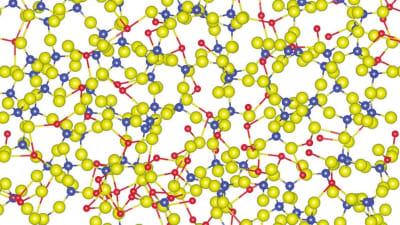
All solid materials, including glass, have a property called elastic stiffness — also known as elastic modulus. It's a measure of how much force per unit area is needed to make...
Briefs: Nanotechnology
Graphene — hexagonally arranged carbon atoms in a single layer with superior pliability and high conductivity — could impact the development of future motion detection, tactile sensing,...

Briefs: Electronics & Computers
A Penn State-led team of interdisciplinary researchers developed a polymer with robust piezoelectric effectiveness, resulting in 60 percent more efficient electricity...
Briefs: Manufacturing & Prototyping
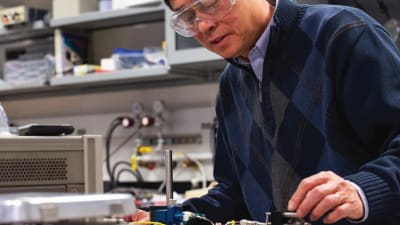
A research team developed a thread made of conductive cellulose that offers practical possibilities for electronic textiles. Sewing the electrically conductive cellulose threads into a...

Briefs: Photonics/Optics
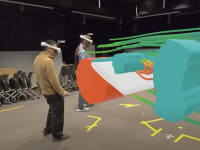
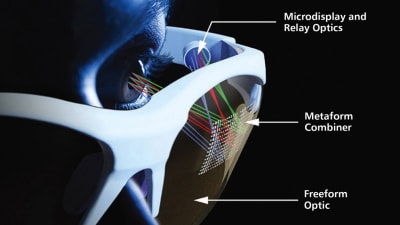
Consumers are looking for augmented reality/virtual reality (AR/VR) glasses that are compact and easy to wear, delivering high-quality imagery with socially acceptable optics that...
Briefs: Energy
Researchers have developed technology to produce next-generation composite glass for lighting LEDs and smartphone, television, and computer screens. The technology was a step forward in perovskite...

Briefs: Nanotechnology
Optical limiting — a manner of telecom switching without the use of electronics — is an all-optical method that could improve the speed and capacity of Internet communications. A...
Briefs: Power
Decreasing Anode Corrosion in Metal-Air Batteries
Metal-air batteries can be used in a variety of applications ranging from range extenders for electric vehicles to emergency power systems. Metal-sea-water batteries are primarily used for underwater applications ranging from torpedoes to underwater unmanned vehicles. A team of researchers at the...
Briefs: Transportation
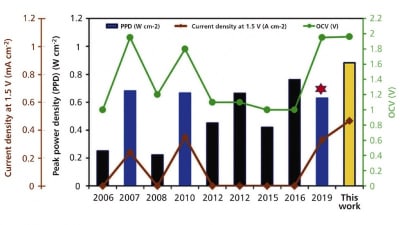
Electrification of the transportation sector is critical to future energy and environmental resilience and will require high-power fuel cells (either standalone or in conjunction with batteries) to...
Briefs: Transportation
Electric vehicle batteries typically require a tradeoff between safety and energy density. If the battery has high energy and power density — required for uphill driving or merging on the...
Briefs: Power
Wearable electronic components incorporated directly into fabrics have been developed that could be used for flexible circuits, healthcare monitoring, energy conversion, and other applications. Graphene...

Briefs: Energy
Many technical processes only use part of the energy consumed. The remaining fraction leaves the system in the form of waste heat. Frequently, this heat is released into the...
Briefs: Communications
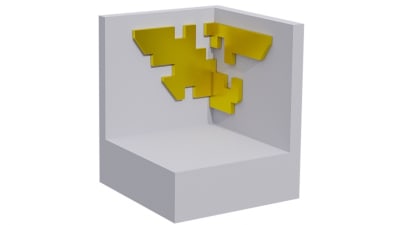
3D nanometer-scale metamaterial structures hold promise for advanced optical isolators.
Briefs: Communications
Optical Signals can be retrieved from inherent background noise using Talbot effect to amplify them.

Briefs: Materials
A hybrid method enables 3D printing of self-powered wearable devices.

Briefs: Manufacturing & Prototyping
Metamaterials that manipulate microwave energy can be fabricated using low-cost inkjet printing.

Briefs: Materials
This method prints 3D structures made of metal and plastic, paving the way for 3D electronics.

Briefs: Manufacturing & Prototyping
This method fabricates 3D nanostructures for electronics, manufacturing, and healthcare.

Briefs: Energy
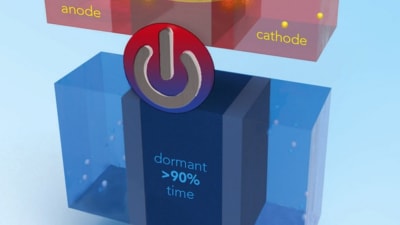
The method enhances the battery's safety while it is being used, without opening the battery cell.

Briefs: Energy
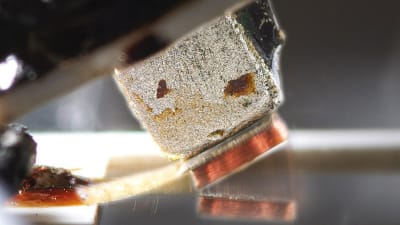
Pyroelectric energy generates energy from heat that would otherwise be wasted in a catalytic chemical reaction.

Briefs: Energy
The battery is smaller than a traditional lithium-ion battery due to the elimination of dendrites.

Briefs: Materials
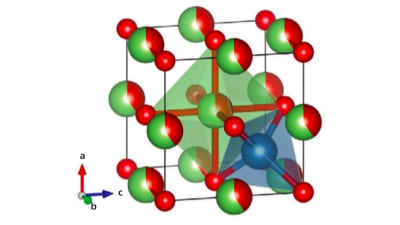
The material enables lithium-ion batteries to be safely recharged within minutes for thousands of cycles.
Briefs: Electronics & Computers
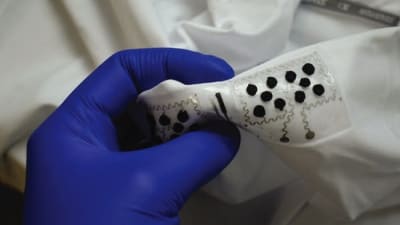
The flexible, washable microgrid uses the human body to sustainably power small electronics.
Briefs: Energy
The material improves connectivity while maintaining recyclability and low cost.

Briefs: Electronics & Computers
Artificial skin reacts to pain just like real skin, paving the way to better prosthetics, robotics, and noninvasive alternatives to skin grafts.

Briefs: Communications
The mobile, wearable device could allow babies to leave the hospital and be monitored from home.

Briefs: Imaging
The high-bandwidth, high-resolution ISAR technology can be used to study subsurface structures.

Briefs: Electronics & Computers
The device combines with body power to treat tendon disease and damage, and sports injuries.

Briefs: Software
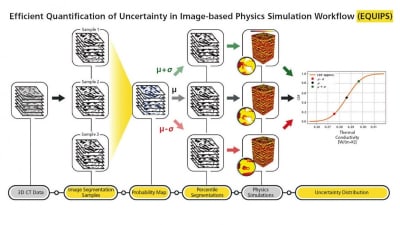
The new computer simulation method can equip engineers and doctors with better information.
Top Stories
 Blog: Lighting

A Stretchable OLED that Can Maintain Most of Its Luminescence
 Blog: Energy

Batteries that Can Withstand the Cold
 INSIDER: Energy

Advancing All-Solid-State Batteries
 Blog: Power

My Opinion: We Need More Power Soon — Is Nuclear the Answer?
 Quiz: Power

 Blog: Data Acquisition

Webcasts
 Upcoming Webinars: Test & Measurement

From Spreadsheets to Insights: Fast Data Analysis Without Complex...
 Upcoming Webinars: Defense

Cooling a New Generation of Aerospace and Defense Embedded...
 Upcoming Webinars: AR/AI

Beyond AI-Copy-Paste Engineering: Advanced AI-Integration Success...
 Upcoming Webinars: Automotive

Battery Abuse Testing: Pushing to Failure
 Upcoming Webinars: Connectivity

A FREE Two-Day Event Dedicated to Connected Mobility
 Upcoming Webinars: RF & Microwave Electronics

Choosing the Right N-Port Strategy: Multiport VNAs vs. Switch...