8,33,42,44,45,47,52,54,68
-1
510
30
Briefs: Materials
Researchers have developed an inexpensive and eco-friendly steam generator to desalinate and purify water using sunlight.

Briefs: Energy
When it discharges, the carbon dioxide can be released in a controlled way and collected to be reused or disposed of responsibly.

Briefs: Design
A team of researchers at EMPA have developed a water-activated disposable paper battery.

Briefs: Energy
The work could lead to improvements in the energy density of lithium batteries that power electric vehicles.

Briefs: Energy
Inducing TR in a battery cell allows engineers to test and improve the safety performance of overheated batteries that can potentially catch fire or explode.

Briefs: Energy
In tests, the proof-of-concept batteries retained 87.5 percent and 115.9 percent of their energy capacity at -40 °C and 50 °C (-40 °F and 122 °F), respectively.

Briefs: Materials
Lithium-ion batteries are currently the preferred technology for powering electric vehicles, but they’re too expensive for long-duration grid-scale energy storage systems.

Briefs: Design
Over the course of their research, the team discovered that these anthraquinones decompose slowly over time, regardless of how many times the battery has been used.

Briefs: Design
In batteries, electrolyte is the circulating “blood” that keeps the energy flowing. The electrolyte forms by dissolving salts in solvents, resulting in charged ions that flow between the positive and negative electrodes.

Briefs: Lighting
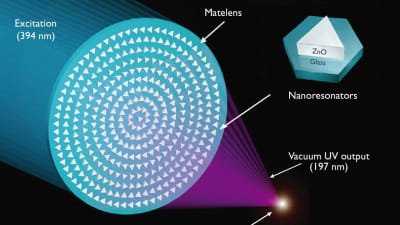
Tests showed the metalens they made could focus its 197-nanometer output onto a spot measuring 1.7 microns in diameter, increasing the power density of the light output by 21 times.
Briefs: Photonics/Optics
Plasmonics is a technology that essentially traps the energy of light in groups of electrons oscillating together on a metal surface.

Briefs: Connectivity
It achieves 40 channels by combining a frequency comb light source based on a new photonic crystal resonator developed by the National Institute of Standards and Technology (NIST) with an optimized mode-division multiplexer.

Briefs: Materials
An experimental plant-based jet fuel could increase engine performance and efficiency, while dispensing with aromatics, the pollution-causing compounds found in conventional fuels.
Briefs: Energy
Have we found a better alternative to lithium-ion batteries?

Briefs: Electronics & Computers
The researchers plan to apply the design to edge computing devices.

Briefs: Robotics, Automation & Control
The technology could be useful in manufacturing and assembly plants for sorting packages, or in any environment where humans and robots collaborate.

Briefs: Design
Researchers built electroluminescent soft artificial muscles for flying, insect-scale robots.

Briefs: Materials
A simple change to the surface of perovskite removes a barrier to its functionality.

Briefs: Medical
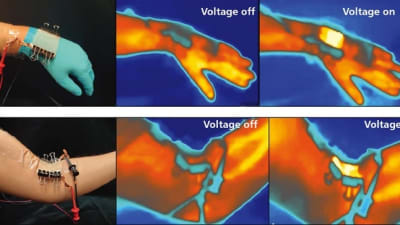
Additional applications include defogging/defrosting, wearable devices, industrial heat systems, sensors, thermochromic displays, and microfluidic chips.
Briefs: Energy
The material remains effective as an energy harvester or sensor at temperatures to well above 572°F.
Briefs: Power
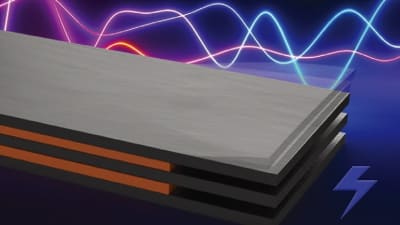
Advanced analyses shed light on the mechanism of a deadly problem plaguing combustion chambers in rocket engines.

Briefs: Photonics/Optics
This method increases the efficiency of light-emitting diodes and other optical elements.

Briefs: Lighting
These micro LEDs can be folded, twisted, cut, and stuck to different surfaces.
Briefs: Power
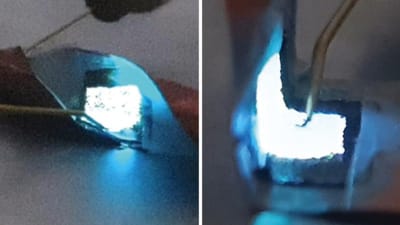
Vanillin is converted into a redox-active electrolyte material for liquid batteries.
Briefs: Energy
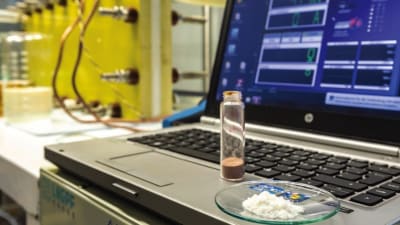
Scientists have been trying for years to create biofuels and other bioproducts more cheaply.

Briefs: Energy
The National Renewable Energy Laboratory is leading the development of new lithium-ion (Li-ion) battery designs specific to the stationary storage requirements.
Briefs: Energy
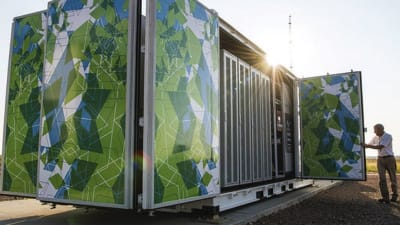
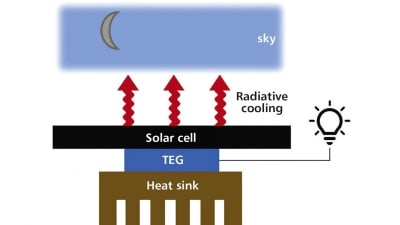
The device uses a thermoelectric module to generate voltage and current from the temperature gradient between the cell and the air.
Briefs: Green Design & Manufacturing
The design could someday enable a fully decarbonized power grid.

Briefs: Energy
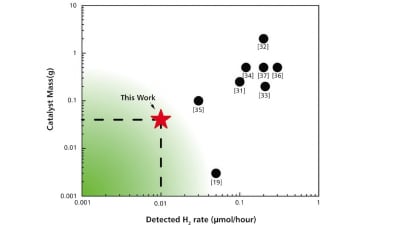
A highly sensitive system for detecting the production of hydrogen gas can foster the development of hydrogen as an alternative to fossil fuels.
Top Stories
 Blog: Lighting

A Stretchable OLED that Can Maintain Most of Its Luminescence
 Blog: Energy

Batteries that Can Withstand the Cold
 INSIDER: Energy

Advancing All-Solid-State Batteries
 Blog: Power

My Opinion: We Need More Power Soon — Is Nuclear the Answer?
 Quiz: Power

 Blog: Data Acquisition

Webcasts
 Upcoming Webinars: Test & Measurement

From Spreadsheets to Insights: Fast Data Analysis Without Complex...
 Upcoming Webinars: Defense

Cooling a New Generation of Aerospace and Defense Embedded...
 Upcoming Webinars: AR/AI

Beyond AI-Copy-Paste Engineering: Advanced AI-Integration Success...
 Upcoming Webinars: Automotive

Battery Abuse Testing: Pushing to Failure
 Upcoming Webinars: Connectivity

A FREE Two-Day Event Dedicated to Connected Mobility
 Upcoming Webinars: RF & Microwave Electronics

Choosing the Right N-Port Strategy: Multiport VNAs vs. Switch...