36
-1
210
30
Briefs: Electronics & Computers
A research team developed a thread made of conductive cellulose that offers practical possibilities for electronic textiles. Sewing the electrically conductive cellulose threads into a...

Briefs: Photonics/Optics
Researchers have developed technology to produce next-generation composite glass for lighting LEDs and smartphone, television, and computer screens. The technology was a step forward in perovskite...

Briefs: Transportation
A new composition of germanosili-cate glass created by adding zinc oxide has properties good for lens applications. The new family of zinc germanosilicate glass has a high refractive index comparable to...

Briefs: Power
Wearable electronic components incorporated directly into fabrics have been developed that could be used for flexible circuits, healthcare monitoring, energy conversion, and other applications. Graphene...

Briefs: Materials
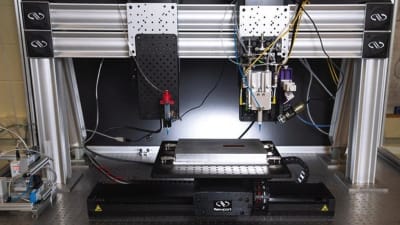
A hybrid method enables 3D printing of self-powered wearable devices.
Briefs: RF & Microwave Electronics
Metamaterials that manipulate microwave energy can be fabricated using low-cost inkjet printing.

Briefs: Materials
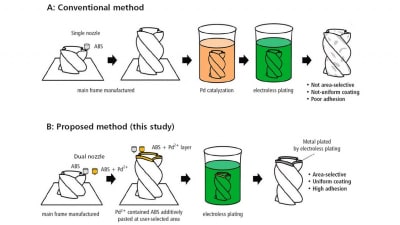
This method prints 3D structures made of metal and plastic, paving the way for 3D electronics.
Briefs: Electronics & Computers
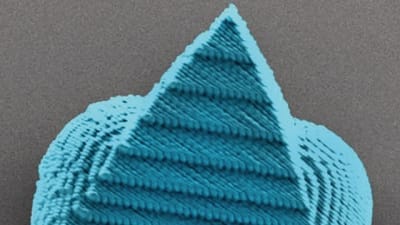
This method fabricates 3D nanostructures for electronics, manufacturing, and healthcare.

Briefs: Manufacturing & Prototyping
Surgeons can use the heart model as a tool for planning and practice.

Briefs: Materials
Making one kilometer of a two-lane road would use up about three million masks.

Briefs: Energy
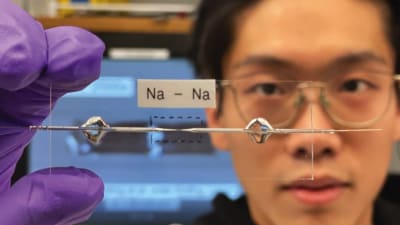
The battery is smaller than a traditional lithium-ion battery due to the elimination of dendrites.
Briefs: Manufacturing & Prototyping
The material enables lithium-ion batteries to be safely recharged within minutes for thousands of cycles.

Briefs: Sensors/Data Acquisition
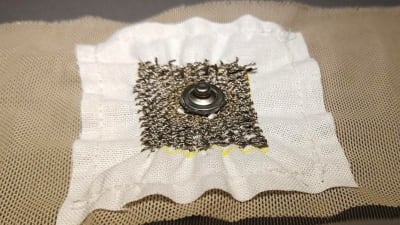
The device ultimately should be able to provide accurate signals from a person who is walking, running, or climbing stairs.
Briefs: Manufacturing & Prototyping
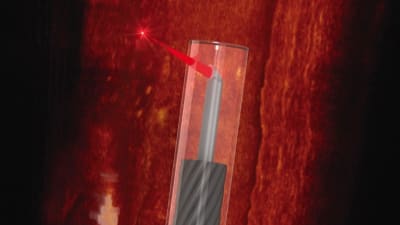
3D micro-printing was used to develop this small, flexible scope for looking inside blood vessels.
Briefs: Software
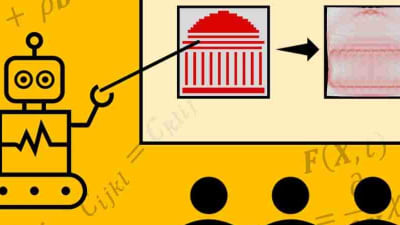
The advance could accelerate engineers’ design process by eliminating the need to solve complex equations.
Briefs: Test & Measurement
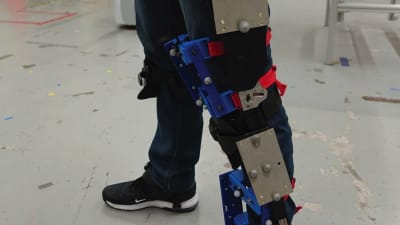
This testing method ensures that an exoskeleton and the person wearing it are moving smoothly and in harmony.
Briefs: Manufacturing & Prototyping
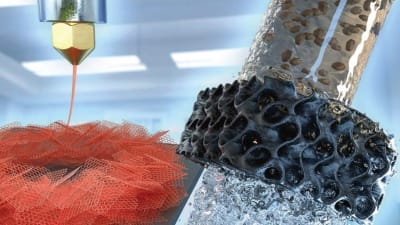
The aerogels safely remove contaminants from water without releasing any problematic chemical residue.
Briefs: Wearables
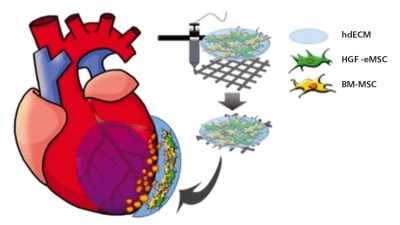
3D bioprinting using bioink from engineered stem cells enables treatment of myocardial infarction and other cardiovascular diseases.
Briefs: AR/AI
The technology is aimed at protecting physical targets, such as utilities and infrastructure.

Briefs: Sensors/Data Acquisition
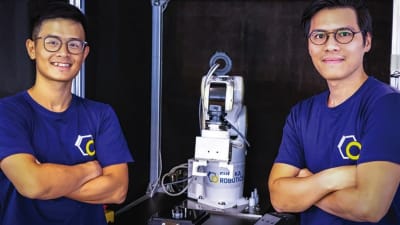
A software makes industrial robots nimbler and almost as sensitive as human hands.
Briefs: Propulsion
A remotely controlled microswimmer could navigate the human body and aid in drug delivery.
Briefs: Materials
A new fabrication methodology addresses the need for a thin, double-sided circuitry board.

Briefs: Energy
Vibrating transducers create tunnels in a thin layer of oil to transport droplets across a chip without leaving a trace behind.

Briefs: Materials
The sulfolane-additive process yields easy fabrication, low cost, and long operating life.

Briefs: Materials
A 3D-printable elastomer yields soft, elastic objects that feel like human tissue.

Briefs: Sensors/Data Acquisition
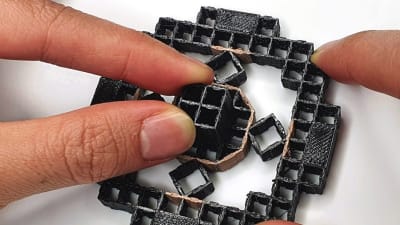
Sensing is incorporated directly into an object’s material, with applications for assistive technology and “intelligent” furniture.
Briefs: Materials
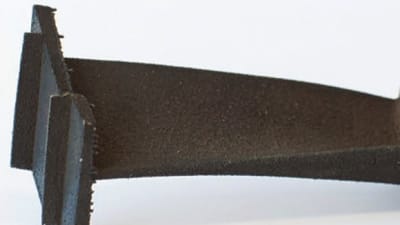
Parts remain crack-free and defect-resistant, making them conducive for use in metal-based 3D-printing applications.
Briefs: Wearables
The technology shines through fabrics to show notifications for email messages, time, weather, or other forms of basic information.

Briefs: Motion Control
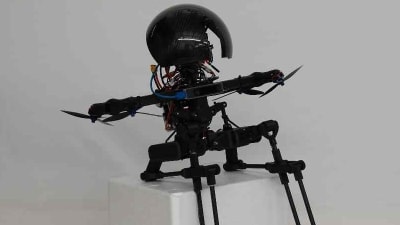
A new robot developed by Caltech researchers LEO carves out a new type of locomotion somewhere between walking and flying.
Top Stories
 Blog: Power

My Opinion: We Need More Power Soon — Is Nuclear the Answer?
 Blog: AR/AI
Aerial Microrobots That Can Match a Bumblebee's Speed
 News: Energy

 Blog: Electronics & Computers

Turning Edible Fungi into Organic Memristors
 Blog: Robotics, Automation & Control

Microscopic Swimming Machines that Can Sense, Respond to Surroundings
 INSIDER: Sensors/Data Acquisition

Webcasts
 Upcoming Webinars: Power

Hydrogen Engines Are Heating Up for Heavy Duty
 Upcoming Webinars: Electronics & Computers

Advantages of Smart Power Distribution Unit Design for Automotive...
 Upcoming Webinars: Transportation

Quiet, Please: NVH Improvement Opportunities in the Early Design...
 Upcoming Webinars: Sensors/Data Acquisition

From Spreadsheets to Insights: Fast Data Analysis Without Complex...
 Upcoming Webinars: Energy

Battery Abuse Testing: Pushing to Failure
 Upcoming Webinars: AR/AI