36
-1
30
30
Briefs: Manufacturing & Prototyping
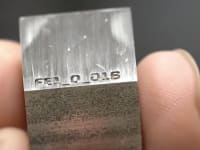
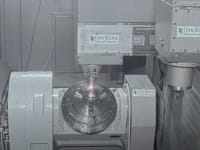
A research team led by Associate Professor Tao Sun has made new discoveries that can expand additive manufacturing in aerospace and other industries that rely on strong metal parts. Read on to learn more.

Briefs: Electronics & Computers
A recent study demonstrates that soft skin pads doubling as sensors made from thermoplastic urethane can be efficiently manufactured using 3D printers. Read on to learn more.

Briefs: Mechanical & Fluid Systems
NASA Kennedy Space Center engineers developed a Cryogenic Oxygen Storage Module to store oxygen in solid-state form and deliver it as a gas to an end-use environmental control and/or life support system. Read on to learn more about it.
Briefs: Materials
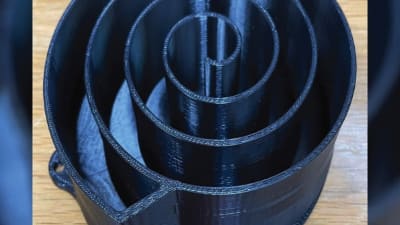
A team at MIT has moved beyond traditional trial-and-error methods to create materials with extraordinary performance through computational design. Their new system integrates physical experiments, physics-based simulations, and neural networks to navigate the discrepancies often found between theoretical models and practical results. Read on to learn more.
Blog: Manufacturing & Prototyping
In this video, we provide an overview of the Nancy Grace Roman Space Telescope’s mission, capabilities and timeline to launch.

Briefs: Manufacturing & Prototyping
Inspired by a small and slow snail, scientists have developed a robot prototype that may one day scoop up microplastics from the surfaces of oceans, seas, and lakes.
Briefs: Manufacturing & Prototyping
Researchers have developed a pioneering technique for producing large-scale graphene current collectors. This breakthrough promises to significantly enhance the safety and performance of lithium-ion batteries (LIBs), addressing a critical challenge in energy storage technology. Read on to learn more.
Briefs: Manufacturing & Prototyping
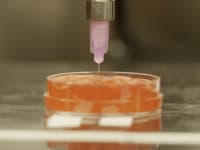
Biomedical engineers have developed a “bio-ink” for 3D-printed materials that could serve as scaffolds for growing human tissues to repair or replace damaged ones in the body. Read on to learn more.
Briefs: Manufacturing & Prototyping
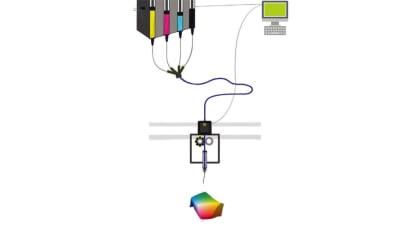
Innovators at NASA Johnson Space Center have developed an adjustable thermal control ball valve assembly which utilizes a unique geometric ball valve design to facilitate precise thermal control within a spacesuit. The technology meters the coolant flow going to the cooling and ventilation garment, worn by an astronaut in the next generation space suit. Read on to learn more.

Briefs: Manufacturing & Prototyping
Researchers have successfully demonstrated the 4D printing of shape memory polymers in submicron dimensions that are comparable to the wavelength of visible light. Read on to learn more.

Briefs: Manufacturing & Prototyping
A new approach uses commercial chip fab materials and techniques to fabricate specialized transistors to serve as the building block of the timing device. Read on to learn more.

Briefs: Energy
In recent years, engineers at ETH Zurich have developed the technology to produce liquid fuels from sunlight and air. In 2019, they demonstrated the entire thermochemical process chain under real conditions for the first time, in the middle of Zurich, on the roof of ETH Machine Laboratory. Two ETH spin-offs, Climeworks and Synhelion, are further developing and commercializing the technologies. Read on to learn more.

Briefs: Wearables
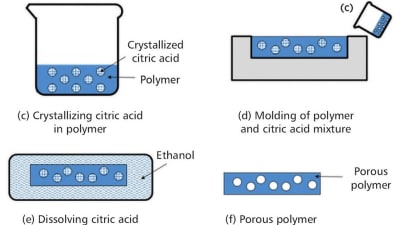
A silicone membrane for wearable devices is more comfortable and breathable thanks to better-sized pores made with the help of citric acid crystals. The new preparation technique fabricates thin, silicone-based patches that rapidly wick water away from the skin. The technique could reduce the redness and itching caused by wearable biosensors that trap sweat beneath them. Read on to learn more.
Briefs: Materials
Potential Solvents for Building on Moon and Mars
Researchers have taken the first steps toward finding liquid solvents that may someday help extract critical building materials from lunar and Martian rock dust, an important piece in making long-term space travel possible. Read on to learn more.
Briefs: Imaging
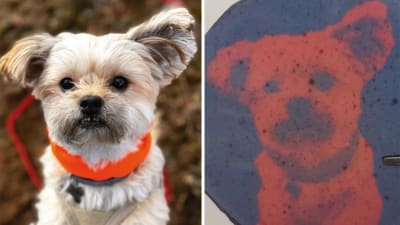
Imagine if physicians could capture 3D projections of medical scans, suspending them inside an acrylic cube to create a hand-held reproduction of a patient’s heart, brain, kidneys, or other organs. Then, when the visit is done, a quick blast of heat erases the projection, and the cube is ready for the next scan. A new report by researchers at Dartmouth and Southern Methodist University outlines a technical breakthrough that could enable such scenarios, and others, with widespread utility. Read on to learn more.
Briefs: Data Acquisition
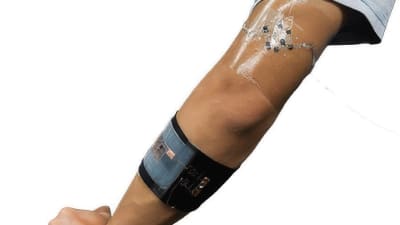
A flexible and stretchable cell has been developed for wearable electronic devices that require a reliable and efficient energy source that can easily be integrated into the human body. Read on to learn more about it.
Briefs: Materials
Applications include vehicle and aircraft tires, sports helmets, military equipment, and seals and couplings. Read on to learn more.

Briefs: Mechanical & Fluid Systems
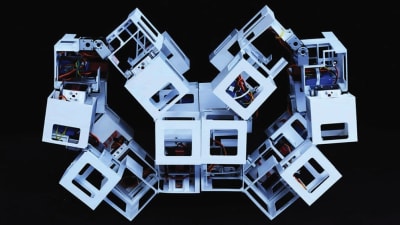
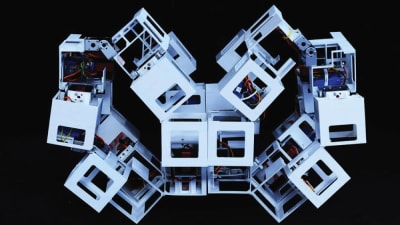
Inspired by the paper-folding art of origami, North Carolina State University engineers have discovered a way to make a single plastic cubed structure transform into more than 1,000 configurations using only three active motors. The findings could pave the way for shape-shifting artificial systems that can take on multiple functions and even carry a load. Read on to learn more.
Briefs: Manufacturing & Prototyping
Inspired by the paper-folding art of origami, North Carolina State University engineers have discovered a way to make a single plastic cubed structure transform into more than 1,000 configurations using only three active motors. Read on to learn more.
Briefs: Manufacturing & Prototyping
A research team has created an innovative microelectronic device that can potentially function as a sustainable, high-performance “bit-switch.” This paves the way for future computing technologies to process data much faster while using significantly less energy. Read on to learn more.

Briefs: Medical
McGill University researchers have made a breakthrough in diagnostic technology, inventing a ‘lab on a chip’ that can be 3D-printed in just 30 minutes. The chip has the potential to make on-the-spot testing widely accessible. Read on to learn more.

Briefs: Test & Measurement
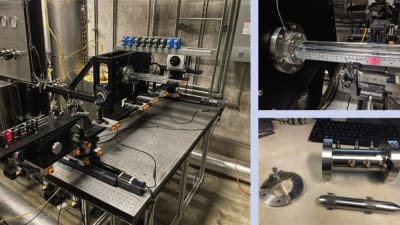
Engineers at NASAs Stennis Space Center have developed the HYdrocarbon Propellants Enabling Reproduction of Flows in Rocket Engines (HYPERFIRE), a sub-scale, non-reacting flow test system. HYPERFIRE uses heated ethane to enable physical simulation of rocket engines powered by a broad range of propellants in an inexpensive, accurate, and simple fashion. Read on to learn more.
Briefs: Photonics/Optics
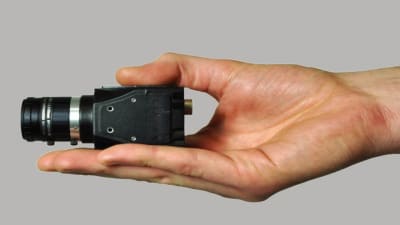
The palm-sized light field camera could improve autonomous driving, classification of recycled materials, and remote sensing. Read on to learn more about it.
Briefs: Wearables
Engineers have developed a new technique for making wearable sensors that enables medical researchers to prototype and test new designs much faster and at a far lower cost than existing methods. Read on to learn more.

Briefs: Materials
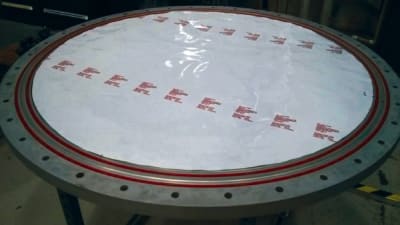
The RTV sealing method may benefit terrestrial applications that may demand cure-in-place internal seals. The method could also innovate manufacturing processes for components by enhancing the speed of assembly while increasing seal integrity. Read on to learn more.
Briefs: Manufacturing & Prototyping
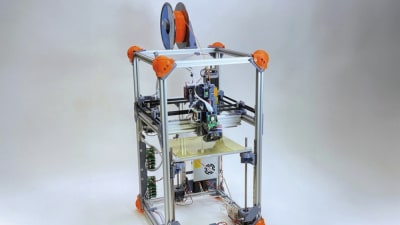
This research could help to reduce the environmental impact of additive manufacturing, which typically relies on nonrecyclable polymers and resins derived from fossil fuels. Read on to learn more.
Briefs: Medical
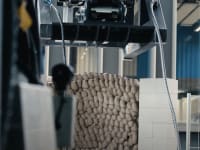
Eva Baur, a Ph.D. student, used 3D-printed double network granular elastomers (DNGEs) to print a prototype ‘finger,’ complete with rigid ‘bones’ surrounded by flexible ‘flesh.’ The finger was printed to deform in a pre-defined way, demonstrating the technology’s potential to manufacture devices that are sufficiently supple to bend and stretch, while remaining firm enough to manipulate objects. Read on to learn more.

Briefs: Materials
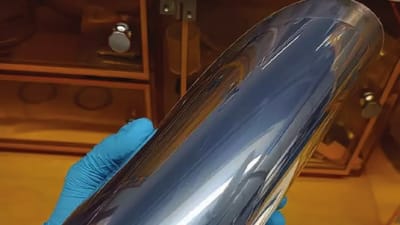
Researchers have developed a new way to produce and shape large, high-quality mirrors that are much thinner than conventional space-telescope mirrors. The final product is even flexible enough to be rolled up and stored compactly inside a launch vehicle. Read on to learn more.
Briefs: Manufacturing & Prototyping
John Kolinski and his team at the Laboratory of Engineering Mechanics of Soft Interfaces aim to understand how cracks propagate in brittle solids, which is essential for developing and testing safe and cost-effective composite materials for use in construction, sports, and aerospace engineering.

Top Stories
 Blog: Power

My Opinion: We Need More Power Soon — Is Nuclear the Answer?
 Blog: AR/AI
Aerial Microrobots That Can Match a Bumblebee's Speed
 News: Energy

 Blog: Electronics & Computers

Turning Edible Fungi into Organic Memristors
 Blog: Robotics, Automation & Control

Microscopic Swimming Machines that Can Sense, Respond to Surroundings
 INSIDER: Sensors/Data Acquisition

Webcasts
 Upcoming Webinars: Energy

Hydrogen Engines Are Heating Up for Heavy Duty
 Upcoming Webinars: Electronics & Computers

Advantages of Smart Power Distribution Unit Design for Automotive...
 Upcoming Webinars: Unmanned Systems

Quiet, Please: NVH Improvement Opportunities in the Early Design...
 Upcoming Webinars: AR/AI

From Spreadsheets to Insights: Fast Data Analysis Without Complex...
 Upcoming Webinars: Automotive

Battery Abuse Testing: Pushing to Failure
 Upcoming Webinars: AR/AI