38
-1
450
30
Briefs: RF & Microwave Electronics
Flexible carbon nanotube fibers woven into clothing gather accurate EKG and heart rate.

Briefs: Aerospace
Applications include space structures, emergency shelters, backpack solar collectors, and inspection of hazardous environments.

Briefs: Energy
Incorporating semiconductor components, microscopic robots are made to walk with standard electronic signals.

Briefs: Electronics & Computers
The 2D materials boost device performance for electronic devices, solar cells, batteries, and medical equipment.

Briefs: Sensors/Data Acquisition
Directly visualizing external stresses of plastics is useful in development of materials with improved mechanical properties.
Briefs: Lighting
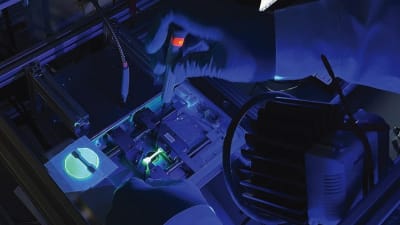
This paves the way for innovative and more energy-efficient printed electronics.

Briefs: Materials
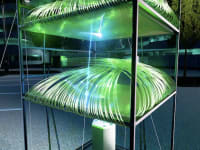
The material could be used to create housing in outer space.

Briefs: Electronics & Computers
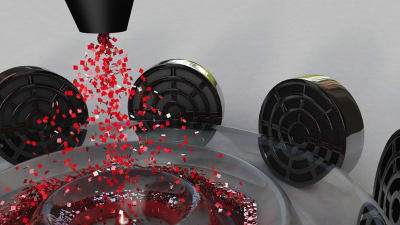
The new printing method coaxes particles and droplets into precise patterns using the power of sound.
Briefs: Materials
With this advance, so-called “flextronics” move closer to reality.

Briefs: Transportation
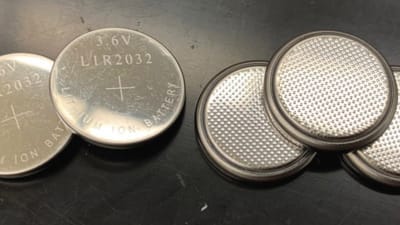
The technology could be key to lighter, less expensive, and long-lasting batteries for future electric vehicles.
Briefs: Test & Measurement
Growing large-area graphene on optical substrates enables use in photonics devices.

Briefs: Photonics/Optics
The process produces rapid, cost-effective, and environmentally friendly material.

Briefs: Materials
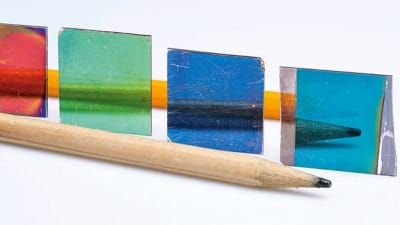
Fano Resonance Optical Coatings (FROCs) can both transmit and reflect the same color simultaneously.
Briefs: Mechanical & Fluid Systems
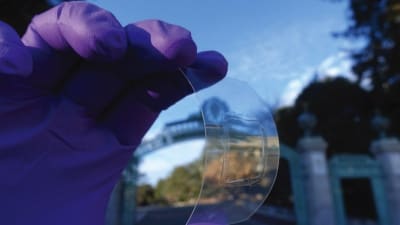
The approach achieves near 100% light emission efficiency at all brightness levels.
Briefs: Energy
A new anode for aqueous batteries uses seawater as an electrolyte.

Briefs: Electronics & Computers
High-voltage direct current cables can more efficiently transport electricity over long distances.

Briefs: Photonics/Optics
The protective coating works like body armor for the atomically thin materials.

Briefs: Imaging
The ultrathin magnet could advance new applications in computing and electronics.

Briefs: Sensors/Data Acquisition
The method could be applied to carbon waste streams.

Briefs: AR/AI
The system could one day replace LiDAR and cameras in automated manufacturing, biomedical imaging, and autonomous driving.
Briefs: Semiconductors & ICs
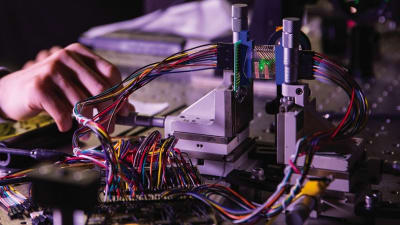
This combination of technologies could enable developments for many optical applications.
Briefs: Materials
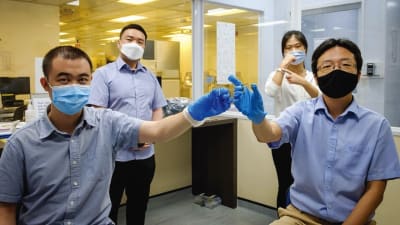
To enable the development of wearable devices that possess advanced ultraviolet (UV) detection functions, scientists have created a new type of light sensor that is both flexible and highly sensitive.
Briefs: Aerospace
Vibration-absorbing resonators could better soundproof walls and make vehicles more streamlined.

Briefs: Mechanical & Fluid Systems
The tiny motors mimic how rock climbers navigate inclines.

Briefs: Energy
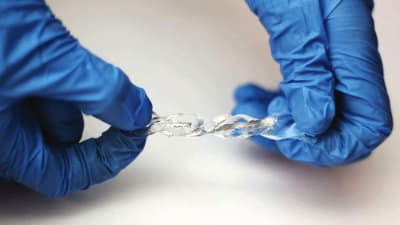
The soft and stretchable device converts movement into electricity and can work in wet environments.
Briefs: Motion Control
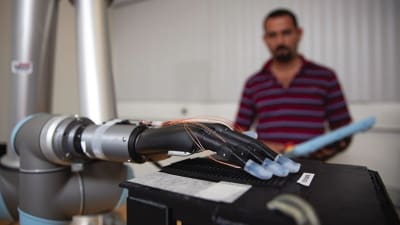
The technology could improve the control of prosthetic hands and provide a sense of “touch” for amputees.
Briefs: Wearables
Researchers have developed graphene-based sensing technology using G-Putty material — a highly malleable graphene blended putty. The printed sensors are 50 times more sensitive than the...

Briefs: Materials
Applications include manufacturing structural components for aerospace vehicles, cars, trucks, trains, ships, and submarines.

Briefs: Materials
The reaction converts 90% of plastic to jet fuel and other valuable hydrocarbon products within an hour at moderate temperatures.

Top Stories
 Blog: Lighting

A Stretchable OLED that Can Maintain Most of Its Luminescence
 Blog: Energy

Batteries that Can Withstand the Cold
 INSIDER: Energy

Advancing All-Solid-State Batteries
 Quiz: Energy

 Blog: Physical Sciences

 Blog: Materials

Webcasts
 Upcoming Webinars: Test & Measurement

From Spreadsheets to Insights: Fast Data Analysis Without Complex...
 Upcoming Webinars: Electronics & Computers

Cooling a New Generation of Aerospace and Defense Embedded...
 Upcoming Webinars: Test & Measurement

Beyond AI-Copy-Paste Engineering: Advanced AI-Integration Success...
 Upcoming Webinars: Automotive

Battery Abuse Testing: Pushing to Failure
 Upcoming Webinars: Internet of Things

A FREE Two-Day Event Dedicated to Connected Mobility
 Upcoming Webinars: Test & Measurement

Choosing the Right N-Port Strategy: Multiport VNAs vs. Switch...