38
-1
660
30
Briefs: Electronics & Computers
These non-reciprocal devices on a compact chip pave the way for applications from two-way wireless to quantum computing.

Briefs: Materials
This technique may enable speedy, on-demand design of softer, safer neural devices.

Briefs: Manufacturing & Prototyping
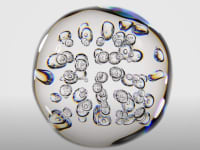
This technology makes it possible to save extensive data in objects such as shirt buttons, water bottles, or the lenses of glasses and then retrieve it years later.

Briefs: Manufacturing & Prototyping
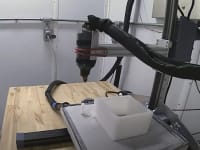
The technique could enable the printing of circuit boards, electromechanical components, and robots.

Briefs: Robotics, Automation & Control
Tiny aircraft that weigh as much as a fruit fly could serve as Martian atmospheric probes.

Briefs: Energy
Applications include rapid prototyping, medical, aerospace, and automotive.

Briefs: Sensors/Data Acquisition
This approach could engineer quantum materials atom-by-atom for new electronic, magnetic, and sensing applications.

Briefs: Test & Measurement
The software assesses the quality of parts in real time, without the need for expensive characterization equipment.

Briefs: Sensors/Data Acquisition
This method could impact optical technologies such as smartphone cameras, biosensors, or autonomous vision for robots and self-driving cars.
Briefs: Energy
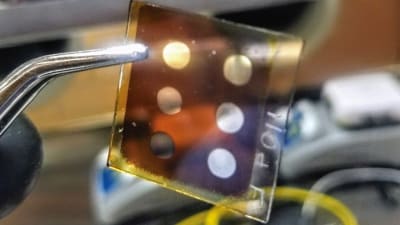
Perovskites could be the active ingredient that makes the next generation of low-cost, efficient, lightweight, and flexible solar cells.
Briefs: Manufacturing & Prototyping
To make electronic components smaller, semiconductor 2D materials are combined with new types of insulator materials.

Briefs: Medical
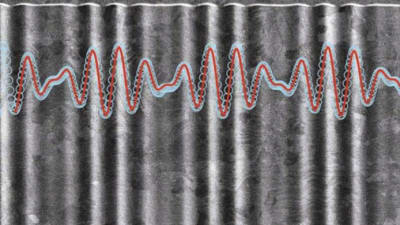
A soft hydrogel, driven by an oscillatory chemical reaction, produces an autonomous integrated pump for microfluidic applications.

Briefs: Data Acquisition
The instrument has uses in photography where the goal is to image a dim object near a bright one.

Briefs: Manufacturing & Prototyping
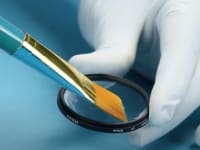
This eye-on-a-chip can help treatment of dry eye disease.

Briefs: Aerospace
Biomaterial Shields Against Harmful Radiation
A new form of melanin can protect human tissue from X-rays during medical treatment or spaceflight.
Briefs: Materials
This material could be used for artificial muscles that power bio-inspired robots.

Briefs: Nanotechnology
Aerogels based on cellulose nanofibers can effectively shield electromagnetic radiation over a wide frequency range.

Briefs: Sensors/Data Acquisition
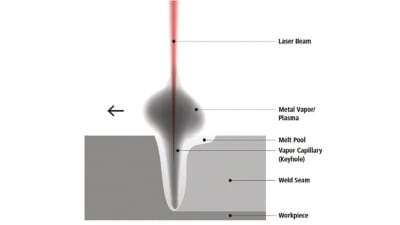
Empa researchers were able to demonstrate real-time acoustic monitoring of laser weld seams.
Briefs: Nanotechnology
One unexpected application for spider silk is its use in the creation of biocompatible lenses.

Briefs: Sensors/Data Acquisition
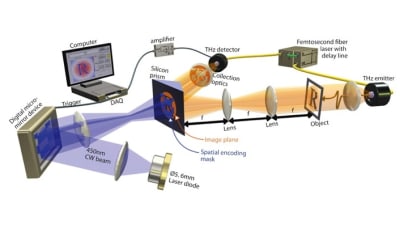
Real-time terahertz imaging with a single-pixel detector.
Briefs: Software
This high-strength material could be used to improve safety and reduce the cost of producing cars.
Briefs: Robotics, Automation & Control
Features include unusual color changes and high touch sensitivity.

Briefs: Materials
Liquid-Repelling Substance Works on All Surfaces
The new coating can eliminate complex disinfectant procedures for protective face shields.
Briefs: Wearables
The material was designed specifically for biomedical or wearable technologies, since sweat and volatile organic compounds evaporate away from the skin.

Briefs: Test & Measurement
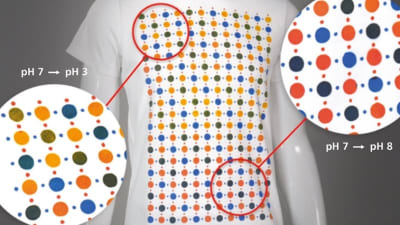
Bioactive inks printed on wearable textiles can map conditions over the entire surface of the body.
Briefs: Sensors/Data Acquisition
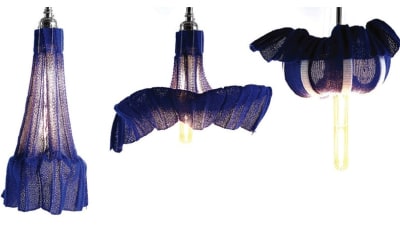
This approach could be used to cost-effectively make soft robots and wearable technologies.
Briefs: Motion Control
Inspired by a coral polyp, this plastic mini robot moves by magnetism and light.

Briefs: Robotics, Automation & Control
A new method manufactures complex shapeshifters for soft robots and biomedical implants.

Briefs: Test & Measurement
The device brings lithium metal batteries one step closer to commercial viability.
Top Stories
 Blog: Lighting

A Stretchable OLED that Can Maintain Most of Its Luminescence
 Blog: Energy

Batteries that Can Withstand the Cold
 INSIDER: Energy

Advancing All-Solid-State Batteries
 Quiz: Energy

 Blog: Physical Sciences

 Blog: Materials

Webcasts
 Upcoming Webinars: Test & Measurement

From Spreadsheets to Insights: Fast Data Analysis Without Complex...
 Upcoming Webinars: Electronics & Computers

Cooling a New Generation of Aerospace and Defense Embedded...
 Upcoming Webinars: Test & Measurement

Beyond AI-Copy-Paste Engineering: Advanced AI-Integration Success...
 Upcoming Webinars: Automotive

Battery Abuse Testing: Pushing to Failure
 Upcoming Webinars: Internet of Things

A FREE Two-Day Event Dedicated to Connected Mobility
 Upcoming Webinars: Test & Measurement

Choosing the Right N-Port Strategy: Multiport VNAs vs. Switch...