51
-1
0
30
Briefs: AR/AI
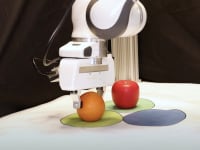
For a robot, the real world is a lot to take in. Making sense of every data point in a scene can take a huge amount of computational effort and time. Using that information to then decide how to best help a human is an even thornier exercise. Now, MIT roboticists have a way to cut through the data noise, to help robots focus on the features in a scene that are most relevant for assisting humans. Read on to learn more.

Briefs: Software
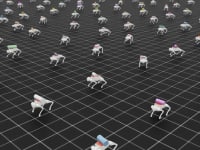
Bees, ants, and termites don’t need blueprints. They may have queens, but none of these species breed architects or construction managers. Each insect worker, or drone, simply responds to cues like warmth or the presence or absence of building material. Now, researchers at Penn Engineering have developed mathematical rules that allow virtual swarms of tiny robots to do the same. Read on to learn more.

Briefs: Mechanical & Fluid Systems
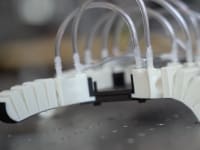
Researchers have created a light-powered soft robot that can carry loads through the air along established tracks, similar to cable cars or aerial trams. The soft robot operates autonomously, can climb slopes at angles of up to 80°, and can carry loads up to 12 times its weight. Read on to learn more.

Briefs: RF & Microwave Electronics
NASA has developed an innovative combination of a Magnetometer, low-powered ElectroMagnets, and Resonant Inductive Coupling (MEMRIC) to create and control relative positioning of nano satellites within a cluster. This is a game-changing approach to enable distributed nanosatellite (nanosat) clusters. Read on to learn more.

Briefs: Materials
University of Minnesota Twin Cities researchers have discovered a new method to move objects using ultrasound waves, which opens the door for using contactless manipulation in industries in which devices wouldn’t need a built-in power source to move. Read on to learn more.

Briefs: Robotics, Automation & Control
Missions to the moon and other planets will require large-scale infrastructure that would benefit from autonomous assembly by robots without on-site human intervention. NASA Ames Research Center has developed a novel and efficient mobile bipedal robot system to construct low-mass, high precision, and largescale infrastructure. Read on to learn more.

Briefs: Design
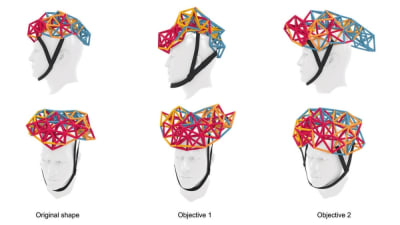
A team of UC Berkeley-led researchers has developed an AI-driven framework to optimize and automate the design of complex truss robots. This approach enables designers to create robots with extraordinary capabilities while maximizing control efficiency. Read on to learn more about it.
Briefs: Energy
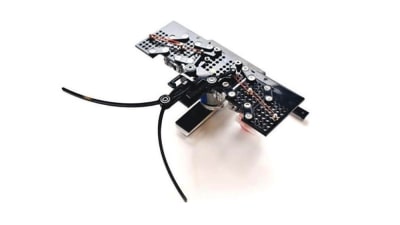
Mechanical engineering researchers in the Harvard John A. Paulson School of Engineering and Applied Sciences think there’s another way to design robots: Programming intended functions directly into a robot’s physical structure, allowing the robot to react to its surroundings without the need for extensive on-board electronics. Read on to learn more.
Briefs: Power
Researchers at the University of California San Diego have developed a soft robotic skin that enables vine robots that are just a few millimeters wide to navigate convoluted paths and fragile environments. Read on to learn more.

Briefs: Software
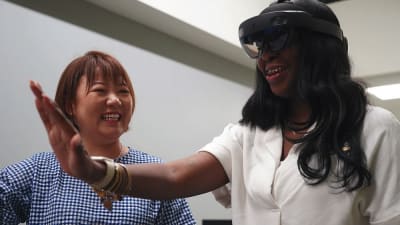
Robots may soon have a new way to communicate with people. Not through words or screens, but with light and images projected directly onto the world around them. University of South Florida's Zhao Han is developing technology that could transform how people interact with robots in both emergencies and everyday life. Read on to learn more.
Briefs: Materials
Soft robots, medical devices and implants, and next-generation drug delivery methods could soon be guided with magnetism — thanks to a metal-free magnetic gel developed by researchers at the University of Michigan and the Max Planck Institute for Intelligent Systems in Stuttgart, Germany. Read on to learn more about it.

Briefs: Robotics, Automation & Control
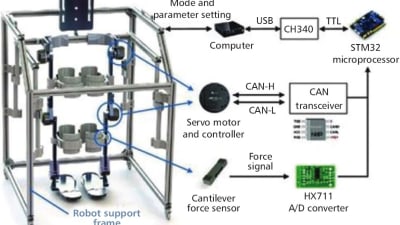
A study conducted by Fuyang Yu and his colleagues introduces an innovative approach to lower limb rehabilitation. Their research outlines the development of a lower limb rehabilitation robot designed to significantly improve the safety and effectiveness of gait training through a novel method based on human-robot interaction force measurement. Read on to learn more.
Briefs: Robotics, Automation & Control
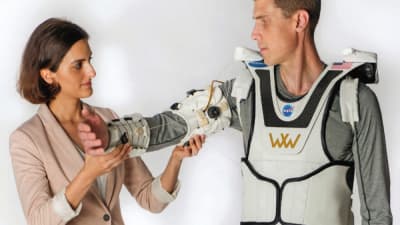
This lightweight, portable garment is designed for active shoulder and elbow positioning.
Briefs: Semiconductors & ICs
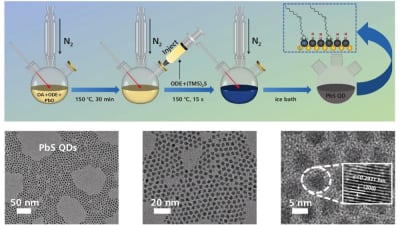
Researchers at Fuzhou University in China created a machine vision sensor that uses quantum dots to adapt to extreme changes in light far faster than the human eye can — in about 40 seconds — by mimicking eyes’ key behaviors. Their results could be a game changer for robotic vision and autonomous vehicle safety. Read on to learn more.
Briefs: Software
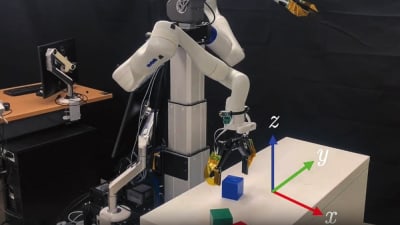
Researchers from MIT and NVIDIA Research have developed a novel algorithm that dramatically speeds up a robot’s planning process. Their approach enables a robot to “think ahead” by evaluating thousands of possible solutions in parallel and then refining the best ones to meet the constraints of the robot and its environment. Read on to learn more.
Briefs: Physical Sciences
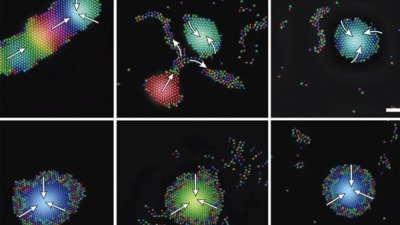
Animals like bats, whales, and insects have long used acoustic signals for communication and navigation. Now, an international team of scientists have taken a page from nature’s playbook to model micro-sized robots that use sound waves to coordinate into large swarms that exhibit intelligent-like behavior. Read on to learn more.
Briefs: Sensors/Data Acquisition
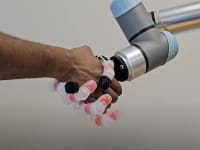
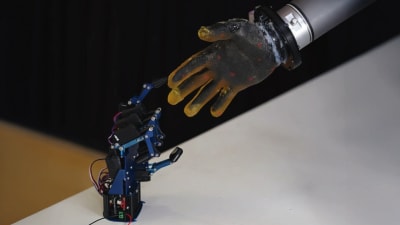
A team of engineers has developed a low-cost, durable, highly-sensitive robotic ‘skin’ that can be added to robotic hands like a glove, enabling robots to detect information about their surroundings in a way that’s similar to humans. Read on to learn more.
Briefs: AR/AI
A new AI training protocol teaches robots how to perform complicated tasks, like assembling a motherboard or an IKEA drawer, with a 100 percent success rate. Read on to learn more about it.

Briefs: RF & Microwave Electronics
Researchers from Duke University have developed a novel framework named WildFusion that fuses vision, vibration, and touch to enable robots to “sense” complex outdoor environments much like humans do. Read on to learn more.

Briefs: Robotics, Automation & Control
A human clearing junk out of an attic can often guess the contents of a box simply by picking it up and giving it a shake, without the need to see what’s inside. Researchers from MIT, Amazon Robotics, and the University of British Columbia have taught robots to do something similar. Read on to learn more.

Briefs: Robotics, Automation & Control
Imagine a robot that can walk, without electronics, and only with the addition of a cartridge of compressed gas, right off the 3D printer. It can also be printed in one go, from one material. That is exactly what roboticists have achieved in robots developed by the Bioinspired Robotics Laboratory at the University of California San Diego. Read on to learn more.

Briefs: Motion Control
Researchers have created a light-powered soft robot that can carry loads through the air along established tracks, similar to cable cars or aerial trams. The soft robot operates autonomously, can climb slopes at angles of up to 80°, and can carry loads up to 12 times its weight. Read on to learn more.

Briefs: Software
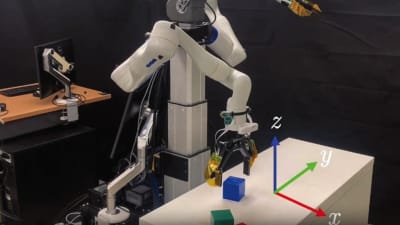
Researchers from MIT and NVIDIA Research have developed a novel algorithm that dramatically speeds up a robot’s planning process. Their approach enables a robot to “think ahead” by evaluating thousands of possible solutions in parallel and then refining the best ones to meet the constraints of the robot and its environment. Read on to learn more.
Briefs: Robotics, Automation & Control
Specialized robots that can both fly and drive typically touch down on land before attempting to transform and drive away. But when the landing terrain is rough, these robots sometimes get stuck and are unable to continue operating. Now a team of Caltech engineers has developed a real-life Transformer that has the “brains” to morph in midair, allowing the dronelike robot to smoothly roll away and begin its ground operations without pause. Read on to learn more.

Briefs: Robotics, Automation & Control
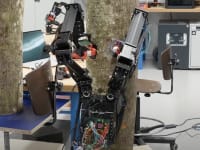
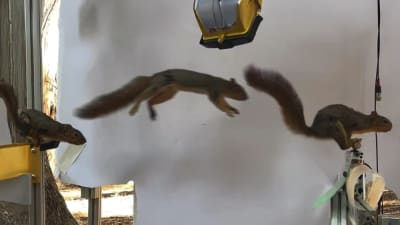
University of California Berkeley biologists and engineers have designed a hopping robot that can stick a landing on a narrow perch. The feat is a big step in the design of more agile robots, ones that can leap among the trusses and girders of buildings under construction or robots that can monitor the environment in tangled forests or tree canopies. Read on to learn more.
Briefs: Robotics, Automation & Control
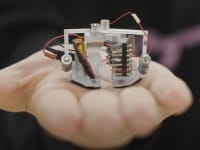
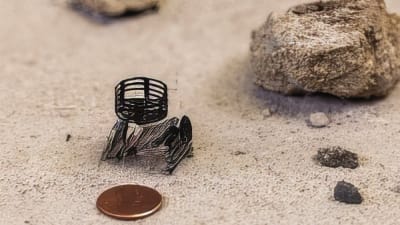
Researchers have developed a compact and versatile robot that can maneuver through tight spaces and transport payloads much heavier than itself. Smaller than a credit card and weighing 6 grams, the nimble swimming robot is ideal for environments with limited space like rice fields, or for performing inspections in waterborne machines. Read on to learn more.

Briefs: Mechanical & Fluid Systems
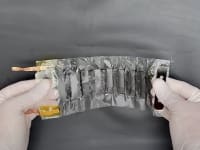
It’s a game a lot of us played as children — and maybe even later in life: unspooling measuring tape to see how far it would extend before bending. But to engineers at the University of California San Diego, this game was an inspiration, suggesting that measuring tape could become a great material for a robotic gripper. Read on to learn more about their robot, GRIP-tape.

Briefs: Robotics, Automation & Control
The piezoelectric “meta-bot” is capable of propulsion, movement, sensing, and decision-making.
Briefs: Imaging
Innovators at NASA Johnson Space Center have developed a robotic system whose primary structural platform, or “orb,” can be injected into a pipe network and perform reconnaissance of piping infrastructure and other interior volumes. When deployed, this technology uses throttled fluid flow from a companion device for passive propulsion. Read on to learn more.

Top Stories
 Blog: Power

My Opinion: We Need More Power Soon — Is Nuclear the Answer?
 Blog: AR/AI
Aerial Microrobots That Can Match a Bumblebee's Speed
 News: Energy

 Blog: Electronics & Computers

Turning Edible Fungi into Organic Memristors
 Blog: Robotics, Automation & Control

Microscopic Swimming Machines that Can Sense, Respond to Surroundings
 INSIDER: Sensors/Data Acquisition

Webcasts
 Upcoming Webinars: Energy

Hydrogen Engines Are Heating Up for Heavy Duty
 Upcoming Webinars: Electronics & Computers

Advantages of Smart Power Distribution Unit Design for Automotive...
 Upcoming Webinars: Unmanned Systems

Quiet, Please: NVH Improvement Opportunities in the Early Design...
 Upcoming Webinars: AR/AI

From Spreadsheets to Insights: Fast Data Analysis Without Complex...
 Upcoming Webinars: Automotive

Battery Abuse Testing: Pushing to Failure
 Upcoming Webinars: AR/AI