51
-1
300
30
Briefs: Aerospace
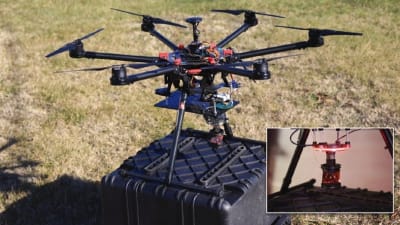
Wire-connected drones may complement or replace the fixed base stations of cellular communications networks.

Briefs: Sensors/Data Acquisition
This robotic finger has a highly precise sense of touch over a complex, multi-curved surface.
Briefs: Robotics, Automation & Control
The robot’s extendable appendage can wind through tight spaces and then lift heavy loads.

Briefs: Robotics, Automation & Control
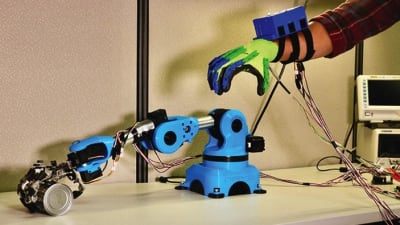
This method enables users to control their robotic fingers precisely enough to gently land on fragile surfaces.
Briefs: Sensors/Data Acquisition
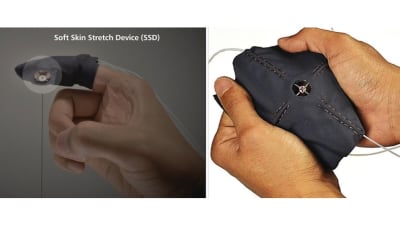
The soft, wearable device simulates the sense of touch and has wide potential in medical and industrial applications.
Briefs: Mechanical & Fluid Systems
Kirigami balloons could be used in shape-changing actuators for soft robots, minimally invasive surgical devices, and macro structures for space exploration.

Briefs: Robotics, Automation & Control
This system can be used for long-range or high-payload deliveries as well as search and rescue.

Briefs: RF & Microwave Electronics
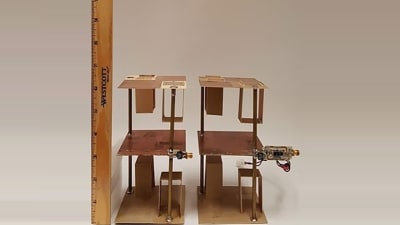
A low-frequency antenna with enhanced bandwidth will enable robust networking among compact, mobile robots.
Briefs: Motion Control
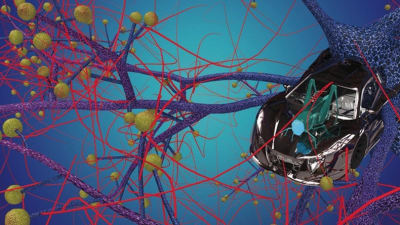
This detector could help robots, drones, and self-driving cars avoid collisions.
Briefs: Robotics, Automation & Control
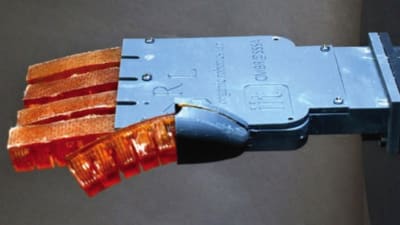
These hands, with a large grasping force, enable safer human-robot interactions.

Briefs: Motion Control
Applications include retractable covers and awnings, camera booms, and spacecraft and astronaut positioning.

Briefs: Manufacturing & Prototyping
The robot blocks jump, spin, flip, and identify each other.

Briefs: Energy
Adaptable automation reduces manufacturing time and costs.

Briefs: Electronics & Computers
This technology enables robots, electronic devices, and prosthetic devices to feel pain through sense of touch.

Briefs: Imaging
Future robots could be taught how to outperform humans.
Briefs: Robotics, Automation & Control
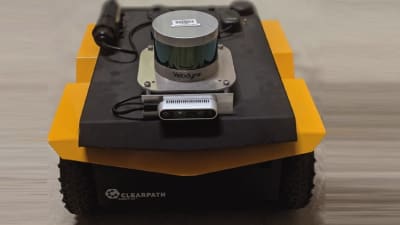
The Tentacle Bot can grip, move, and manipulate a wide range of objects.

Briefs: Robotics, Automation & Control
This form of thermal management can help enable untethered, high-powered robots to operate for long periods of time without overheating.
Briefs: Photonics/Optics
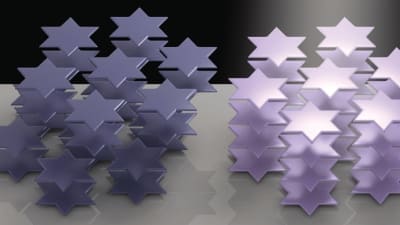
See how tantalum disulfide is supporting new kinds of optics, and potentially new kinds of application for VR and self-driving cars.
Briefs: Photonics/Optics
MIT engineers are envisioning robots more like home helpers.

Briefs: Robotics, Automation & Control
This technology can work with multiple wavelengths of light simultaneously.
Briefs: Electronics & Computers
Fully integrated flexible electronics made of magnetic sensors and organic circuits open the path towards the development of electronic skin.

Briefs: RF & Microwave Electronics
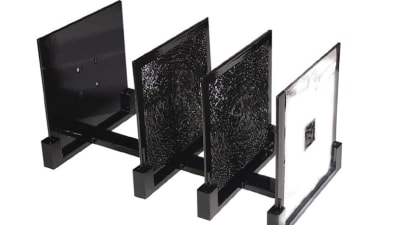
This system has a capacity of more than 1,500 times the volume of a typical testing facility.
Briefs: Robotics, Automation & Control
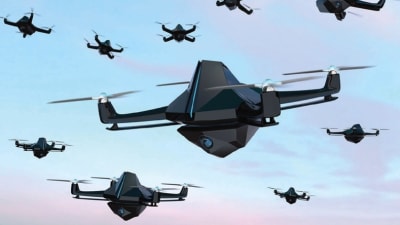
The learning approach allows swarms of unmanned vehicles to optimally accomplish their mission while minimizing performance uncertainty.
Briefs: Imaging
Tiny aircraft that weigh as much as a fruit fly could serve as Martian atmospheric probes.

Briefs: Photonics/Optics
This method could impact optical technologies such as smartphone cameras, biosensors, or autonomous vision for robots and self-driving cars.

Briefs: Aerospace
This capability will optimize performance of the vehicle through different phases of flight.

Briefs: Medical
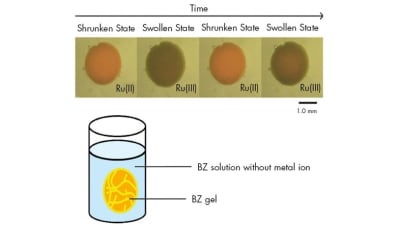
A soft hydrogel, driven by an oscillatory chemical reaction, produces an autonomous integrated pump for microfluidic applications.
Briefs: Robotics, Automation & Control
This mini robot improves precision and control of teleoperated surgical procedures.

Briefs: Robotics, Automation & Control
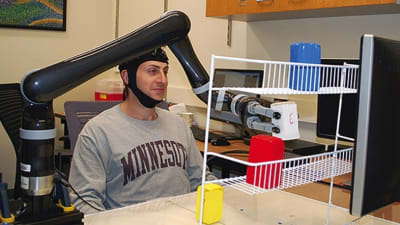
This technique can be used by people who are paralyzed or have neurodegenerative diseases.
Top Stories
 Blog: Power

My Opinion: We Need More Power Soon — Is Nuclear the Answer?
 Blog: AR/AI

Aerial Microrobots That Can Match a Bumblebee's Speed
 News: Energy

 Blog: Electronics & Computers

Turning Edible Fungi into Organic Memristors
 Blog: Robotics, Automation & Control

Microscopic Swimming Machines that Can Sense, Respond to Surroundings
 INSIDER: Sensors/Data Acquisition

Webcasts
 Upcoming Webinars: Energy

Hydrogen Engines Are Heating Up for Heavy Duty
 Upcoming Webinars: Electronics & Computers

Advantages of Smart Power Distribution Unit Design for Automotive...
 Upcoming Webinars: Automotive

Quiet, Please: NVH Improvement Opportunities in the Early Design...
 Upcoming Webinars: AR/AI

From Spreadsheets to Insights: Fast Data Analysis Without Complex...
 Upcoming Webinars: Test & Measurement

Battery Abuse Testing: Pushing to Failure
 Upcoming Webinars: Power