34,35
-1
900
30
Briefs: Photonics/Optics
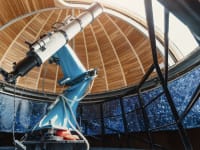
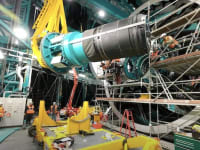
A Novel Orbiting Cloud Imager System for IR/UV/X-Ray Bands
Typically, the cost of a spaceborne imaging system is driven by the size and mass of the primary aperture. Innovative solutions for imagers that are less complex and are lightweight are very desirable. Currently, telescopes such as JWST and ATLAST are very expensive and very complex.
Briefs: Imaging
3D Imaging Laser System
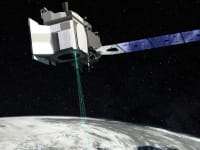
NASA’s Goddard Space Flight Center has developed a non-scanning, 3D imaging laser system that uses a simple lens system to simultaneously generate a one-dimensional or two-dimensional array of optical (light) spots to illuminate an object, surface, or image to generate a topographic profile.
Briefs: Imaging
NASA’s Langley Research Center researchers have developed an automatic measurement and control method for smart image enhancement. Pilots, doctors, and photographers will benefit from this innovation that...

Briefs: Imaging
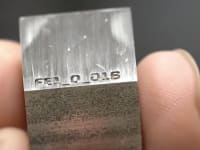
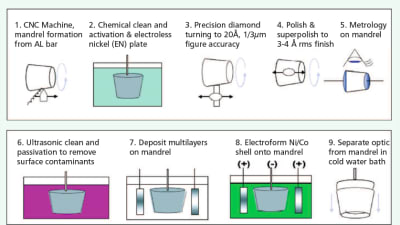
NASA’s Marshall Space Flight Center has developed novel neutron grazing incidence optics for use with small-scale portable neutron generators. The technology was...
Briefs: Imaging
A new smart camera developed at NASA’s Glenn Research Center has the ability to process and transmit valuable edge location data for the images that it captures — at a rate...

Briefs: Imaging
Scientists at NASA’s Glenn Research Center have successfully developed a novel subcutaneous structure imager for locating veins...

Briefs: Imaging
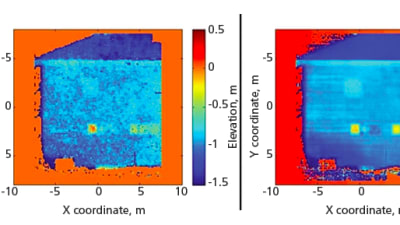
NASA’s Langley Research Center has developed 3D imaging technologies (Flash LIDAR) for real-time terrain mapping and synthetic...
Briefs: Imaging
High-performance thermal imagers like Mars Climate Sounder (MCS) on the Mars Reconnaissance Orbiter (MRO) and the Diviner Lunar Radiometer Experiment on the Lunar...
Briefs: Imaging
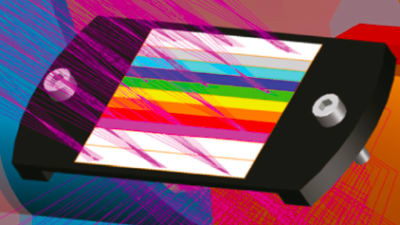
Digital holography is a fast-growing field in optics, recently spurred by the advent of large-format digital cameras and high-speed computers. This method provides a time-series of volumetric...
Briefs: Imaging
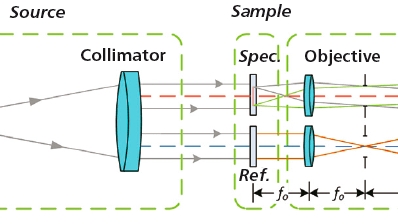
Smartphone Video Guidance Sensor
The need arose to apply the state determination algorithms developed for the Advanced Video Guidance Sensor autonomous rendezvous and docking (AR&D) sensor onto a commercial off-the-shelf (COTS), smartphone-based platform to create a lower-mass, lower-cost sensor for small satellite and CubeSat applications....
Briefs: Imaging
A Smooth-Walled Feedhorn with Sub-30-dB Cross-Polarization Over a 30-Percent Bandwidth
The focus of this research was the design, optimization, and measurement of a monotonically profiled, smooth-walled scalar feedhorn with a diffraction-limited ~14° FWHM (full width at half maximum). It is an easier-to-manufacture, smooth-walled feed that...
Briefs: Photonics/Optics
Partially Transparent Circular Mask to Suppress Narrowband Laser Light
The evolved Laser Interferometry Space Antenna (eLISA) is the implementation of the original Laser Interferometry Space Antenna (LISA) concept that will be proposed for the European Space Agency’s (ESA) L.3 Cosmic Visions opportunity. The eLISA observatory uses lasers to range...
Briefs: Photonics/Optics
Characterizing Richness of Previously Unmapped Terrain and Estimating its Impact on Navigation Performance using 3D Range Sensors in Flight
Landers to large planetary bodies such as Mars typically use a secondary reconnaissance spacecraft to generate high-fidelity 3D terrain maps that are subsequently used for landing site selection and creating...
Briefs: Imaging
Measurements of the cosmic micro wave background are a powerful probe of the early universe. Part-per-million fluctuations in the intensity of background trace the initial...

Briefs: Imaging
A Novel Orbiting Cloud Imager System for IR/UV/X-Ray Bands
Typically, the cost of a spaceborne imaging system is driven by the size and mass of the primary aperture. Innovative solutions for imagers that are less complex and are lightweight are very desirable. Currently, telescopes such as JWST and ATLAST are very expensive and very complex.
Briefs: Imaging
One-Micron (1064-nm) Planar External Cavity Laser (PLANEX)
A highly reliable, very low-phase and low-amplitude-noise laser is required as an oscillator for the LISA mission. A commercial product made by Redfern Integrated Optics met these requirements (1550 nm PLANEX External Cavity Laser), but it operated at 1.5 microns, not the required LISA...
Briefs: Mechanical & Fluid Systems
Micro Cylindrical Ion Trap Micro Mass Spectrometer Instrument System
The goal of this work was to advance the development of new, extremely small (≈2 cm3), low-power (≈3 W), and low-cost micro mass spectrometer instrument systems (μMSIS) through the application of microelectro-mechanical system (MEMS) design and fabrication, and microsystem...
Briefs: Photonics/Optics
Invertible Time Invariant Linear Filtering (InTILF) Method for Pattern Detection and Modeling of Stochastic One- or Two- Dimensional Data
X-ray astronomy offers the opportunity to observe important phenomena, including the early accretion of massive black holes and detecting diffuse ionized intergalactic gas that is heated to X-ray temperatures...
Briefs: Photonics/Optics
High-performance thermal imagers like Mars Climate Sounder (MCS) on the Mars Reconnaissance Orbiter (MRO) and the Diviner Lunar Radiometer Experiment on the Lunar...

Briefs: Photonics/Optics
Characterizing Richness of Previously Unmapped Terrain and Estimating its Impact on Navigation Performance using 3D Range Sensors in Flight
Landers to large planetary bodies such as Mars typically use a secondary reconnaissance spacecraft to generate high-fidelity 3D terrain maps that are subsequently used for landing site selection and creating...
Briefs: Imaging
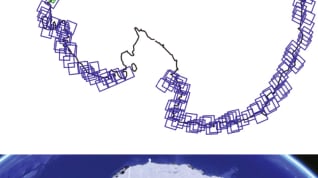
The Adélie penguin has a circum-Antarctic distribution and is widely considered a useful indicator of status and change in the Antarctic and Southern Ocean ecosystems....
Briefs: Photonics/Optics
Photogrammetric-Based Pose Initialization and Propagation for Inertial Navigation Systems
The purpose of the Pose Initialization and Propagation (PIP) system is to provide an absolute navigational solution (position, velocity, and attitude) to a moving vehicle without using GPS. This was developed as a navigation system for rocket launches in a...
Briefs: Imaging
Tunable laser absorption spectrometer (TLAS) sensors enable gas monitoring with high accuracy and gas specificity, and can be optimized for continuous,...

Briefs: Photonics/Optics
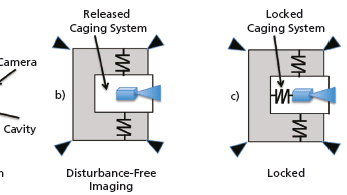
All imaging systems from space are affected by disturbances originating in the spacecraft in the form of mechanical noise from thruster and reaction/momentum wheels, and sensor noise. A...
Briefs: Photonics/Optics
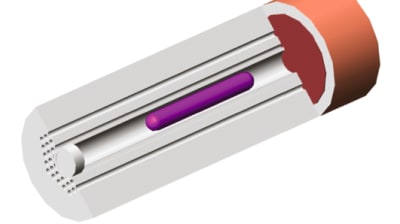
The mercury linear ion trap frequency standard (LITS) at JPL has been demonstrated to have multiple potential applications in NASA deep space missions. An increase of the...
Briefs: Imaging
3D Imaging Technology and System
All current cameras and imaging systems have the same classical problem in practical applications. To complete the observation task, a large amount of data is captured, processed, and transmitted; then most of the data is discarded because it is not essential for the given observation task. The problem comes from...
Briefs: Imaging
Virtual Windows to Supplement Conventional Spacecraft Windows
Legacy NASA spacecraft windows suffer from specialized costs and operational constraints associated with embedding optically transparent apertures within structures that are designed to maximize strength, safety, and environmental integrity. A new approach to the legacy window solution...
Briefs: Photonics/Optics
SCaN Optical Link Assessment Tool Version 2
In response to the requirements of the Space-Based Relay Study (SBRS) undertaken by NASA in 2013, as well as the Integrated Radio and Optical Communications (iROC) project being conducted by NASA Glenn Research Center (GRC) beginning in 2012, a calculation procedure was required to rapidly assess the...
Briefs: Photonics/Optics
Optical Correlation Receiver
Precise distance, time, and pulse width measurements are required for many areas of science and engineering. Time-of-flight methods are often used to measure remote distances. Optical signals are attractive because the small wavelength allows small transmit and receive telescopes. Short pulsed lasers are attractive...
Top Stories
 Blog: Lighting

A Stretchable OLED that Can Maintain Most of Its Luminescence
 News: Energy

 INSIDER: Energy

Advancing All-Solid-State Batteries
 Blog: Energy

My Opinion: We Need More Power Soon — Is Nuclear the Answer?
 Blog: Robotics, Automation & Control

Aerial Microrobots That Can Match a Bumblebee's Speed
 Blog: Communications

Microscopic Swimming Machines that Can Sense, Respond to Surroundings
Webcasts
 Upcoming Webinars: Transportation

Advantages of Smart Power Distribution Unit Design for Automotive...
 Upcoming Webinars: Transportation

Quiet, Please: NVH Improvement Opportunities in the Early Design...
 Upcoming Webinars: AR/AI

From Spreadsheets to Insights: Fast Data Analysis Without Complex...
 Upcoming Webinars: Defense

Cooling a New Generation of Aerospace and Defense Embedded...
 Upcoming Webinars: AR/AI

Beyond AI-Copy-Paste Engineering: Advanced AI-Integration Success...
 Upcoming Webinars: Energy