
Stories
38
0
1350
30
INSIDER: Energy
A team of University of Arkansas physicists has successfully developed a circuit capable of capturing graphene’s thermal motion and converting it into an electrical current.

Question of the Week: Medical
Will RepelWrap Catch On?
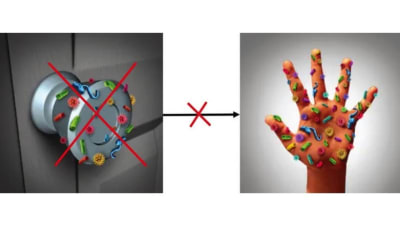
A material called "RepelWrap" won this year's "Create the Future" Design Contest. The thin film, invented by researchers at McMaster University, instantly fends off viruses and bacteria when the material is placed on a surface, including a door handle or railing.
INSIDER: Manufacturing & Prototyping
Researchers at the University of Nottingham have cracked the conundrum of how to use inks to 3D-print novel electronic devices with useful properties, such as an ability...

Briefs: Mechanical & Fluid Systems
Kirigami balloons could be used in shape-changing actuators for soft robots, minimally invasive surgical devices, and macro structures for space exploration.

Briefs: Wearables
Researchers developed a wearable technology that can hide its wearer from heat-detecting sensors such as night vision goggles, even when the ambient temperature changes. The technology can...

Articles: Electronics & Computers
Jacobs' scientists are helping to make contract-tracing apps, emergency-use ventilators, and even squid-bots.
Briefs: Sensors/Data Acquisition
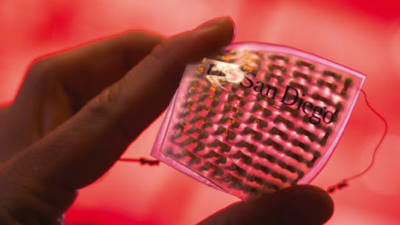
The soft, wearable device simulates the sense of touch and has wide potential in medical and industrial applications.
Briefs: Photonics/Optics
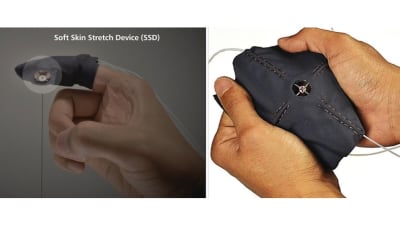
Invisible displays on walls and windows would be bright when turned on but invisible when turned off.

Articles: Sensors/Data Acquisition
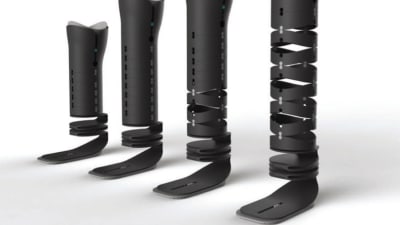
The conceptual Ring prosthetic leg ensures that individuals do not need an entirely new device every time they have a growth spurt.
Articles: Manufacturing & Prototyping
Read all about this year's "Create the Future" winner: A transparent flexible film called "RepelWrap."
Briefs: Robotics, Automation & Control
The robot’s extendable appendage can wind through tight spaces and then lift heavy loads.

Q&A: Photonics/Optics
See how Dr. Andrei Kolmakov and his team are using low-energy electron beams to 3D-print tiny gel structures in liquids.

Articles: Materials
Robotic exoskeletons, a breath-test for cancer, and plastic-eating enzymes are Products of Tomorrow.

Products: Software
Mixed-signal oscilloscopes, 3D printers, DC/DC converters, and more.

Articles: Energy
A new process can turn bulk quantities of just about any carbon source into valuable graphene flakes.

Briefs: Energy
Method Tests Microscopic Aeronautical Materials
This process breaks the temperature barrier in small-scale materials testing.
Articles: Energy
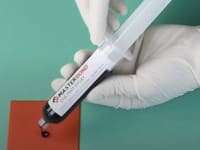
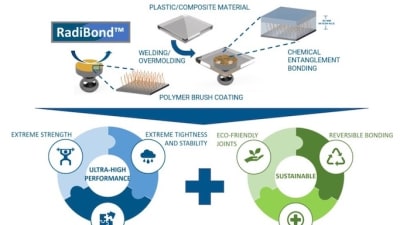
RadiBond technology, based on nanometer-thin coatings, provides ultra-strong and ultra-tight bonding between metals and plastics.
Briefs: Mechanical & Fluid Systems
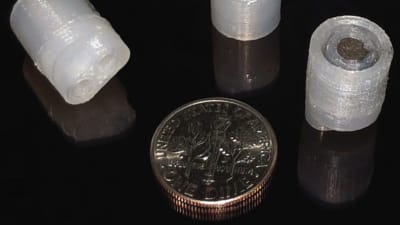
The magnetic, multi-material pump was 3D-printed all in one piece.
Question of the Week: Manufacturing & Prototyping
Should We Use Chitin to Build on Mars?
In the latest episode of our Tech Briefs podcast series Here's an Idea™, researcher Javier Gomez Fernandez talks about his idea for making habitats on Mars. Fernandez envisions using chitin from insects – and combining the substance with the Martian soil – to create a kind of sustainable building...
Question of the Week: Energy
Will Indoor Light Someday Power Our Smart Devices?
Our lead INSIDER story today looks at “perovskite-inspired” materials that can absorb indoor light at higher efficiencies than ever before.
Blog: Energy
A new material is especially effective at absorbing indoor light and converting it into usable energy.
News: Motion Control
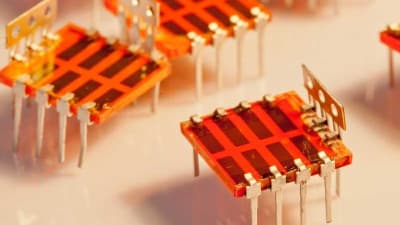
Scientists at Oak Ridge National Laboratory (ORNL) have used new techniques to create a composite that increases the electrical current capacity of copper wires, providing a material that...

News: Materials
A new lithium-based electrolyte invented by Stanford University scientists could pave the way for the next generation of battery-powered electric vehicles (EVs). Their electrolyte design...
Blog: Materials
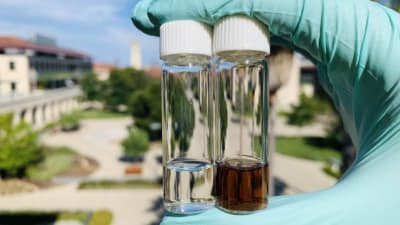
The RepelWrap inventors explain why their product is especially valuable as the world confronts a pandemic like COVID-19.

INSIDER: Imaging
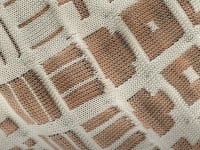
Researchers at Empa and ETH Zurich succeeded in developing a material that works like a luminescent solar concentrator and can even be applied to textiles. This opens up numerous possibilities for...

Application Briefs: Manufacturing & Prototyping
With Nikon's Layer Thickness software module, comprehensive information about a specimen is obtained more quickly than if an operator is making all the measurements by hand.

Briefs: Automotive
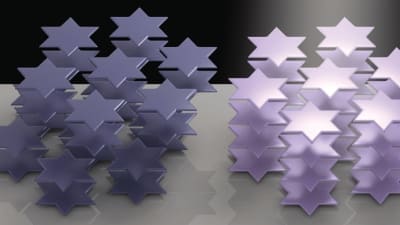
See how tantalum disulfide is supporting new kinds of optics, and potentially new kinds of application for VR and self-driving cars.
Application Briefs: Lighting
Creating next-generation LEDs for novel efforts like COVID-19 decontamination requires LED manufacturers to reevaluate the materials that they’re using.

Briefs: Photonics/Optics
With low-cost materials called perovskites, stable, continuous lasing is achieved at room temperature for over an hour.

Top Stories
 Blog: Robotics, Automation & Control

Aerial Microrobots That Can Match a Bumblebee's Speed
 Blog: Electronics & Computers

Turning Edible Fungi into Organic Memristors
 Blog: Manufacturing & Prototyping

Revolutionizing the Production of Semiconductor Chips
 News: Energy

 INSIDER: Electronics & Computers

World’s Smallest Programmable, Autonomous Robots
 INSIDER: Manufacturing & Prototyping

Webcasts
 On-Demand Webinars: Power

E/E Architecture Redefined: Building Smarter, Safer, and Scalable Vehicles
 Upcoming Webinars: Energy

Hydrogen Engines Are Heating Up for Heavy Duty
 Upcoming Webinars: Electronics & Computers

Advantages of Smart Power Distribution Unit Design for Automotive...
 Upcoming Webinars: Automotive

Quiet, Please: NVH Improvement Opportunities in the Early Design...
 Upcoming Webinars: Power

A FREE Two-Day Event Dedicated to Connected Mobility
 Podcasts: Defense

How Sift's Unified Observability Platform Accelerates Drone Innovation