
Stories
36,38
0
330
30
Articles: Materials
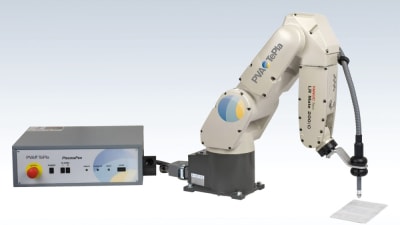
By leveraging plasma pen technology into inline processes, manufacturers can achieve stronger, more reliable bonds, improved wettability, and enhanced performance across various materials. Read on to learn more about what this means.
Articles: Electronics & Computers
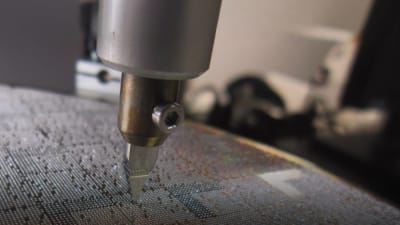
The U.S. government’s microelectronics needs have evolved significantly over the decades. Now, we have entered the era of Advanced Packaging. This is the next microelectronics evolution to enhance and extend the performance of modern military and commercial systems. Read on to learn more about this.
White Papers: Manufacturing & Prototyping

Team Collaboration & PCB Design
There was a time when PCB design was handled by a single designer after the circuit was completed. Today, with complex products like tablets, smartphones, and electronic games, PCB design involves teams of...Special Reports: Aerospace
Aerospace Manufacturing - February 2025
The future of AI for aerospace manufacturing…3D‐printed engines propel next industrial revolution…engineering a new approach to satellite design. Read these and other advances in this compendium of...News: Software
Designers, engineers, entrepreneurs, makers, and students gathered at Dassault Systèmes' 3DEXPERIENCE World 2025 event in Houston, TX, from February 23-26, to explore how AI is transforming design and manufacturing.

Quiz: Software
In the last decade or so, sports engineering has become very popular across the world. How much do you know about it? Take this quiz to test your knowledge.

White Papers: Manufacturing & Prototyping
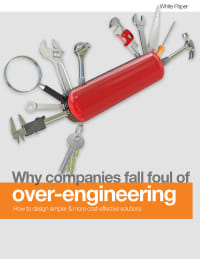
Avoid Over-engineering and Design Simpler, More Cost-effective Equipment
Over-engineering is a common source of additional design costs, yet without the benefit of improved performance or quality. Read this white paper for strategies to help...On-Demand Webinars: Manufacturing & Prototyping

The demand for custom, low-production molds for prototyping or seasonal products is on the rise. Traditional mold-making processes are costly and time intensive, creating...
Blog: Manufacturing & Prototyping
Auxilium Biotechnologies has successfully deployed its 3D bioprinter aboard the ISS. The platform is the first of its kind, making history by printing eight implantable medical devices simultaneously in just two hours.

Q&A: Robotics, Automation & Control
Qing “Cindy” Chang and her team at the University of Virginia have made a significant advancement in manufacturing technology by developing an AI-driven system that could transform how factories operate. Using Multi-Agent Reinforcement Learning (MARL), the team has created a more efficient way to optimize manufacturing systems, improving both speed and quality while reducing waste.

Quiz: Manufacturing & Prototyping
Almost everyone has a microwave oven, but do you really understand how they work? How much do you know about microwave heating? Test your knowledge with this quiz.

White Papers: Automotive

Achieve Your Power Electronics Design Requirements with Customized Silicone Solutions
Electronics are fundamental to products and equipment across nearly every industry in order to function effectively and reliably. Electronics must be...INSIDER: Sensors/Data Acquisition
Researchers at the University of California, Irvine and New York’s Columbia University have embedded transistors in a soft, conformable material to create a biocompatible sensor implant that monitors...

INSIDER: Physical Sciences
The electronics industry is approaching a limit to the number of transistors that can be packed onto the surface of a computer chip. So, chip manufacturers are looking to build up rather than out.

Podcasts: Unmanned Systems
On the first episode of Season 7 of the Aerospace & Defense Technology podcast, Dom Koenig, Marketing Manager, Kairos Autonomi, explains how the UxV/35 standard could be used to lower the cost of designing and manufacturing drones in the future.

Special Reports: Electronics & Computers
Award–Winning Inventions - February 2025
The Create the Future Design Contest recognizes and rewards engineering innovations that promise a better tomorrow. In this special report, learn about the amazing winners chosen in 2024 from hundreds...Articles: Materials
See the products of tomorrow, including a nanorobotic hand made of DNA that can grab viruses for detection or inhibition developed at the University of Illinois Urbana-Champaign; a new and improved wearable ultrasound patch for continuous and noninvasive blood pressure monitoring developed at the University of California San Diego; and soft and intelligent sensor materials based on ceramic particles developed at Empa’s Laboratory for High-Performance Ceramics.

Briefs: Software
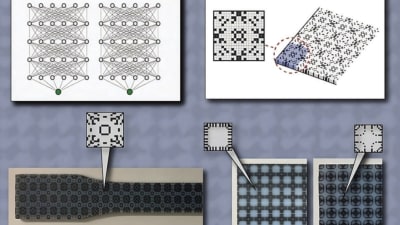
A team at MIT has moved beyond traditional trial-and-error methods to create materials with extraordinary performance through computational design. Their new system integrates physical experiments, physics-based simulations, and neural networks to navigate the discrepancies often found between theoretical models and practical results. Read on to learn more.
Briefs: Materials
NASA Kennedy Space Center engineers developed a Cryogenic Oxygen Storage Module to store oxygen in solid-state form and deliver it as a gas to an end-use environmental control and/or life support system. Read on to learn more about it.
Briefs: Materials
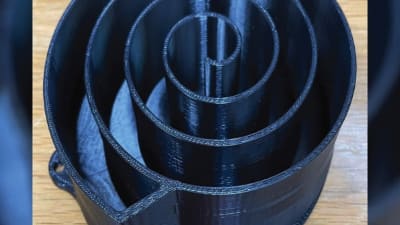
NASA’s Cryogenic Flux Capacitor capitalizes on the energy storage capacity of liquefied gases. By exploiting a unique attribute of nano-porous materials, aerogel in this case, fluid commodities such as oxygen, hydrogen, methane, etc. can be stored in a molecular surface-adsorbed state. Read on to learn more.

Briefs: Manufacturing & Prototyping
A recent study demonstrates that soft skin pads doubling as sensors made from thermoplastic urethane can be efficiently manufactured using 3D printers. Read on to learn more.

Briefs: Manufacturing & Prototyping
A research team led by Associate Professor Tao Sun has made new discoveries that can expand additive manufacturing in aerospace and other industries that rely on strong metal parts. Read on to learn more.

Briefs: Photonics/Optics
Researchers in the emerging field of spatial computing have developed a prototype augmented reality headset that uses holographic imaging to overlay full-color, 3D moving images on the lenses of what would appear to be an ordinary pair of glasses. Read on to learn more about it.

Briefs: Software
This advance could enable quantum computers that use programmable optical qubits or “spin-photon qubits” to connect quantum nodes across a remote network. It could also advance a quantum internet that is not only more secure but could also transmit more data than current optical-fiber information technologies. Read on to learn more.

Briefs: Green Design & Manufacturing
Worldwide, glass manufacturing produces at least 86 million tons of carbon dioxide every year. A new type of glass aims to cut this carbon footprint in half. Read on to learn more about the invention: LionGlass, engineered at Penn State.

Briefs: Physical Sciences
Researchers have demonstrated the ability to engineer materials that are both stiff and capable of insulating against heat. This combination of properties is extremely unusual and holds promise for a range of applications, such as the development of new thermal insulation coatings for electronic devices. Read on to learn more.

Briefs: Physical Sciences
A future quantum network may become less of a stretch thanks to researchers at the Argonne National Laboratory, the University of Chicago, and Cambridge University. By “stretching” thin films of diamond, they created quantum bits that can operate with significantly reduced equipment and expense. Read on to learn more.

Briefs: Materials
MIT engineers have shown they can prevent cracks from spreading between composite’s layers, using an approach they developed called “nanostitching,” in which they deposit chemically grown microscopic forests of carbon nanotubes between composite layers. Read on to learn more about it.

Articles: Manufacturing & Prototyping
Read on to learn about the factors that go into driving zero defects in today’s intelligent vehicles.
Top Stories
 Blog: Robotics, Automation & Control

Aerial Microrobots That Can Match a Bumblebee's Speed
 Blog: Electronics & Computers

Turning Edible Fungi into Organic Memristors
 Blog: Manufacturing & Prototyping

Revolutionizing the Production of Semiconductor Chips
 News: Energy

 INSIDER: Electronics & Computers

World’s Smallest Programmable, Autonomous Robots
 INSIDER: Manufacturing & Prototyping

Webcasts
 Upcoming Webinars: Software

E/E Architecture Redefined: Building Smarter, Safer, and Scalable...
 Upcoming Webinars: Automotive

Hydrogen Engines Are Heating Up for Heavy Duty
 Upcoming Webinars: Electronics & Computers

Advantages of Smart Power Distribution Unit Design for Automotive...
 Upcoming Webinars: Transportation

Quiet, Please: NVH Improvement Opportunities in the Early Design...
 Upcoming Webinars: AR/AI

A FREE Two-Day Event Dedicated to Connected Mobility
 Podcasts: Manufacturing & Prototyping

How Sift's Unified Observability Platform Accelerates Drone Innovation