
Stories
36,38
0
4710
30
Techs for License: Physical Sciences
Development of Organic Materials that Melt by Light Irradiation
AIST has developed organic materials that melt from solid to liquid with only the irradiation of light, without heating, and can be restored to their original solid state. Unlike irreversible photosensitive resins, which cannot be restored to their original state after their state has...
Briefs: Manufacturing & Prototyping
Although the concept of nanotechnology (controlling matter on an atomic scale) dates back to 1959, it is only now becoming more commercially realized. It has the potential to challenge...
Briefs: Manufacturing & Prototyping
Engineers have long been aware of the potential of laser sintering to create innovative and beneficial medical products. Because it is an additive (layer-by-layer) manufacturing process, laser...

Briefs: Photonics/Optics
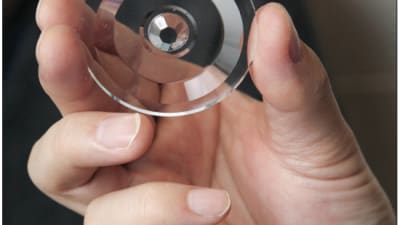
A lens that enables microscopic objects to be seen from nine different angles at once to create a 3D image has been developed. Other 3D microscopes use multiple lenses or cameras that...
Briefs: Manufacturing & Prototyping
Low-Dead-Volume Inlet for Vacuum Chamber
Gas introduction from near-ambient pressures to high vacuum traditionally is accomplished either by multi-stage differential pumping that allows for very rapid response, or by a capillary method that allows for a simple, single-stage introduction, but which often has a delayed response. Another means to...
Briefs: Manufacturing & Prototyping
Infrared-Bolometer Arrays With Reflective Backshorts
Integrated circuits that incorporate square arrays of superconducting-transition-edge bolometers with optically reflective backshorts are being developed for use in image sensors in the spectral range from far infrared to millimeter wavelengths. To maximize the optical efficiency (and, thus,...
Briefs: Manufacturing & Prototyping
Method for Selective Cleaning of Mold Release From Composite Honeycomb Surfaces
Honeycomb structures are commonly employed as load- and force-bearing structures as they are structurally strong and lightweight. These structures include many aircraft and spacecraft surfaces, including aircraft wings and fuselages, spacecraft pressure vessels, and...
Briefs: Manufacturing & Prototyping
Thermal Control Method for High-Current Wire Bundles by Injecting a Thermally Conductive Filler
A procedure was developed to inject thermal filler material (a paste-like substance) inside the power wire bundle coming from solar arrays. This substance fills in voids between wires, which enhances the heat path and reduces wire temperature. This leads...
Briefs: Materials
Commercialization of LARC™-SI Polyimide Technology
LARC™-SI, Langley Research Center-Soluble Imide, was developed in 1992, with the first patent issuing in 1997, and then subsequent patents issued in 1998 and 2000. Currently, this polymer has been successfully licensed by NASA, and has generated revenues, at the time of this reporting, in...
Briefs: Materials
Novel Low-Density Ablators Containing Hyperbranched Poly(azomethine)s
An ablative composite is low-density (0.25 to 0.40 g/cm3), easy to fabricate, and superior to the current state-of-the-art ablator (phenolic impregnated carbon ablator, PICA) in terms of decomposition temperature, char yield, and mechanical strength. Initial ablative testing with...
Briefs: Materials
Carbon Nanotubes on Titanium Substrates for Stray Light Suppression
A method has been developed for growing carbon nanotubes on a titanium substrate, which makes the nanotubes ten times blacker than the current state-of-the-art paints in the visible to near infrared. This will allow for significant improvement of stray light performance in...
Articles: Manufacturing & Prototyping
The Create the Future Design Contest was launched in 2002 by the publishers of NASA Tech Briefs to help stimulate and reward engineering innovation. The competition has attracted...

Briefs: Manufacturing & Prototyping
Carbon Nanotube-Based Structural Health Monitoring Sensors
Carbon nanotube (CNT)-based sensors for structural health monitoring (SHM) can be embedded in structures of all geometries to monitor conditions both inside and at the surface of the structure to continuously sense changes. These CNTs can be manipulated into specific orientations to create...
Briefs: Manufacturing & Prototyping
A recent collaboration between the Whitesides Group at Harvard University and CSM Instruments has culminated in an important advance in lithography of different...

Briefs: Manufacturing & Prototyping
Mount Protects Thin-Walled Glass or Ceramic Tubes From Large Thermal and Vibration Loads
The design allows for the low-stress mounting of fragile objects, like thin walled glass, by using particular ways of compensating, isolating, or releasing the coefficient of thermal expansion (CTE) differences between the mounted object and the mount itself....
Briefs: Materials
Fire-Retardant Polymeric Additives
Polyhydroxyamide (PHA) and polymethoxyamide (PMeOA) are fire-retardant (FR) thermoplastic polymers and have been found to be useful as an additive for imparting fire retardant properties to other compatible, thermoplastic polymers (including some elastomers). Examples of compatible flammable polymers include...
Briefs: Materials
A lift-gas cracker (LGC) is an apparatus that generates a low-molecular-weight gas (mostly hydrogen with smaller amounts of carbon monoxide and/or carbon dioxide) at low gauge pressure by methanol...

Briefs: Materials
Ionic Liquids to Replace Hydrazine
A method for developing safe, easy-to-handle propellants has been developed based upon ionic liquids (ILs) or their eutectic mixtures. An IL is a binary combination of a typically organic cation and anion, which generally produces an ionic salt with a melting point below 100 °C. Many ILs have melting points near,...
Briefs: Materials
Variable Emittance Electrochromics Using Ionic Electrolytes and Low Solar Absorptance Coatings
One of the last remaining technical hurdles with variable emittance devices or skins based on conducting polymer electrochromics is the high solar absorptance of their top surfaces. This high solar absorptance causes overheating of the skin when facing...
Blog: Manufacturing & Prototyping
Susie Prototyper
Ideally, the concept of "on demand" shouldn't limit itself to pay-per-view movies. If 3D printers were widely available in every household, consumers could quickly "demand" and fabricate specialized food and other objects at the touch of a button. Scientists in the emerging field of "bioprinting" are even attempting to make it...
Briefs: Manufacturing & Prototyping
Range 7 Scanner Integration With PaR Robot Scanning System
An interface bracket and coordinate transformation matrices were designed to allow the Range 7 scanner to be mounted on the PaR Robot detector arm for scanning the heat shield or other object placed in the test cell. A process was designed for using Rapid Form XOR to stitch data from...
Briefs: Manufacturing & Prototyping
High-Operating-Temperature Barrier Infrared Detector With Tailorable Cutoff Wavelength
A mid-wavelength infrared (MWIR) barrier photodetector is capable of operating at higher temperature than the prevailing MWIR detectors based on InSb. The standard high-operating-temperature barrier infrared detector
(HOT-BIRD) is made with an InAsSb infrared...
Briefs: Manufacturing & Prototyping
Methods of Antimicrobial Coating of Diverse Materials
Methods of coating diverse substrate materials with antimicrobial agents have been developed. Originally intended to reduce health risks to astronauts posed by pathogenic microorganisms that can grow on surfaces in spacecraft, these methods could also be used on Earth — for example, to ensure...
Briefs: Manufacturing & Prototyping
Antimicrobial-Coated Granules for Disinfecting Water
Methods of preparing antimicrobial-coated granules for disinfecting flowing potable water have been developed. Like the methods reported in the immediately preceding article, these methods involve chemical preparation of substrate surfaces (in this case, the surfaces of granules) to enable...
Briefs: Materials
A Model of Reduced Kinetics for Alkane Oxidation Using Constituents and Species for N-Heptane
The reduction of elementary or skeletal oxidation kinetics to a subgroup of tractable reactions for inclusion in turbulent combustion codes has been the subject of numerous studies. The skeletal mechanism is obtained from the elementary mechanism by...
Briefs: Materials
Thermally Conductive Tape Based on Carbon Nanotube Arrays
To increase contact conductance between two mating surfaces, a conductive “tape” has been developed by growing dense arrays of carbon nanotubes (CNTs, graphite layers folded into cylinders) on both sides of a thermally conductive metallic foil. When the two mating surfaces are brought...
Briefs: Materials
Lightweight, Ultra-High-Temperature, CMC-Lined Carbon/Carbon Structures
lished engineering material used extensively in aerospace. The beneficial properties of C/C include high strength, low density, and toughness. Its shortcoming is its limited usability at temperatures higher than the oxidation temperature of carbon — approximately 400 °C....
Briefs: Materials
Two Catalysts for Selective Oxidation of Contaminant Gases
Two catalysts for the selective oxidation of trace amounts of contaminant gases in air have been developed for use aboard the International Space Station. These catalysts might also be useful for reducing concentrations of fumes in terrestrial industrial facilities — especially facilities...
Briefs: Materials
Nanoscale Metal Oxide Semiconductors for Gas Sensing
A report describes the fabrication and testing of nanoscale metal oxide semiconductors (MOSs) for gas and chemical sensing. This document examines the relationship between processing approaches and resulting sensor behavior. This is a core question related to a range of applications of...
Top Stories
 Blog: Robotics, Automation & Control

Aerial Microrobots That Can Match a Bumblebee's Speed
 Blog: Electronics & Computers

Turning Edible Fungi into Organic Memristors
 Blog: Manufacturing & Prototyping

Revolutionizing the Production of Semiconductor Chips
 News: Energy

 INSIDER: Electronics & Computers

World’s Smallest Programmable, Autonomous Robots
 INSIDER: Manufacturing & Prototyping

Webcasts
 Upcoming Webinars: Software

E/E Architecture Redefined: Building Smarter, Safer, and Scalable...
 Upcoming Webinars: Automotive

Hydrogen Engines Are Heating Up for Heavy Duty
 Upcoming Webinars: Electronics & Computers

Advantages of Smart Power Distribution Unit Design for Automotive...
 Upcoming Webinars: Transportation

Quiet, Please: NVH Improvement Opportunities in the Early Design...
 Upcoming Webinars: AR/AI

A FREE Two-Day Event Dedicated to Connected Mobility
 Podcasts: Manufacturing & Prototyping

How Sift's Unified Observability Platform Accelerates Drone Innovation