
Stories
35
0
30
30
Briefs: Sensors/Data Acquisition
Known as FOSS (for fiber optic sensing system), NASA’s technology portfolio combines advanced sensors and innovative algorithms into a robust package that accurately and cost-effectively monitors a host of critical parameters in real time. Read on to learn more.

Products: Electronics & Computers
See the new products, including the VITA 93 QMC Mezzanine Modules from Acromag; fiber-optic sensors of the optoCONTROL CLS1000 series from Micro-Epsilon; AW-Lake's TG Series Gas Turbine Flow Meter; NewTek Sensors' advanced Linear Variable Differential Transformer specifically designed to withstand the extreme environments found in next-gen molten salt reactors; and more.

Special Reports: Aerospace
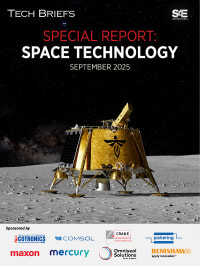
Space Technology - September 2025
Blue Ghost, an historic lunar mission, is paving the way for future crewed endeavors and long‐term surface operations under NASA's Artemis campaign. Read about this and other recent advances in a compendium...INSIDER: Imaging
The Silicon Technology for Applications Relying on Light with Photonics Devices (STARLight) project brings together a consortium of leading industrial and...

Quiz: Photonics/Optics
Television was king during the second half of the 20th century — what do you know about the history of the technology?

5 Ws: Photonics/Optics
North Carolina State University engineers have built a tiny spectrometer that is orders of magnitude smaller than current technologies and can accurately measure wavelengths of light from ultraviolet to the near infrared.

Articles: Photonics/Optics
See the products of tomorrow, including a new tunable laser that uses a series of rings to smoothly emit many light wavelengths from a single chip; a smart capsule called PillTrek, which can measure pH, temperature, and a variety of different biomarkers; and more.

Briefs: Photonics/Optics
Researchers have developed an on-chip twisted moiré photonic crystal sensor that uses MEMS technology to control the gap and angle between the crystal layers in real time. The sensor can detect and collect detailed polarization and wavelength information simultaneously. Read on to learn more.

Application Briefs: Imaging
For loading and unloading workpiece carriers containing wafers of different sizes in an automated process prior to PECVD coating, acp systems has developed a robotic solution aided by image processing for a leading manufacturer of space solar technology. Read on to learn more.

Articles: Imaging
Patent-pending imaging technologies created in Purdue University’s College of Engineering could be developed and commercialized for applications as diverse as medical imaging, autonomous navigation, surveillance, microscopy, and advanced manufacturing. Read on to learn more about it.

Articles: Photonics/Optics
DPSS lasers are a critical enabling technology for meeting the precision materials processing demands of advanced packaging. Both nanosecond and USP lasers can achieve excellent results, but the right choice depends on specific requirements. Read on to learn more.

Products: Electronics & Computers
See the new products, including Corning Incorporated's Corning® Gorilla® Glass Ceramic; Epoxy Technology's EPO-TEK®353NDP, a high-performance, humidity-resistant epoxy; Edmund Optics' off-the-shelf HOLO/OR Diffractive Diffusers and Beamsplitters; Teledyne Technologies subsidiary FLIR's advanced multispectral imaging solution; and much more.

Briefs: Semiconductors & ICs
Researchers have invented a new type of tunable semiconductor laser that combines the best attributes of today’s most advanced laser products, demonstrating smooth, reliable, wide-range wavelength tuning in a simple, chip-sized design. Read on to learn more about it.

Briefs: Photonics/Optics
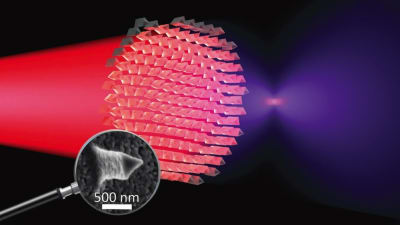
Engineers at the University of California San Diego have achieved a long-sought milestone in photonics: creating tiny optical devices that are both highly sensitive and durable — two qualities that have long been considered fundamentally incompatible. Read on to learn more.
Briefs: Photonics/Optics
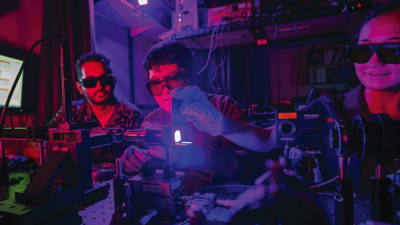
As fast as modern electronics have become, they could be much faster if their operations were based on light, rather than electricity. Fiber optic cables already transport information at the speed of light, but to do computations on that information without translating it back to electric signals will require a host of new optical components. Researchers have now developed such a device. Read on to learn more.
Briefs: Semiconductors & ICs
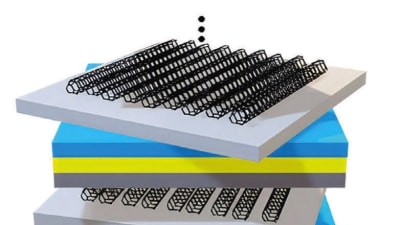
AI systems like ChatGPT are notorious for being power-hungry. To tackle this challenge, a team from the Centre for Optics, Photonics and Lasers has come up with an optical chip that can transfer massive amounts of data at ultra-high speed. As thin as a strand of hair, this technology offers unrivaled energy efficiency. Read on to learn more.
Briefs: Medical
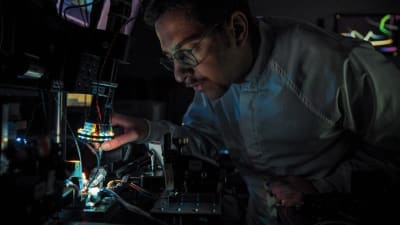
Metabolic imaging is a noninvasive method that enables clinicians and scientists to study living cells using laser light, which can help them assess disease progression and treatment responses. But light scatters when it shines into biological tissue, limiting how deeply it can penetrate and hampering the resolution of captured images. Now, MIT researchers have developed a new technique that more than doubles the usual depth limit of metabolic imaging. Read on to learn more.
Special Reports: Photonics/Optics

Military & Maritime Unmanned/Autonomous Systems - August 2025
AI automates drone defense with high‐energy lasers…3D printing a game‐changer for ship and submarine part production…how TSN Ethernet will change the future of mil/aero...Products: Robotics, Automation & Control
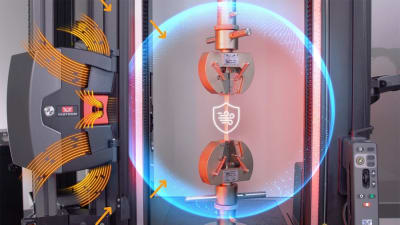
See what's new on the market, including a solution for actuating choke and other valves in subsea applications; Sumida's new CEP1311F Flyback Transformers, designed for use with “no-opto” isolated flyback circuits; SPIROL's range of 2024 aluminum Press-In Inserts; Instron's AVE3, an advanced non-contacting video extensometer that delivers precise strain measurement with unparalleled, micron-level accuracy; and more.
Briefs: Lighting
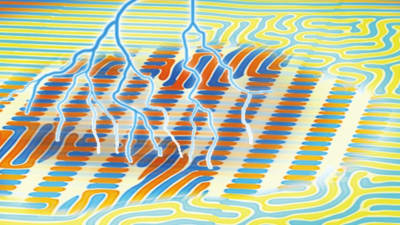
With this groundbreaking discovery of time-dependent changes in networked nanodomains, developers are on the path to building adaptive networks for information storage and processing. Read on to learn more.
Special Reports: Electronics & Computers

Rugged/Hi‐Rel Electronics - June 2025
How advanced packaging is transforming mission‐critical electronics…a new era of high‐speed data transmission in defense…fully rugged PCs provide a decisive edge on the battlefield. Read about...On-Demand Webinars: Imaging
Advancements in silicon photonic and micro-optic technologies are driving the need to perform precision alignments down to sub-micrometer levels. As cutting-edge optical and...
INSIDER: Electronics & Computers
What if ultrafast pulses of light could operate computers at speeds a million times faster than today's best processors? A team of scientists, including researchers from...
Products: Semiconductors & ICs
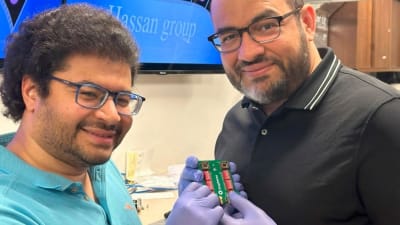
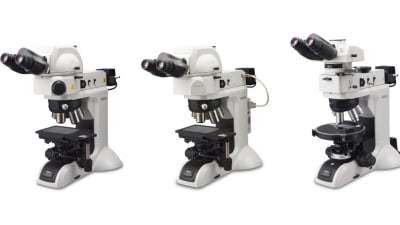
See what's new on the market, including the ZE2531 Isolation Transformer from Coilcraft; Nikon Metrology's three new ECLIPSE microscope models, the LV100NDA LED, LV100ND LED, and LV100N POL LED; Würth Elektronik's expanded STAR-TEC and STAR-TEC LFS snap ferrite families; Walter's new milling grade, PVD-coated Tiger·tec® Gold WSM36G; and more.
Articles: Software
As optical systems become more integrated into communication, sensing, and imaging technologies, FSMs will remain a key enabler of speed, precision, and stability in next-generation photonic applications. Read on to learn more.
Technology & Society: Photonics/Optics
Desperately wanting to bridge the gap between the deaf and people who don't know sign language, a Florida Atlantic University team decided to use AI and computer engineering to build a smart, real-time ASL system.

Briefs: Power
Innovators at NASA Johnson Space Center have developed a handheld digital microscope to fill the critical microscopy needs of human space exploration by providing flight crews in situ hematological diagnostic and tracking ability to assess and monitor crew health in the absence of gravity. Read on to learn more.

Briefs: Design
Changing the shape of the blade will expand the possibilities of using the laser in medicine.

Briefs: Sensors/Data Acquisition
Residents of the Manu’a Islands in American Samoa were feeling the earth shake, raising concerns of an imminent volcanic eruption or tsunami. Scientists from the U.S. Geological Survey used machine learning and a technique called template matching on shaking data recorded from a single seismic sensor located 250 kilometers away to locate the source of the shaking. Read on to learn more.

Top Stories
 Blog: Robotics, Automation & Control

Aerial Microrobots That Can Match a Bumblebee's Speed
 Blog: Electronics & Computers

Turning Edible Fungi into Organic Memristors
 Blog: Manufacturing & Prototyping

Revolutionizing the Production of Semiconductor Chips
 News: Energy

 INSIDER: Electronics & Computers

World’s Smallest Programmable, Autonomous Robots
 INSIDER: Manufacturing & Prototyping

Webcasts
 On-Demand Webinars: Power

E/E Architecture Redefined: Building Smarter, Safer, and Scalable Vehicles
 Upcoming Webinars: Energy

Hydrogen Engines Are Heating Up for Heavy Duty
 Upcoming Webinars: Electronics & Computers

Advantages of Smart Power Distribution Unit Design for Automotive...
 Upcoming Webinars: Automotive

Quiet, Please: NVH Improvement Opportunities in the Early Design...
 Upcoming Webinars: Power

A FREE Two-Day Event Dedicated to Connected Mobility
 Podcasts: Defense

How Sift's Unified Observability Platform Accelerates Drone Innovation