Stories
41
80
0
330
30
Podcasts: Wearables
Wearable medical devices must balance the need for continuous monitoring with power efficiency.
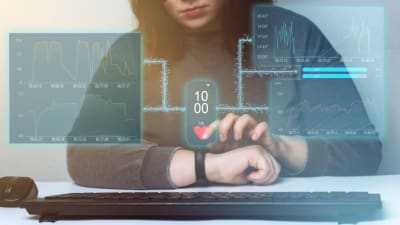
Podcasts: Wearables
Achieving interoperability as medical-grade wearables integrate with diverse healthcare systems.

5 Ws: Robotics, Automation & Control
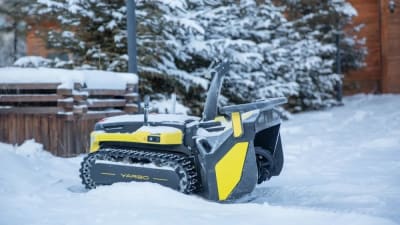
A smart modular yardwork robot that can blow leaves and plow snow as well as achieve reductions in carbon emissions at the same time.
Articles: Design
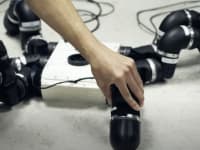
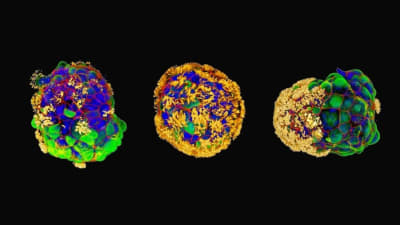
See the products of tomorrow, including the University of Maryland's "cooling glass"; the Reconfigurable Robotics Lab's sensor that can perceive combinations of bending, stretching, compression, and temperature changes using color; Tufts' tiny biological robots; and more.
INSIDER: Sensors/Data Acquisition
An international research group has engineered a novel high-strength flexible device by combining piezoelectric composites with unidirectional carbon fiber (UDCF), an anisotropic...

INSIDER: Materials
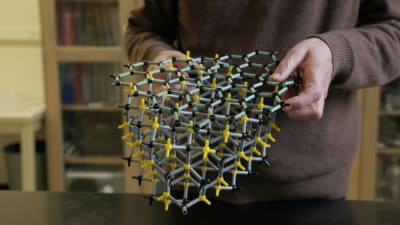
Researchers at the Georgia Institute of Technology have created the world’s first functional semiconductor made from graphene, a single sheet of carbon atoms held...
INSIDER: Electronics & Computers
MIT researchers have developed a battery-free, self-powered sensor that can harvest energy from its environment.
INSIDER: AR/AI
The largest optics and trade show in North America, SPIE Photonics West 2024, is just a few days away from its annual collection of exhibitions, conferences and courses at San...

INSIDER: Sensors/Data Acquisition
An inspection design method and procedure by which mobile robots can inspect large pipe structures has been demonstrated with the successful inspection of multiple...

5 Ws: Imaging
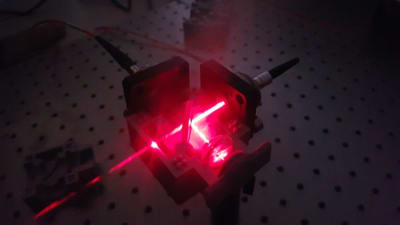
There is an urgent need for new technologies to improve the timeliness of traumatic brain injury diagnosis. Researchers from the University of Birmingham have a laser-based solution.
Special Reports: Power

Electric Vehicles - January 2024
In this compendium of recent articles from the editors of Automotive Engineering and Battery & Electrification Technology, learn about the latest advances in EV motors and batteries, e-powertrain design and...Special Reports: Aerospace
Space Technology - January 2024
NASA is making progress in solving some of the most daunting challenges of future space exploration – how to survive the extreme cold of the lunar night, generate oxygen for Mars colonies, and create artificial...Briefs: Sensors/Data Acquisition
A research team has developed a robotic system that can be unobtrusively built into the frame of a standard honeybee hive. Composed of an array of thermal sensors and actuators, the system measures and modulates honeybee behavior through localized temperature variations.

Briefs: Manufacturing & Prototyping
A Molecular-Sized, More Efficient Electronic Sensor
Australian researchers have developed a molecular-sized, more efficient version of a widely used electronic sensor, in a breakthrough that could bring widespread benefits.
Briefs: Materials
Macquarie University engineers have developed a new technique to make the manufacturing of nanosensors far less carbon-intensive, much cheaper, more efficient, and more versatile — substantially improving a key process in this trillion-dollar global industry.

Briefs: Materials
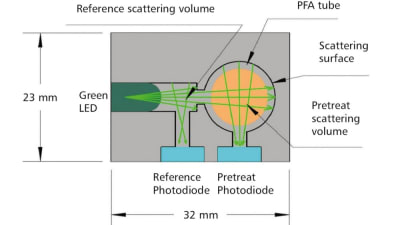
The optical concentration sensor has been demonstrated to effectively measure pretreat concentrations in both still and flowing liquid conditions and is resistant to contamination issues as necessitated by the UWMS.
Briefs: Photonics/Optics
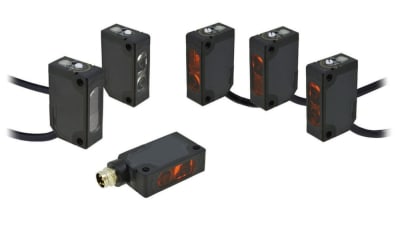
Photoelectric (PE) sensors represent a discrete sensor technology widely used throughout industry. They use the presence or absence of light to provide an on/off output to supervisory automation and monitoring systems, and are often the better choice for sensing manufacturing products.
Videos of the Month: Manufacturing & Prototyping
See the videos of the month, including one on FibeRobo, a novel body-temperature shape-changing fiber based on liquid crystal elastomers; one on 3D printing extremely viscous plastic solids; one on using digital twins in EV battery design and testing; and one on flexible sensors screen-printed onto a stamp-like flexible surface.
5 Ws: Sensors/Data Acquisition
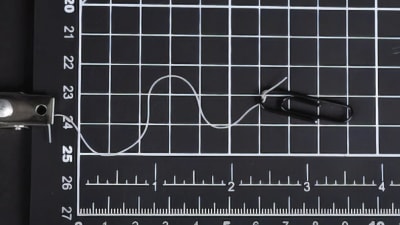
Researchers at Tufts University have created microprocessor-scale transistors that can detect and respond to biological states and the environment.

INSIDER: Sensors/Data Acquisition
MIT engineers have developed a robotic replica of the heart’s right ventricle, which mimics the beating and blood-pumping action of live hearts.

INSIDER: Robotics, Automation & Control
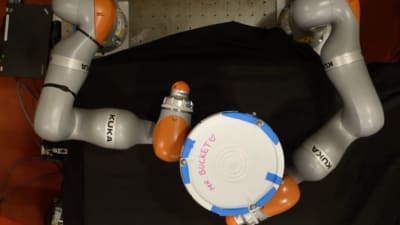
Imagine you want to carry a large, heavy box up a flight of stairs. You might spread your fingers and lift the box with both hands, then hold it on top of your forearms and balance...
INSIDER: Electronics & Computers
Understanding how energy moves in materials is fundamental to the study of quantum phenomena, catalytic reactions, and complex proteins. Measuring how energy...

INSIDER: Electronics & Computers
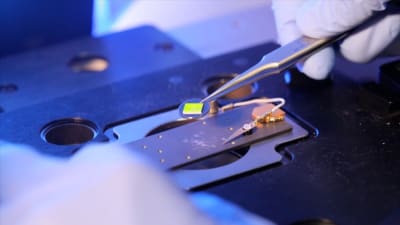
New research from Flinders University and UNSW Sydney, published in ACS Nano, explores switchable polarization in a new class of silicon compatible metal oxides...
INSIDER: RF & Microwave Electronics
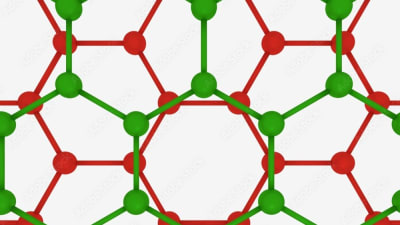
The 'wonder material' graphene is well-known for its high electrical conductivity, mechanical strength, and flexibility. Stacking two layers of graphene...
NASA Spinoff: Aerospace
Traffic-Aware Strategic Aircrew Requests (TASAR), developed by NASA, is a piece of software pilots and ground operations teams can use to find better routes in transit.

Special Reports: Unmanned Systems

ADAS/Connected Car - December 2023
In this compendium of popular articles from the editors of Automotive Engineering and ADAS & Autonomous Vehicle Engineering magazines, see how advances in simulation, testing, lidar/sensors, displays, and...Products: Software
See the new products, including new Vision hardware from Beckhoff; Renishaw’s new Central manufacturing connectivity and data platform; Weidmuller USA's new open operating system, u-OS; a Digital Valve Controller featuring the Device™ technology; and more.

Briefs: AR/AI
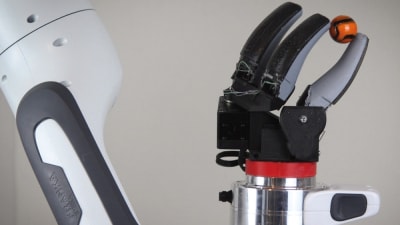
A new soft sensor developed by UBC and Honda researchers opens the door to a wide range of applications in robotics and prosthetics. When applied to the surface of a prosthetic arm or a robotic limb, the sensor skin provides touch sensitivity and dexterity, enabling tasks that can be difficult for machines such as picking up a piece of soft fruit.

Briefs: Imaging
MIT researchers have developed a camera-based touch sensor that is long, curved, and shaped like a human finger. Their device provides high-resolution tactile sensing over a large area. The sensor, called the GelSight Svelte, uses two mirrors to reflect and refract light.
Top Stories
 Blog: Power

My Opinion: We Need More Power Soon — Is Nuclear the Answer?
 Blog: AR/AI

Aerial Microrobots That Can Match a Bumblebee's Speed
 News: Energy

 Blog: Electronics & Computers

Turning Edible Fungi into Organic Memristors
 Blog: Robotics, Automation & Control

Microscopic Swimming Machines that Can Sense, Respond to Surroundings
 INSIDER: Sensors/Data Acquisition

Webcasts
 Upcoming Webinars: Energy

Hydrogen Engines Are Heating Up for Heavy Duty
 Upcoming Webinars: Transportation

Advantages of Smart Power Distribution Unit Design for Automotive...
 Upcoming Webinars: Automotive

Quiet, Please: NVH Improvement Opportunities in the Early Design...
 Upcoming Webinars: Test & Measurement

From Spreadsheets to Insights: Fast Data Analysis Without Complex...
 Upcoming Webinars: Power

Battery Abuse Testing: Pushing to Failure
 Upcoming Webinars: Internet of Things