Stories
6,36,37,43,46,48,50,56,58,59,60
7,8,36,110,131,134,135,138,139,141,142,144,145,151,152,201,202
-1
5670
30
Articles: Aerospace
50 Years of Inspiration
We wanted NASA Tech Briefs readers to be a part of our special issue celebrating NASA's 50th anniversary. So, we asked you to tell us how NASA, and NASA Tech Briefs, have inspired you over the past 50 years. We wanted to know how NASA helped you in your career or business, or improved your everyday life. What benefits have...
Articles: Aerospace
NASA’s predecessor agency, the National Advisory Committee for Aeronautics (NACA), began a legacy of aeronautical innovation that continues today. While much of the focus of NASA’s...

Briefs: Medical
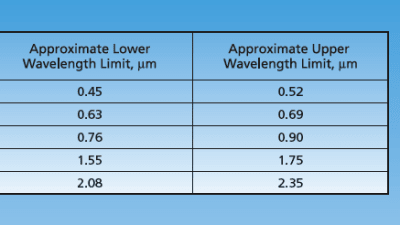
A recently invented method of measuring concentrations of phycocynanin- pigmented algae and bacteria in water is based on measurement of the spectrum of reflected sunlight. When...
Briefs: Medical
The Expert System is an enclosed, controlled environment for growing plants, which incorporates a computerized, knowledge-based software program that is designed to capture the...

Articles: Aerospace
“Space exploration is all about inspiration, innovation, and discovery. It’s about imagining the future. It’s about taking new steps, and exploring beyond our limitations, and creating something bigger...

Briefs: Physical Sciences
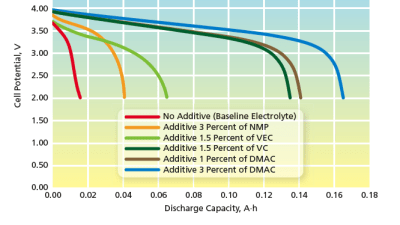
Dimethyl acetamide (DMAC) and N-methyl pyrrolidinone (NMP) have been found to be useful as high- temperature- resilience-enhancing additives to a baseline electrolyte used in rechargeable...
Briefs: Physical Sciences
A miniature mass spectrometer that incorporates features not typically found in prior mass spectrometers is undergoing development. This mass spectrometer is designed to simultaneously...

Briefs: Physical Sciences
Waveguide Harmonic Generator for the SIM
A second-harmonic generator (SHG) serves as the source of the visible laser beam in an onboard calibration scheme for NASA's planned Space Interferometry Mission (SIM), which requires an infrared laser beam and a visible laser beam coherent with the infrared laser beam. The SHG includes quasi-phase-matched...
Articles: Nanotechnology
The 2008 NASA Tech Briefs National Nano Engineering Conference (NNEC), be held November 12-13 at the Boston Colonnade Hotel, is for design engineers who want to know what’s real, what’s close to...

Briefs: Physical Sciences
Whispering Gallery Mode Resonator With Orthogonally Reconfigurable Filter Function
An optical resonator has been developed with reconfigurable filter function that has resonant lines that can be shifted precisely and independently from each other, creating any desirable combination of resonant lines. This is achieved by changing the axial...
Briefs: Physical Sciences
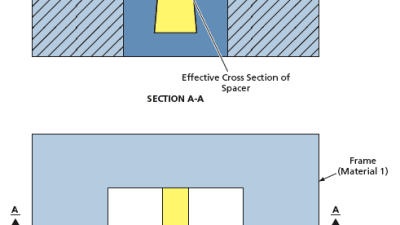
Bimaterial thermal compensators have been proposed as inexpensive means of preventing (to first order) or reducing temperature-related changes in the resonance frequencies of...
Briefs: Physical Sciences
Stable Calibration of Raman Lidar Water-Vapor Measurements
A method has been devised to ensure stable, long-term calibration of Raman lidar measurements that are used to determine the altitude-dependent mixing ratio of water vapor in the upper troposphere and lower stratosphere. Because the lidar measurements yield a quantity proportional to the...
Application Briefs: Aerospace
Constellation Space Suit Station (CSSS) Oceaneering International Houston, TX 281-228-5300 www.oceaneering.com
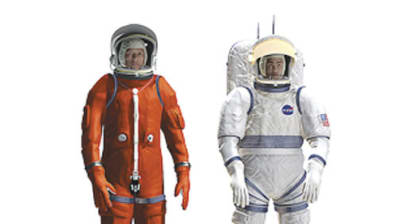
Oceaneering International has secured a contract from NASA to design...
Who's Who: Nanotechnology
Dr. Jonathan Trent is an expert in the use of extremophile proteins to create nanoscale electronic devices. An extremophile is a life form capable of surviving in the...

Briefs: Physical Sciences
On-Orbit Multi-Field Wavefront Control With a Kalman Filter
A document describes a multi-field wavefront control (WFC) procedure for the James Webb Space Telescope (JWST) on-orbit optical telescope element (OTE) fine-phasing using wavefront measurements at the NIRCam pupil. The control is applied to JWST primary mirror (PM) segments and secondary...
Blog: Medical
Software Predicts Fungal Genes
Researchers at the Georgia Institute of Technology have developed a computer program that trains itself to predict genes in the DNA sequences of fungi. Understanding the recently sequenced fungal genomes can help in developing and producing critical pharmaceuticals. Gene prediction can also help to identify potential...
Blog: Nanotechnology
Nano 50 Awards at the NNEC
The sixth annual National Nanoengineering Conference returns to Boston this year on November 12-13 at the Boston Colonnade Hotel, featuring the fourth annual Nano 50 Awards, recognizing top 50 technologies, innovators, and products that have significantly impacted the development of nanotechnology.
This year's...
Blog: Imaging
Protein Detector
Scientists from Novartis Institute for Biomedical Research and the British Columbia Cancer Agency have demonstrated a new instrument that makes it possible to detect and quantify multiple different clinically important proteins in a single tumor sample using conventional staining. Currently, pathologists usually need a separate...
Blog: Physical Sciences
Quantum Computing
Researchers at the University of Michigan, U.S. Naval Research Laboratory, and the University of California at San Diego recently demonstrated the fastest quantum computer bit that exploits the main advantage of the qubit over the conventional bit. The scientists used lasers to create an initialized quantum state of this...
Blog: Medical
Breast Cancer Detection
Scientists from Finland, Germany, and the European Synchrotron Radiation Facility (ESRF) have developed a new X-ray technique for the early detection of breast cancer. Current X-ray mammography fails to identify about 10 to 20% of palpable breast cancers because glandular tissues can mask cancer lesions. Better results are...
Blog: Aerospace
Hubble Solves Mystery
NASA's Hubble Space Telescope has found an answer to a long-standing puzzle by resolving giant but delicate filaments shaped by a strong magnetic field around the active galaxy NGC 1275. One of the closest giant elliptical galaxies, NGC 1275 hosts a supermassive black hole. Energetic activity of gas swirling near the black...
Blog: Nanotechnology
MIT At NNEC
Register today for NASA Tech Briefs' National Nano Engineering Conference (NNEC), the premier event focused on current and future developments in engineering innovations at the nanoscale, as well as the commercialization of nanotechnology. The event returns to Boston this year on November 12-13 at the Boston Colonnade Hotel, featuring...
Briefs: Nanotechnology
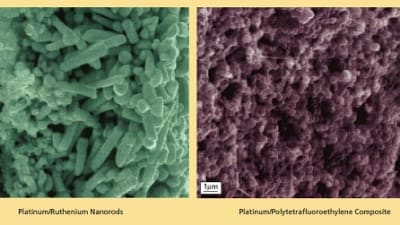
Nano-engineered catalysts, and a method of fabricating them, have been developed in a continuing effort to improve the performances of direct methanol fuel cells as candidate power...
Briefs: Materials
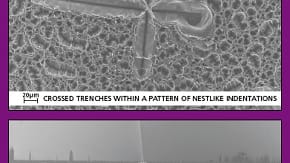
Capillography (from the Latin capillus, “hair”, and the Greek graphein, “to write”) is a recently conceived technique for forming mats of nanofibers into useful patterns. The concept was inspired by...
Briefs: Test & Measurement
The shapes of waveforms generated by commercially available analytical separation devices, such as some types of mass spectrometers and differential mobility spectrometers are, in general, inadequate...

Who's Who: Sensors/Data Acquisition
LCROSS (Lunar Crater Observation and Sensing Satellite), which will travel to the moon aboard the launch vehicle for the Lunar Reconnaissance Orbiter (LRO), will test...

Briefs: Test & Measurement
Purifying Nucleic Acids From Samples of Extremely Low Biomass
A new method is able to circumvent the bias to which one commercial DNA extraction method falls prey with regard to the lysing of certain types of microbial cells, resulting in a truncated spectrum of microbial diversity. By prefacing the protocol with glass-bead-beating agitation...
Briefs: Medical
The term “Multi-Angle and Rear Viewing Endoscopic tooL” (MARVEL) denotes an auxiliary endoscope, now undergoing development, that a surgeon would use in conjunction...

Briefs: Packaging & Sterilization
UV-Resistant Non-Spore-Forming Bacteria From Spacecraft-Assembly Facilities
Four species of non-spore-forming bacteria collected from clean-room surfaces in spacecraft-assembly facilities could survive doses of ultraviolet (UV) radiation that would suffice to kill most known cultivable bacterial species. In a previous study, high UV resistance was...
Top Stories
 Blog: Power

My Opinion: We Need More Power Soon — Is Nuclear the Answer?
 Blog: AR/AI

Aerial Microrobots That Can Match a Bumblebee's Speed
 News: Energy

 Blog: Electronics & Computers

Turning Edible Fungi into Organic Memristors
 Blog: Robotics, Automation & Control

Microscopic Swimming Machines that Can Sense, Respond to Surroundings
 INSIDER: Sensors/Data Acquisition
Webcasts
 Upcoming Webinars: Power

Hydrogen Engines Are Heating Up for Heavy Duty
 Upcoming Webinars: Electronics & Computers

Advantages of Smart Power Distribution Unit Design for Automotive...
 Upcoming Webinars: Transportation

Quiet, Please: NVH Improvement Opportunities in the Early Design...
 Upcoming Webinars: Sensors/Data Acquisition

From Spreadsheets to Insights: Fast Data Analysis Without Complex...
 Upcoming Webinars: Energy

Battery Abuse Testing: Pushing to Failure
 Upcoming Webinars: AR/AI