Stories
6,36,37,43,46,48,50,56,58,59,60
7,8,36,110,131,134,135,138,139,141,142,144,145,151,152,201,202
-1
5910
30
Blog: Aerospace
Current Attractions
In a crash, keeping the occupants alive and uninjured is paramount. As a part of the Structural Dynamics Branch in the Research and Technology Directorate at NASA Langley, the Landing and Impact Research Facility (LandIR) tests the safety of aircraft by crashing them. Dr. Karen Jackson is part of the research team.
Blog: Electronics & Computers
Nano 50 Deadline
Nominations for Nanotech Briefs' third annual Nano 50 awards competition are being accepted through 11:59 PM today, April 2. The awards honor the top 50 innovators, products, and technological advancements that demonstrate the greatest potential toward developing the commercialization of nanotechnology. Previous winners include...
Blog: Medical
Technology Business Briefs
A Fiber Optic-Based Integration System (FOBIS) has been developed that may be capable of in-situ, real-time biological monitoring, and is based on a single fiber optic system. A compact, multi-functional device, the FOBIS incorporates three working units (a Micro-Flow Cytometer, a Micro-Photometer, and a Micro-Sensor)...
Blog: Materials
Chain-mail Fabric
University of Illinois scientists have fabricated the world's smallest chain-mail fabric that consists of a network of small rings about 500 microns in diameter and even smaller links about 400 microns long. The rings and links are built upon a planar substrate and then released to create a flexible sheet that can bend along two...
Briefs: Physical Sciences
A filter function has been derived as a means of optimally weighting the wavefront estimates obtained in image-based phase retrieval performed at multiple points distributed over the...

Briefs: Physical Sciences
Balloon for Long-Duration, High-Altitude Flight at Venus
A document describes a 5.5-m-diameter, helium-filled balloon designed for carrying a scientific payload having a mass of 44 kg for at least six days at an altitude of about 55 km in the atmosphere of Venus. The requirement for floating at nearly constant altitude dictates the choice of a...
Briefs: Medical
Wearable Environmental and Physiological Sensing Unit
The wearable environmental and physiological sensing unit (WEPS) is a prototype of systems to be worn by emergency workers (e.g., firefighters and members of hazardous-material response teams) to increase their level of safety. The WEPS includes sensors that measure a few key physiological and...
Briefs: Physical Sciences
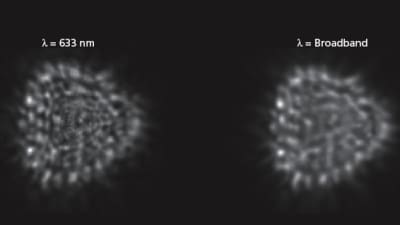
A focus-diverse phase-retrieval algorithm has been shown to perform adequately for the purpose of image-based wavefront sensing when (1) broadband light (typically spanning the visible...
Briefs: Physical Sciences
A phase-diverse iterative-transform phase-retrieval algorithm enables high-spatial-frequency, high-dynamic-range, image-based wavefront sensing. [The terms "phase-diverse," "phase...

Briefs: Physical Sciences
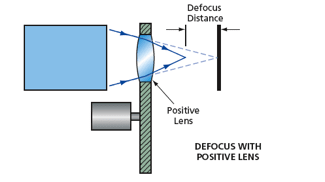
In an alternative hardware design for an apparatus used in image-based wavefront sensing, defocus diversity is introduced by means of fixed lenses that are mounted in a filter wheel (see...
Who's Who: Aerospace
In a crash, keeping the occupants alive and uninjured is paramount. In order to study the dynamics of an impact, military and general aviation aircraft,...

Briefs: Medical
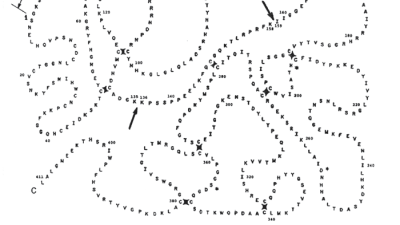
Antibodies that bind to preselected regions of the urokinase molecule have been developed. These antibodies can be used to measure small quantities of each of three molecular forms of urokinase that...
Briefs: Medical
Understanding and Counteracting Fatigue in Flight Crews
The materials included in the collection of documents describe the research of the NASA Ames Fatigue Countermeasures Group (FCG), which examines the extent to which fatigue, sleep loss, and circadian disruption affect flight-crew performance. The group was formed in 1980 — in response to a...

Articles: Aerospace
Meet the Judges, “Create the Future” 2006 Design Contest
William Brosey, Section Manager,BWXT Y-12, Oak Ridge, TN
Joe Buford, Mfg. Engineer,Boeing Satellite Development Center, El Segundo, CA
Briefs: Photonics/Optics
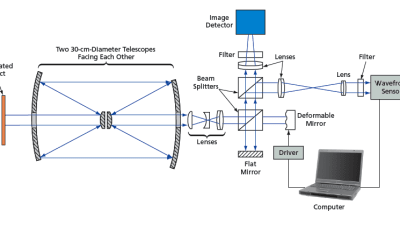
A system of active optics that includes a wavefront sensor and a deformable mirror has been demonstrated to be an effective means of partly correcting wavefront aberrations...
Blog: Materials
Nano 50 Awards
Nanotech Briefs® magazine is accepting nominations for its third annual Nano 50 awards competition. The Nano 50 recognizes the top 50 technologies, innovators, and products with the greatest potential to advance the commercialization of nanotechnology.
Blog: Software
Supply Chain Software
By 2020, NASA plans to establish a long-term human presence on the Moon. To make this possible, a reliable stream of consumables such as fuel, food and oxygen, spare parts, and exploration equipment would have to make its way from the Earth to the Moon as predictably as any Earth-based delivery system. To figure out how to do...
Blog: Motion Control
Pneumatic Step Motor
Medical scientists at Johns Hopkins University (Baltimore, MD) have constructed the "PneuStep," a prototype pneumatic step motor that is the first of its kind. The motor was developed as part of a project for a robot that could operate precisely within the closed bore of high-intensity MRI equipment. The pneumatic nature of the...
Blog: Medical
Diagnostic Hydrogel
Researchers at Massachusetts Institute of Technology (MIT) have created customizable hydrogel microparticles capable of identifying different biomolecules, disease monitoring, drug discovery, or genetic profiling. Each particle is equipped with a bar-coded ID and one or more probe regions that turn fluorescent when they detect...
Blog: Energy
Technologies of the Week
A self-biased solar cell is available that provides improved conversion efficiency. Loss of carriers at the back surface of the battery is decreased, and open circuit voltage and quantum efficiency near a long wavelength are increased.
View this technology here.
Blog: Green Design & Manufacturing
PCB Bacteria
Researchers at Rensselaer Polytechnic Institute have discovered a tiny anaerobic bacterium that could one day transform how polychlorinated biphenyls (PCBs) are removed from the environment. The organism could be the key to developing methods that help detoxify commercial PCB compounds on site -- without the need for dredging.
In order...
Blog: Medical
Holographic Images
The response of tumors to anticancer drugs has been observed in real-time, 3D images using technology developed at Purdue University. The new digital holographic imaging system uses a laser and a charged couple device (CCD) to see inside tumor cells. The instrument also may have applications in drug development and medical...
Blog: Aerospace
Technology Business Briefs
Lightweight, High-Performance Propeller/Rotor/Wind Turbine Blade
The turbine blade features a much lighter, more efficient, less expensive, and entirely new structural design. Other advantages offered bythis technology include increased performance, lower noise, decreased maintenance time and expense, and optimized...
Blog: Materials
Fusion Research
University of Wisconsin-Madison researchers have come one step closer to making fusion energy possible by showing that their magnetic plasma chamber, called a stellarator, can overcome a major barrier in plasma research by retaining the needed temperature for fusion to be possible. Past stellarators lose too much energy to reach the...
Blog: Medical
Anti-Cancer Protein
Researchers at the Dana-Farber Cancer Institute (Boston, MA) have found that the p53 protein, known to guard against cancer-causing DNA damage, provides an entirely different level of cancer protection: by prompting the skin to tan in response to ultraviolet light from the sun, p53 deters the development of melanoma skin cancer....
Blog: Medical
Drug Tooth
Medical researches at Information Society Technologies (Brussels, Belgium) are developing the IntelliDrug controlled drug delivery system, where medication is stored and released from an implanted tooth. The fake tooth is a micro-system comprising of a medication reservoir and release mechanism, a built-in intelligence, micro- sensors,...
Blog: Medical
Technology Business Briefs
Printable Biosensor for On-Site, Online Measurements -- Bioactive Hybrid Materials for Photonic Microsystems It allows samples to be analyzed on site within a few minutes by integrating biotechnology, information technology, electronics, physics, and chemistry to realize small and cost-effective bio-photonic microsystems....
Blog: Aerospace
NASA News
The Subregional Bone Assessment, a NASA study of the long-term effects of microgravity on the bones of International Space Station crewmembers, showed that the astronauts lost roughly 11% of their total hipbone mass over the course of their mission, more than an elderly woman in a year. While bone mass was regained after a year on Earth,...
Top Stories
 Blog: Power

My Opinion: We Need More Power Soon — Is Nuclear the Answer?
 Blog: AR/AI
Aerial Microrobots That Can Match a Bumblebee's Speed
 News: Energy

 Blog: Electronics & Computers

Turning Edible Fungi into Organic Memristors
 Blog: Robotics, Automation & Control

Microscopic Swimming Machines that Can Sense, Respond to Surroundings
 INSIDER: Sensors/Data Acquisition
Webcasts
 Upcoming Webinars: Energy

Hydrogen Engines Are Heating Up for Heavy Duty
 Upcoming Webinars: Automotive

Advantages of Smart Power Distribution Unit Design for Automotive...
 Upcoming Webinars: Transportation

Quiet, Please: NVH Improvement Opportunities in the Early Design...
 Upcoming Webinars: Sensors/Data Acquisition

From Spreadsheets to Insights: Fast Data Analysis Without Complex...
 Upcoming Webinars: Power

Battery Abuse Testing: Pushing to Failure
 Upcoming Webinars: Connectivity