Stories
6,36,37,43,46,48,50,56,58,59,60
7,8,36,110,131,134,135,138,139,141,142,144,145,151,152,201,202
-1
5880
30
Briefs: Physical Sciences
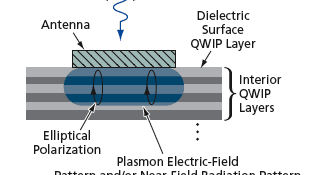
In a proposed scheme for coupling light into a quantum-well infrared photodetector (QWIP), an antenna or an array of antennas made of a suitable metal would be fabricated on the face of what would otherwise...
Briefs: Physical Sciences
Suits cooled by evaporation of water have been proposed as improved means of temporary protection against high temperatures near fires. When air temperature exceeds 600 °F (316 °C) or...

Briefs: Physical Sciences
Electronic tongue 2 (E-tongue 2) represents the second generation of the apparatus described in "Electronic Tongue for Quantitation of Contaminants in Water" (NPO-30601), NASA Tech...

Who's Who: Aerospace
NASA recently tested the Nano ChemSensor, the first nanotechnology- based electronic device to fly in space. The test showed that the sensor could monitor trace gases inside a...
Briefs: Physical Sciences
Second-Generation Electronic Nose
A report discusses the second generation of the JPL Electronic Nose (ENose), an array of 32 semi-specific chemical sensors used as an event monitor to identify and quantify contaminants released into breathing air by leaks or spills. It is designed to monitor the environment for changes in air quality, and is...
Blog: Medical
Have a Screw Loose?
Inspired by the device used to find lost coins in the sand, Johns Hopkins University biomedical engineering students have invented a small handheld metal detector to help doctors locate hidden orthopedic screws that need to be removed from patients' bodies. The device emits a tone that rises in pitch as the surgeon moves closer...
Briefs: Physical Sciences
Radar Interferometer for Topographic Mapping of Glaciers and Ice Sheets
A report discusses Ka-band (35-GHz) radar for mapping the surface topography of glaciers and ice sheets at high spatial resolution and high vertical accuracy, independent of cloud cover, with a swath-width of 70 km. The system is a single-pass, single-platform interferometric...
Who's Who: Aerospace
NASA plans to return to the Moon by 2020. For a sustained lunar presence, however, astronauts need habitats that can support them and their experments. To this end, researchers...

Application Briefs: Physical Sciences
CODE Rebreathers and SSV Lifejackets Aqua Lung Vista, CA 760- 597-5000
The High Lakes Project (HLP) is funded by a grant from the NASA Astrobiology...
Briefs: Physical Sciences
A small, lightweight, portable apparatus based on an electrochemical sensing principle has been developed for monitoring low concentrations of ethylene in air. Ethylene has long been...

Briefs: Medical
A proposed special-purpose infrared imaging system would be a compact, portable, less-expensive alternative to functional magnetic resonance imaging (fMRI) systems heretofore used to study...

Briefs: Physical Sciences
A method of cleaning the mode spectra of whispering - gallery - mode (WGM) optical resonators has been devised to make such resonators more suitable for use as narrow-band optical filters....

Briefs: Physical Sciences
A device that includes a rectangular-waveguide / slot-antenna structure and permanent magnets has been devised as a means of generating a substantially uniform plasma over a relatively...

Briefs: Physical Sciences
Large-Area Permanent-Magnet ECR Plasma Source
A 40-cm-diameter plasma device has been developed as a source of ions for material-processing and ion-thruster applications. Like the device described in the immediately preceding article, this device utilizes electron cyclotron resonance (ECR) excited by microwave power in a magnetic field to generate...
Briefs: Physical Sciences
Broadband Achromatic Telecentric Lens
A new type of lens design features broadband achromatic performance as well as telecentricity, using a minimum number of spherical elements. With appropriate modifications, the lens design form can be tailored to cover the range of response of the focal-plane array, from Si (400–1,000 nm) to InGaAs...
Blog: AR/AI
Virtual Patient
Researchers from Rensselaer Polytechnic Institute are using a $2 million grant from the National Institutes of Health (NIH) to develop a physics-based virtual model that can simulate a patientÃs breathing in real time. When used in conjunction with existing 3D models, adding the fourth dimension of time could improve the accuracy...
Briefs: Medical
Simplified Identification of mRNA or DNA in Whole Cells
A recently invented method of detecting a selected messenger ribonucleic acid (mRNA) or deoxyribonucleic acid (DNA) sequence offers two important advantages over prior such methods: it is simpler and can be implemented by means of compact equipment. The simplification and miniaturization...
Briefs: Medical
Printed multi-turn loop antennas have been designed for contactless powering of, and reception of radio signals transmitted by, surgically implantable biotelemetric sensor units operating at...

Briefs: Physical Sciences
In a proposed direct methanol fuel-cell electric-power-generating system, the fuel-cells would consume neat methanol, in contradistinction to the dilute aqueous methanol solutions consumed in...

Briefs: Physical Sciences
A proposed biosensing system would be based on a combination of (1) a sensing volume containing antibodies immobilized in a sol-gel matrix and (2) an optical interferometer having a ring...

Who's Who: Imaging
Medical imaging technology has led to quicker diagnoses of conditions that, when caught early, can be treated. However, because such devices are large, they are impractical in the...

Blog: Aerospace
NASA Innovative Partnership
As part of NASA's Partnership Seed Fund program, Goddard Space Flight Center is integrating the ILIADS software, a geospatial information system (GIS) it developed for lunar applications, with Questus(TM), a management and planning software tool developed by United Space Alliance (USA) for space shuttle operations. The...
Blog: Photonics/Optics
Custom Contacts
University of Rochester (New York) researchers have developed custom- designed contacts for people with keratoconic eyes, which are rare but disabling. From the side, the eyes look more pointed or cone-shaped than round. The condition causes people to see halos, and double and triple images. About 1 in 2,000 people suffer from the...
Briefs: Physical Sciences
DNSs of Multicomponent Gaseous and Drop-Laden Mixing Layers Achieving Transition to Turbulence
A paper describes direct numerical simulations (DNSs) of three-dimensional mixing-layer flows undergoing transition to turbulence; the mixing layers may or may not be laden with evaporating liquid drops. In contrast to most studies in this field, the...
Who's Who: Aerospace
Supersonic speed would allow travelers to cut significantly their travel time. However, because of the resulting sonic booms, the Federal Aviation Administration...

Briefs: Physical Sciences
An improved statistical model has been developed to describe the chemical composition of an evaporating multicomponent- liquid drop and of the mixture of gases surrounding the drop. The...
Briefs: Physical Sciences
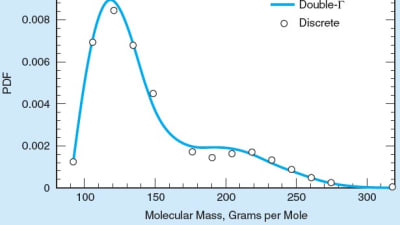
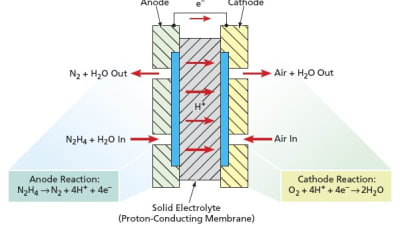
An electrochemical method of disposal of hydrazines dissolved in water has been devised. The method is applicable to hydrazine (N2H4), to monomethyl hydrazine [also denoted by MMH or by its...
Briefs: Physical Sciences
Resistively Heated SiC Nozzle for Generating Molecular Beams
An improved nozzle has been developed to replace nozzles used previously in an apparatus that generates a substantially unidirectional beam of molecules passing through a vacuum at speeds of several kilometers per second. The need to replace the previous nozzles arose from a complex set...
Blog: Imaging
3D Ultrasound
The same Duke University Pratt School of Engineering research team that first developed real-time, 3D ultrasound imaging has modified the commercial version of the scanner to produce an even more realistic perception of depth. The researchers created an updated version of the image-viewing software, making it possible to achieve a...
Top Stories
 Blog: Power

My Opinion: We Need More Power Soon — Is Nuclear the Answer?
 Blog: AR/AI
Aerial Microrobots That Can Match a Bumblebee's Speed
 News: Energy

 Blog: Electronics & Computers

Turning Edible Fungi into Organic Memristors
 Blog: Robotics, Automation & Control

Microscopic Swimming Machines that Can Sense, Respond to Surroundings
 INSIDER: Sensors/Data Acquisition

Webcasts
 Upcoming Webinars: Energy

Hydrogen Engines Are Heating Up for Heavy Duty
 Upcoming Webinars: Transportation

Advantages of Smart Power Distribution Unit Design for Automotive...
 Upcoming Webinars: Automotive

Quiet, Please: NVH Improvement Opportunities in the Early Design...
 Upcoming Webinars: Test & Measurement

From Spreadsheets to Insights: Fast Data Analysis Without Complex...
 Upcoming Webinars: Power

Battery Abuse Testing: Pushing to Failure
 Upcoming Webinars: Internet of Things