-1
30
30
Blog: Energy
Some applications of generative AI are quite useful, some not so much. One way to tame its exponentially expanding hunger for power is to use it intelligently.

Blog: Green Design & Manufacturing
EVs can have lower fuel costs and reduce emissions relative to cars that use gasoline, but they are only a practical option if drivers have convenient ways to charge them. To address this issue, a team of researchers at Penn State created a scalable framework to develop, analyze, and evaluate using streetlights as a low-cost, equitable EV charging option.

Blog: Photonics/Optics
Researchers have used the centuries-old idea of pinhole imaging to create a high-performance mid-infrared imaging system without lenses. The new camera can capture extremely clear pictures over a large range of distances and in low light, making it useful for situations that are challenging for traditional cameras.

Blog: Software
A digital, voice-controlled hand could improve the convenience and accessibility of virtual and augmented reality by enabling hands-free use of games and apps. The prototype software was developed by computer scientists at the University of Michigan.

Blog: Materials
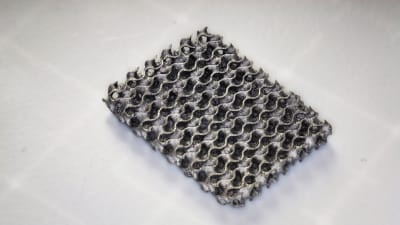
EPFL researchers have pioneered a 3D printing method that grows metals and ceramics inside a water-based gel, resulting in constructions for next-gen energy, biomedical, and sensing technologies.
Blog: Energy
MIT researchers have replaced silicon with a magnetic semiconductor, creating a magnetic transistor that could enable smaller, faster, and more energy-efficient circuits.

Blog: Energy
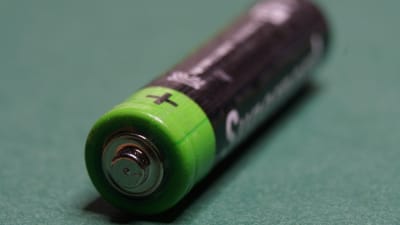
What if the next battery you buy was made from the same kinds of ingredients found in your body? That’s the idea behind a breakthrough battery material made from natural, biodegradable components. It’s so natural, it could even be consumed as food.
Blog: Design
With increasing demands and requirements for building complex embedded systems that involve complex machines, the demand for resilient embedded systems is even higher today. Building safe and secure embedded systems is paramount in the context of pervasive embedded systems across multiple domains and industries. Read on to learn more.

Blog: Mechanical & Fluid Systems
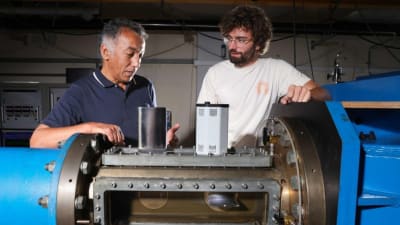
An EPFL Ph.D. student has developed a 3D-printable clever device that significantly dampens the flow-induced vibration caused by rotating parts.
Blog: Design
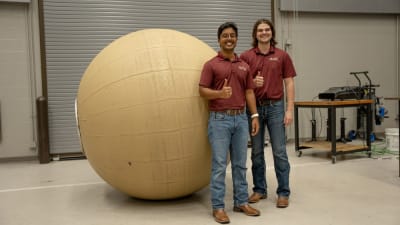
Two decades after the original idea, RoboBall is rolling across Texas A&M University. The RAD Lab is intent on sending the novel spherical robot into uncharted terrain.
Blog: AR/AI
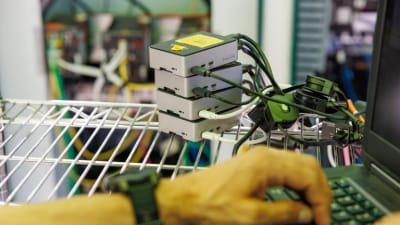
Researchers at Sandia National Laboratories have developed brain-inspired AI algorithms that detect physical problems, cyberattacks, and both at the same time within the grid.
Blog: Power
Everybody’s talking about the problem of providing the electricity to power the growth of AI, but are we doing enough solve it?

Blog: Robotics, Automation & Control
While the average pampered pup at home may lounge on the couch and demand belly rubs, the robotic dogs being created at Arizona State University are stepping up to take on some of the world’s most dangerous tasks.

Blog: Medical
Kennesaw State University’s Lei Shi is leading a research project that could alter how GI disorders are diagnosed and treated using virtual replicas of a human stomach.

News: AR/AI
A new AI model is much better than doctors at identifying patients likely to experience cardiac arrest. The linchpin is the system's ability to analyze long-underused heart imaging, alongside a full spectrum of medical records, to reveal previously hidden information about a patient's heart health.

Blog: Design
Haozhe “Harry” Wang, assistant professor of electrical and computer engineering (ECE) at Duke University and an expert in developing new methods for manufacturing materials, continues to push the boundaries in MXene research.

Blog: AR/AI
All the pieces are in place for agriculture to become smarter — it’s time to move ahead. Here’s how to move to Agriculture 4.0.

Blog: Design
By turning simulation into custom apps, companies are empowering their workforce to make faster, smarter decisions across every part of the business — from the lab to the field.

Blog: Lighting
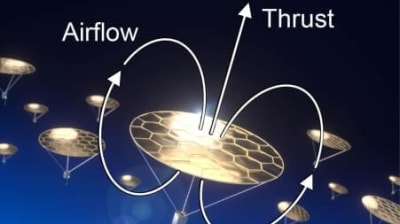
A new study introduces a novel way to reach a largely unstudied stretch of the atmosphere, between 30-60 miles above Earth’s surface, the mesosphere. Researchers have introduced a new way to explore it: lightweight flying structures that can float using nothing but sunlight.
Blog: Medical
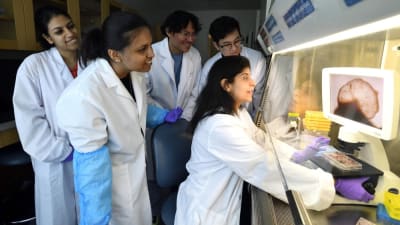
Johns Hopkins University researchers have grown a novel whole-brain organoid, complete with neural tissues and rudimentary blood vessels — an advance that could usher in a new era of research into neuropsychiatric disorders such as autism.
Blog: AR/AI
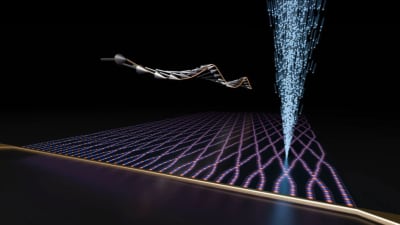
Scientists have engineered a vast spin waveguide network that processes information with far less energy. These spin waves quantum ripples in magnetic materials offer a promising alternative to power-hungry electronics.
Blog: Materials
The Zhang Lab’s latest advance, Phase Gradient Ultra-Open Metamaterial (PGUOM), centers on broadband silencing. Read on to learn more about it.

Blog: Robotics, Automation & Control
My Opinion: Industry 4.0 is already here — Agriculture 4.0 will catch up. Bringing automation and AI to agriculture is a necessity.

Blog: Robotics, Automation & Control
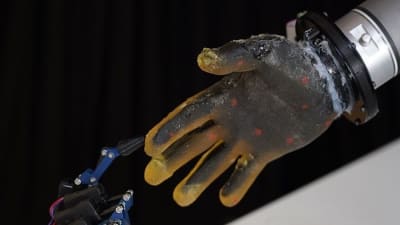
Scientists have developed a low-cost, durable, highly-sensitive robotic ‘skin’ that can be added to robotic hands like a glove, enabling robots to detect information about their surroundings in a way that’s similar to humans.
Blog: Design
Researchers from Drexel University have developed a standard testing process to give manufacturers a better look at the internal workings of batteries.

Blog: Robotics, Automation & Control
The team has developed the Safety-Assured High-Speed Aerial Robot (SUPER), capable of flying at speeds exceeding 20 meters per second [about 45 miles per hour] and avoiding obstacles as thin as 2.5 millimeters [about 0.1 inch] — such as power lines or twigs — using solely onboard sensors and computing power.

Blog: Design
A CU Boulder team is using digital twins — hyper-realistic VR environments — to provide a useful proxy for the moon, giving people a chance to get the hang of driving robots without risking damage to multi-million-dollar equipment.

Blog: Robotics, Automation & Control
Equine-Assisted Interventions (EAIs) offer a powerful alternative to traditional talking therapies for patients with PTSD, trauma, and autism who struggle to express and regulate emotions through words alone.

Blog: Design
The new robot, dubbed ATMO (aerially transforming morphobot), uses four thrusters to fly, but the shrouds that protect them become the system's wheels in an alternative driving configuration. The whole transformation relies on a single motor to move a central joint that lifts ATMO's thrusters up into drone mode or down into drive mode.

Top Stories
 Blog: Lighting

A Stretchable OLED that Can Maintain Most of Its Luminescence
 INSIDER: Design

Advancing All-Solid-State Batteries
 Blog: Energy

Batteries that Can Withstand the Cold
 Blog: AR/AI

My Opinion: We Need More Power Soon — Is Nuclear the Answer?
 News: Power

 Blog: Aerospace

Webcasts
 Upcoming Webinars: Test & Measurement

From Spreadsheets to Insights: Fast Data Analysis Without Complex...
 Upcoming Webinars: Aerospace

Cooling a New Generation of Aerospace and Defense Embedded...
 Upcoming Webinars: Test & Measurement

Beyond AI-Copy-Paste Engineering: Advanced AI-Integration Success...
 Upcoming Webinars: Test & Measurement

Battery Abuse Testing: Pushing to Failure
 Upcoming Webinars: AR/AI

A FREE Two-Day Event Dedicated to Connected Mobility
 Upcoming Webinars: Test & Measurement

Choosing the Right N-Port Strategy: Multiport VNAs vs. Switch...