38
-1
1350
30
Briefs: Materials
Subsurface Imaging of Nanocomposites
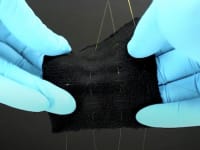
A nondestructive method that is based on modified atomic force ultrasonic microscopy (AFUM) methods has been developed for characterizing nanomaterials. The technology allows imaging and quantifying of material properties at the surface and subsurface levels. The technology reveals the orientation of nanotubes...
Briefs: Materials
Self-Healing Glass Sealants for Solid Oxide Fuel Cells and Electrolyzer Cells
A solid oxide fuel cell (SOFC) is an electrochemical device that converts chemical energy into electrical power. A solid oxide electrolyzer cell (SOEC) operates in a reverse mode of SOFC, and produces O2 and H2 gases. SOFCs are being developed for a broad range of...
Briefs: Materials
Micromachined Thermopile Arrays with Novel Thermo-electric Materials
Future missions to outer planets will have stringent limits on payload mass. Thermal imaging instruments to map planetary surfaces will be part of those payloads, and, consequently, will have to be compact and low mass. For thermal instruments, another key requirement will be...
Briefs: Materials
Low-Cost, High-Performance MMOD Shielding
High-performance micro-meteoroid and orbital debris (MMOD) shielding can be constructed from low-cost, off-the-shelf materials. The advantage in using this innovation is in achieving considerable reduction in both cost and mass of the shielding necessary to protect spacecraft from hypervelocity MMOD...
Briefs: Materials
ITO is a doped metal oxide semiconductor that combines two properties that usually are mutually exclusive in most materials: optical transparency and electrical conductivity. It is...

Briefs: Materials
Electride Mediated Surface Enhanced Raman Spectroscopy
A new sensor substrate supports Surface Enhanced Raman Spectroscopy. A ceramic electride is demonstrated to provide surface enhanced Raman scattering. This provides a sensitive method for monitoring the chemistry and electronic environment at the electride surface. The electride, an ionic...
Briefs: Materials
Patterned Carbon Nanotube Arrays for Displays
Multi-colored electronic displays that are dynamically reconfigurable require substantial electrical power and are limited in the amount of fine detail provided by the physical size of the light sources. For example, where phosphor elements are used, as in a television screen or computer monitor, the...
Briefs: Materials
Puncture Self-Healing Polymer for Aerospace Applications
A document discusses a puncture self-healing polymer for space exploration that is capable of puncture healing upon impact. Puncture healing occurs instantaneously, providing mechanical property retention in lightweight structures.
Briefs: Materials
Dispersion of Carbon Nanotubes Into Polymer Matrices to Produce Unique Properties
The present invention addresses the effective dispersion of carbon nanotubes (CNTs) into polymer matrices. The nanocomposites are prepared using polymer matrices and exhibit a unique combination of properties, most notably, high retention of optical transparency in...
Briefs: Materials
Carbon Nanotube Growth Density Control
This method provides control over the growth density of carbon nanotubes (CNTs) on a relatively coarse scale, with density adjustment over several orders of magnitude, using an applied electrical field or voltage difference that is aligned substantially perpendicular to the substrate surface, which is adjacent...
Briefs: Materials
Pulsed Plasma Lubricator (PPL) Technology for the In Situ Replenishment of Dry Lubricants in Extreme Environments
NASA missions employing mobility systems and other moving mechanical assemblies for application on Mars, the Moon, and in deep space depend on the reliable operation of these assemblies and their tribological components. Wet lubricants...
Briefs: Materials
Long-Life, Hydrophilic, Antimicrobial Coating for Condensing Heat Exchangers
Future manned spacecraft and lunar or Mars outposts will need a condensing heat exchanger (CHX) to control humidity in the cabin atmosphere. Condensing surfaces must be hydrophilic to control condensate flow and ensure efficient operation in zero gravity, and biocidal to...
Briefs: Materials
Opposed Pad Gecko Adhesive Gripper for On-Off Omnidirectional Anchoring/Gripping in Orbit
The idea of turning the stickiness of a material on and off is not an intuitive concept, yet this is exactly how geckos run up walls at speeds greater than 1 m/s and cling to ceilings made of glass. Transitioning this capability to spacecraft would constitute...
Briefs: Materials
Complex Geometry Multi-Use Coatings for Abrasion Prevention, Wear Resistance, and Lunar Dust Removal
Two coatings are required to remove/repel lunar dust particles from the mechanism or surface that needs protection. One coating must be a conductor, and one must be a dielectric. Tungsten carbide (WC) and aluminum oxide (Al2O3) were found to be best...
Briefs: Materials
The automotive industry faces growing pressure for more efficient vehicles. This pressure comes from many sources including government regulations, decreasing...
Briefs: Materials
Mechanistic-Based Multiaxial- Stochastic-Strength Model for Transversely- Isotropic Brittle Materials
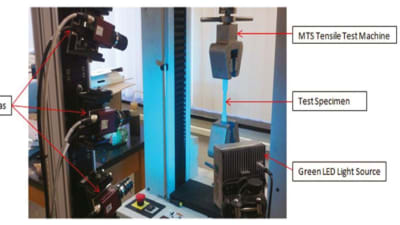
A methodology has been developed and the software written to predict the probability of failure of transversely isotropic (a type of anisotropy) materials under generalized thermomechanical loading. This methodology is mechanistic in that it is...
Briefs: Materials
Li-Ion Electrolytes Containing Flame-Retardant Additives
In order to improve the safety and performance of lithium- ion cells, especially over a wide operating temperature range, a number of Li-ion electrolytes have been developed that contain flame-retardant additives in conjunction with fluorinated co-solvents to provide a safe,...
Briefs: Materials
Touch Temperature Coating for Electrical Equipment on Spacecraft
A coating has been developed that can be applied to spacecraft equipment to significantly increase the allowable touch temperature limit, while only marginally degrading the heat transfer to the environment.
Briefs: Materials
Spacecraft shielding is defined as the outer layer of a satellite or spacecraft that protects it against micrometeorite and orbital debris (MMOD), radiation damage, and...
Briefs: Materials
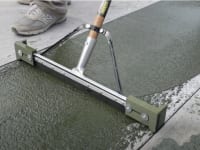
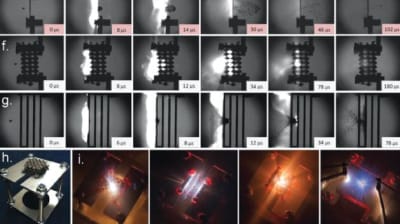
This product is an efficient concrete waterproofing solution. The crystalline, anti-corrosive material features a patented eka-molecular-sieve structure. The cement-based material...

Briefs: Materials
Aqueous Superabsorbent Coating (ASC) technology is a liquid polymer solution that dries to form an absorbent film. It can absorb up to 40 g/g by weight of water, depending on the...

Briefs: Materials
Mechanisms are used widely in engineering applications due to their ability to translate force and movement. They are found in kinematic pairs, gears, cams, linkages, and...
Briefs: Materials
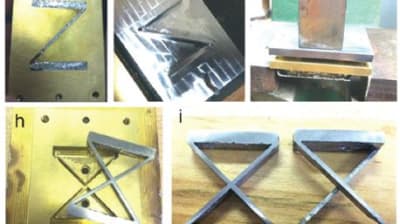
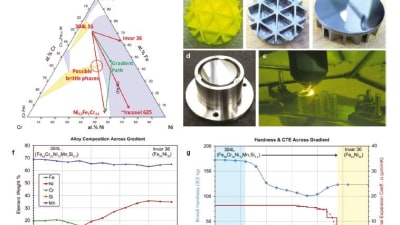
Recently, additive manufacturing (AM) techniques have been developed that may shift the paradigm of traditional metal production by allowing complex netshaped...
Briefs: Materials
Ambient Dried Aerogels
A method has been developed for creating aerogel using normal pressure and ambient temperatures. All spacecraft, satellites, and landers require the use of thermal insulation due to the extreme environments encountered in space and on extraterrestrial bodies. Ambient dried aerogels introduce the possibility of using aerogel...
Briefs: Materials
Passivation of Flexible YBCO Superconducting Current Lead With Amorphous SiO₂ Layer
Adiabatic demagnetization refrigerators (ADR) are operated in space to cool detectors of cosmic radiation to a few 10s of mK. A key element of the ADR is a superconducting magnet operating at about 0.3 K that is continually energized and de-energized in...
Briefs: Materials
Centrifugal Sieve for Gravity-Level-Independent Size Segregation of Granular Materials
Conventional size segregation or screening in batch mode, using stacked vibrated screens, is often a time-consuming process. Utilization of centrifugal force instead of gravity as the primary body force can significantly shorten the time to segregate feedstock...
Briefs: Materials
Ion Exchange Technology Development in Support of the Urine Processor Assembly
The urine processor assembly (UPA) on the International Space Station (ISS) recovers water from urine via a vacuum distillation process. The distillation occurs in a rotating distillation assembly (DA) where the urine is heated and subjected to sub-ambient pressure. As...
Briefs: Materials
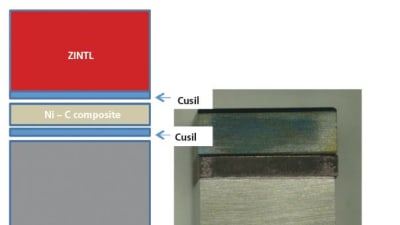
Next-generation high-temperature thermoelectric-power-generating devices will employ segmented architectures and will have to reliably withstand thermally induced mechanical...
Briefs: Materials
Microgravity Storage Vessels and Conveying-Line Feeders for Cohesive Regolith
Under microgravity, the usual methods of placing granular solids into, or extracting them from, containers or storage vessels will not function. Alternative methods are required to provide a motive force to move the material. New configurations for microgravity regolith...
Top Stories
 Blog: Lighting

A Stretchable OLED that Can Maintain Most of Its Luminescence
 Blog: Energy

Batteries that Can Withstand the Cold
 INSIDER: Energy

Advancing All-Solid-State Batteries
 Quiz: Energy

 Blog: Physical Sciences

 Blog: Materials

Webcasts
 Upcoming Webinars: Test & Measurement

From Spreadsheets to Insights: Fast Data Analysis Without Complex...
 Upcoming Webinars: Electronics & Computers

Cooling a New Generation of Aerospace and Defense Embedded...
 Upcoming Webinars: Test & Measurement

Beyond AI-Copy-Paste Engineering: Advanced AI-Integration Success...
 Upcoming Webinars: Automotive

Battery Abuse Testing: Pushing to Failure
 Upcoming Webinars: Internet of Things

A FREE Two-Day Event Dedicated to Connected Mobility
 Upcoming Webinars: Test & Measurement

Choosing the Right N-Port Strategy: Multiport VNAs vs. Switch...