38
-1
1560
30
Briefs: Materials
Electrolytes for Low-Temperature Operation of Li-CFₓ Cells
A report describes a study of electrolyte compositions selected as candidates for improving the low-temperature performances of primary electrochemical cells that contain lithium anodes and fluorinated carbonaceous (CFx) cathodes. This study complements the developments reported in...
Briefs: Materials
Polyimide-Foam/Aerogel Composites for Thermal Insulation
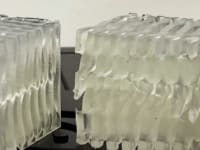
Composites of specific types of polymer foams and aerogel particles or blankets have been proposed to obtain thermal insulation performance superior to those of the neat polyimide foams. These composites have potential to also provide enhanced properties for vibration dampening or acoustic...
Briefs: Materials
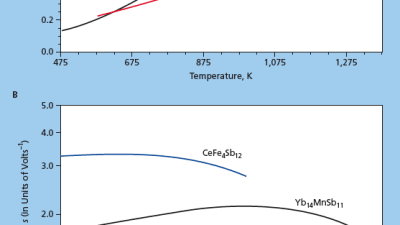
Yb14MnSb11 has been found to be well-suited for use as a p-type thermoelectric material in applications that involve hot-side temperatures in the approximate range of 1,200 to...
Briefs: Materials
Room-Temperature Ionic Liquids for Electrochemical Capacitors
A document discusses room-temperature ionic liquids (RTILs) used as electrolytes in carbon-nanotube-based, electrochemical, double-layer capacitors. Unlike the previous electrolyte (EtNB4 in acetonitrile), the RTIL used here does not produce cyanide upon thermal decomposition and does...
Briefs: Materials
Ultra-Lightweight Self- Deployable Nanocomposite Structure for Habitat Applications
A document discusses self-deployable, rigidized structures that are ultra-lightweight and have gas barrier properties, space durability, and high impact resistance. Developed here are microcellular-foamed sandwich structures made from nanocomposite shape memory...
Briefs: Materials
Polyimide-PEO copolymers (“PEO” signifies polyethylene oxide) that have branched rod-coil molecular structures and that can be cured into film form at room temperature...

Briefs: Materials
Catalysts for Efficient Production of Carbon Nanotubes
Several metal alloys have shown promise as improved catalysts for catalytic thermal decomposition of hydrocarbon gases to produce carbon nanotubes (CNTs). Heretofore almost every experiment on the production of carbon nanotubes by this method has involved the use of iron, nickel, or cobalt as...
Briefs: Materials
Amorphous Silk Fibroin Membranes for Separation of CO₂
Amorphous silk fibroin has shown promise as a polymeric material derivable from natural sources for making membranes for use in removing CO2 from mixed-gas streams. For most applications of silk fibroin, for purposes other than gas separation, this material is used in its highly crystalline,...
Briefs: Materials
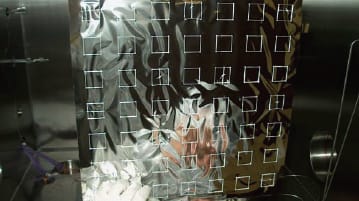
Integrated multilayer insulation (IMLI) is being developed as an improved alternative to conventional multilayer insulation (MLI), which is more than 50 years old. A typical conventional MLI blanket comprises...
Briefs: Electronics & Computers
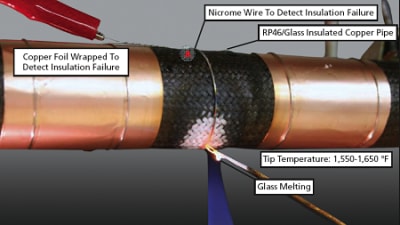
Lightweight composites of RP46 polyimide and glass fibers have been found to be useful as extraordinarily fire-resistant electrical-insulation materials. RP46 is a polyimide of the...
Briefs: Materials
Damage Detection and Self-Repair in Inflatable/Deployable Structures
Inflatable/deployable structures are under consideration for applications as varied as expansion modules for the International Space Station to destinations for space tourism to habitats for the lunar surface. Monitoring and maintaining the integrity of the physical structure is...
Briefs: Materials
Ceramic strain gauges in which the strain-sensitive electrically conductive strips made from nanocomposites of noble metal and indium tin oxide (ITO) are being developed for use in gas turbine...

Briefs: Materials
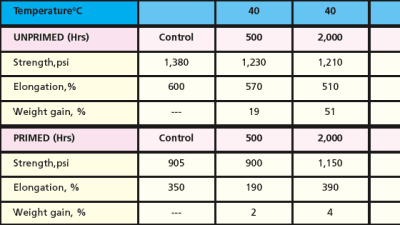
A simplified method has been developed for determining bond durability under exposure to water or high humidity conditions. It uses a small number of test specimens with relatively...
Briefs: Materials
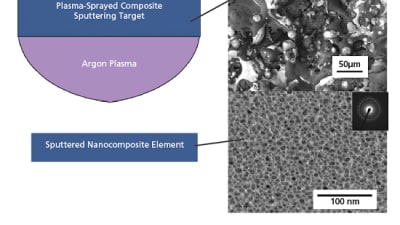
A material having useful thermoelectric properties was synthesized by combining indium-tin-oxide (ITO) with a NiCoCrAlY alloy/alumina cermet. This material had a very large...
Briefs: Materials
A methodology for developing complex multifunctional materials that consist of or contain polymer/ carbon-nanotube composites has been conceived. As used here, “multifunctional”...

Briefs: Materials
Gadolinia-doped ceria, or GDC, (Gd0.4Ce0.6O2–δ, where the value of δ in this material varies, depending on the temperature and oxygen concentration in the atmosphere in which it is...

Briefs: Energy
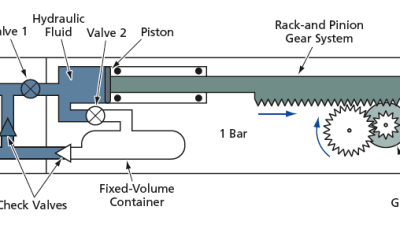
A proposed system for exploiting the ocean thermal gradient to generate power would be based on the thawing-expansion/ freezing-contraction behavior of a wax or perhaps another suitable phase-change...
Briefs: Imaging
The crew activity analyzer (CAA) is a system of electronic hardware and software for automatically identifying patterns of group activity among crew members working together in an office, cockpit, workshop, laboratory, or...

Briefs: Materials
Oxide Fiber Cathode Materials for Rechargeable Lithium Cells
LiCoO2 and LiNiO2 fibers have been investigated as alternatives to LiCoO2 and LiNiO2 powders used as lithium-intercalation compounds in cathodes of rechargeable lithium-ion electrochemical cells. In making such a cathode, LiCoO2 or LiNiO2 powder is mixed with a binder [e.g.,...
Briefs: Materials
Electrocatalytic Reduction of Carbon Dioxide to Methane
A room-temperature electrocatalytic process that effects the overall chemical reaction CO2 + 2H2O → CH4 + 2O2 has been investigated as a means of removing carbon dioxide from air and restoring oxygen to the air. The process was originally intended for use in a spacecraft life-support system,...
Briefs: Materials
Progress Toward Making Epoxy/Carbon-Nanotube Composites
A modicum of progress has been made in an effort to exploit single-walled carbon nanotubes as fibers in epoxy-matrix/fiber composite materials. Two main obstacles to such use of carbon nanotubes are the following: (1) bare nanotubes are not soluble in epoxy resins and so they tend to...
Briefs: Materials
A heterogeneous material construction has been devised for sensing coils of super-conducting quantum interference device (SQUID) magnetometers that are subject to a combination of...

Briefs: Materials
Predicting Properties of Unidirectional-Nanofiber Composites
A theory for predicting mechanical, thermal, electrical, and other properties of unidirectional-nanofiber/matrix composite materials is based on the prior theory of micromechanics of composite materials. In the development of the present theory, the prior theory of micromechanics was...
Briefs: Materials
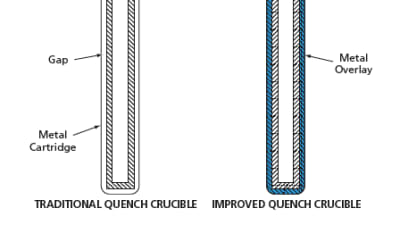
Improved crucibles consisting mainly of metal-reinforced ceramic ampules have been developed for use in experiments in which material specimens are heated in the crucibles to various high temperatures,...
Briefs: Materials
Adjustable Membrane Mirrors Incorporating G-Elastomers
Lightweight, flexible, large-aperture mirrors of a type being developed for use in outer space have unimorph structures that enable precise adjustment of their surface figures. A mirror of this type includes a reflective membrane layer bonded with an electrostrictive grafted elastomer...
Briefs: Materials
High-Temperature Crystal-Growth Cartridge Tubes Made by VPS
Cartridge tubes for use in a crystal-growth furnace at temperatures as high as 1,600°C have been fabricated by vacuum plasma spraying (VPS). These cartridges consist mainly of an alloy of 60 weight percent molybdenum with 40 weight percent rhenium, made from molybdenum powder coated...
Briefs: Materials
Hall-Effect Thruster Utilizing Bismuth as Propellant
A laboratory-model Hall-effect spacecraft thruster was developed that utilizes bismuth as the propellant. Xenon was used in most prior Hall-effect thrusters. Bismuth is an attractive alternative because it has a larger atomic mass, a larger electron- impact- ionization cross-section, and is...
Briefs: Materials
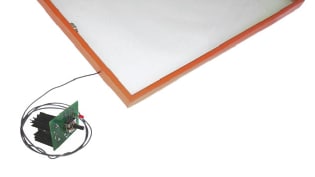
Applying an electric current to specially coated glass results in radiant heat energy. This process creates a transparent heating element with near- uniform surface temperatures. Manufacturing the...
Briefs: Materials
Method of Cross-Linking Aerogels Using a One-Pot Reaction Scheme
A document discusses a new, simplified method for cross-linking silica and other oxide aerogels, with a polymeric material to increase strength of such materials without adversely affecting porosity or low density. The usual process is long and arduous, requiring multiple washing and...
Top Stories
 Blog: Lighting

A Stretchable OLED that Can Maintain Most of Its Luminescence
 Blog: Energy

Batteries that Can Withstand the Cold
 INSIDER: Energy

Advancing All-Solid-State Batteries
 Quiz: Energy

 Blog: Physical Sciences

 Blog: Materials

Webcasts
 Upcoming Webinars: Test & Measurement

From Spreadsheets to Insights: Fast Data Analysis Without Complex...
 Upcoming Webinars: Electronics & Computers

Cooling a New Generation of Aerospace and Defense Embedded...
 Upcoming Webinars: Test & Measurement

Beyond AI-Copy-Paste Engineering: Advanced AI-Integration Success...
 Upcoming Webinars: Automotive

Battery Abuse Testing: Pushing to Failure
 Upcoming Webinars: Internet of Things

A FREE Two-Day Event Dedicated to Connected Mobility
 Upcoming Webinars: Test & Measurement

Choosing the Right N-Port Strategy: Multiport VNAs vs. Switch...