51
-1
360
30
Briefs: Sensors/Data Acquisition
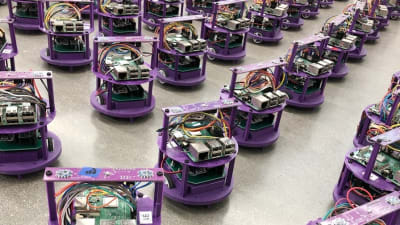
This technology could help control driverless cars and automated warehouses.
Briefs: Manufacturing & Prototyping
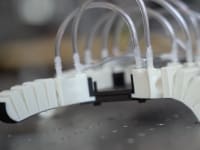
Square trusses replace round for enhanced strength and robotics compatibility.

Briefs: Robotics, Automation & Control
Robot-assisted surgery has advanced dramatically over the past decade in almost every surgical sub-specialty. Robot-assisted surgery is usually performed using surgical robot systems that involve...

Briefs: Robotics, Automation & Control
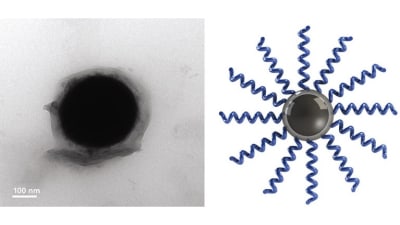
These materials can be used in soft robotics, self-healing electronics, and medical devices.
Briefs: Communications
The newest PLCs can directly access Internet resources, much like a mobile device, to obtain information for improving operations.

Briefs: Transportation
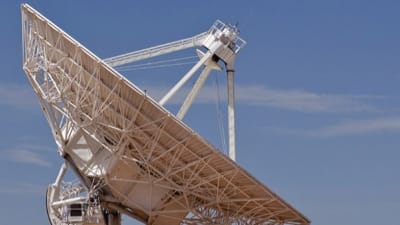
Applications include homeland security, vehicle anti-collision systems, telecommunications systems, and industrial instrumentation.
Briefs: Aerospace
The new arm design enables unmanned aerial vehicles to fly in windy conditions.

Briefs: Test & Measurement
The device retrains patients with spinal cord injury to sit more stably and gain an expanded active sitting workspace.

Briefs: Mechanical & Fluid Systems
This technology could impact new directions in robotics design.

Briefs: Photonics/Optics
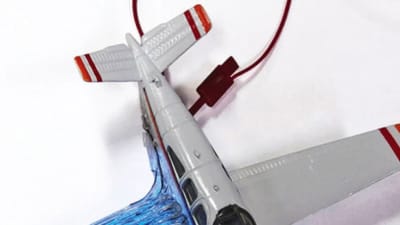
Filaments with embedded circuitry can be used to print complex shapes for biomedical and robotic devices.
Briefs: Manufacturing & Prototyping
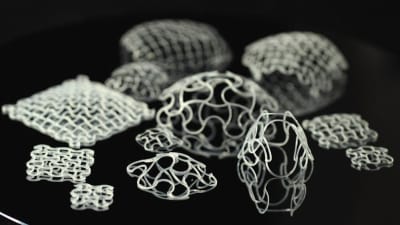
The flat structure morphs into another shape when temperature changes, enabling self-deploying tents or adaptive robotic fins.
Briefs: Manufacturing & Prototyping
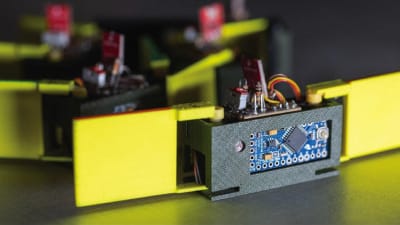
The robot is built entirely from smaller robots and can form a robophysical system that can move by itself.
Briefs: Motion Control
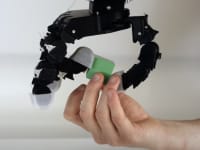
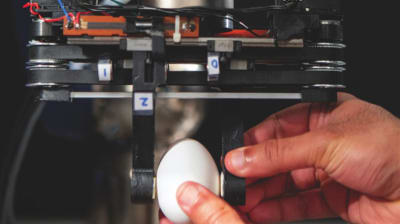
Such grippers would be suited for human-robot partnership in assembly lines in the automotive, electronic packaging, and other industries.
Briefs: Materials
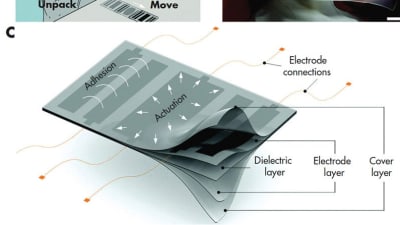
These soft robots can be rolled up and carried in a pocket.
Briefs: Robotics, Automation & Control
Systems of tiny robots could build high-performance structures, from airplanes to space settlements.
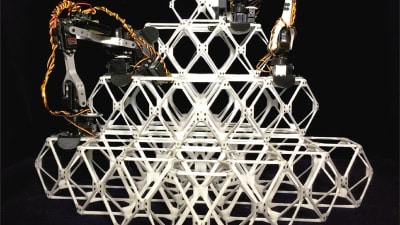
Briefs: Energy
This robot “blood” stores energy, transmits force, operates appendages, and provides structure, all in an integrated design.

Briefs: Photonics/Optics
Such machines, only a few tens of micrometers across, could be used in the human body to perform small operations.
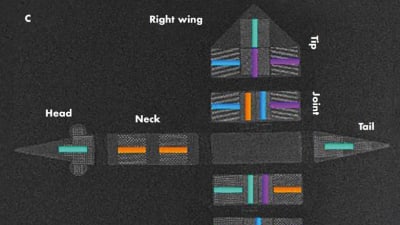
Briefs: Sensors/Data Acquisition
A system senses tiny changes in shadows on the ground to determine if there’s a moving object coming around the corner.

Briefs: Motion Control
This microbot can walk on land, swim, and walk underwater.
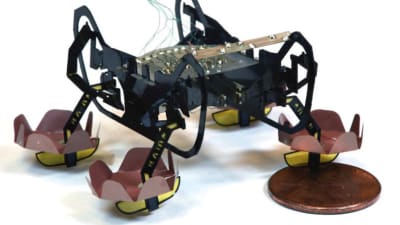
Briefs: Robotics, Automation & Control
Various components are used to assemble robots that are more aware of their surroundings.
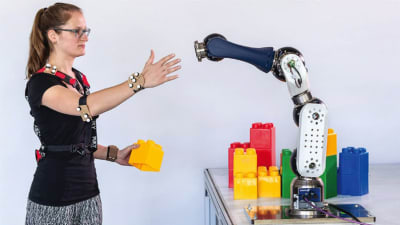
Briefs: Robotics, Automation & Control
Loosely connected disc-shaped “particles” can push and pull one another, moving together to transport objects.

Briefs: Robotics, Automation & Control
This microrobot with soft actuators can crash, fall, and collide without being damaged.
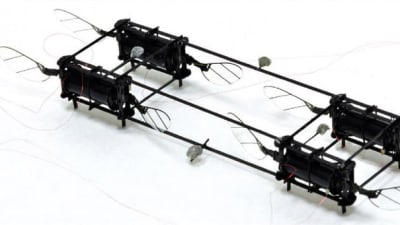
Briefs: Motion Control
An upgraded mini robot can leap over obstacles with ease.
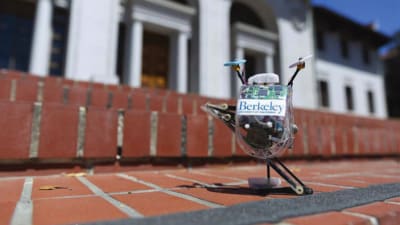
Briefs: Aerospace
A technology uses a combination of WiFi signals and accelerometer technology to track devices in near-real-time.

Briefs: Electronics & Computers
A synthetic skin enables robots to sense their own bodies and surroundings

Briefs: Aerospace
The technology can be used in commercial motors, robotic systems, and hybrid and electric vehicles.

Briefs: Mechanical & Fluid Systems
The algorithm speeds up the planning process that robots use to adjust their grip on objects.

Briefs: Mechanical & Fluid Systems
For decades, robots in controlled environments like assembly lines have been able to pick up the same object over and over again. More recently, breakthroughs in computer vision have enabled...

Briefs: RF & Microwave Electronics
A novel approach was developed to improve communications range and allow for covert behavior using a team of robots for future multi-domain operations. Specifically, researchers demonstrated...

Top Stories
 Blog: Power

My Opinion: We Need More Power Soon — Is Nuclear the Answer?
 Blog: AR/AI
Aerial Microrobots That Can Match a Bumblebee's Speed
 News: Energy

 Blog: Electronics & Computers

Turning Edible Fungi into Organic Memristors
 Blog: Robotics, Automation & Control

Microscopic Swimming Machines that Can Sense, Respond to Surroundings
 INSIDER: Sensors/Data Acquisition
Webcasts
 Upcoming Webinars: Energy

Hydrogen Engines Are Heating Up for Heavy Duty
 Upcoming Webinars: Transportation

Advantages of Smart Power Distribution Unit Design for Automotive...
 Upcoming Webinars: Automotive

Quiet, Please: NVH Improvement Opportunities in the Early Design...
 Upcoming Webinars: Test & Measurement

From Spreadsheets to Insights: Fast Data Analysis Without Complex...
 Upcoming Webinars: Power

Battery Abuse Testing: Pushing to Failure
 Upcoming Webinars: Internet of Things