41,46
-1
180
30
Briefs: Design
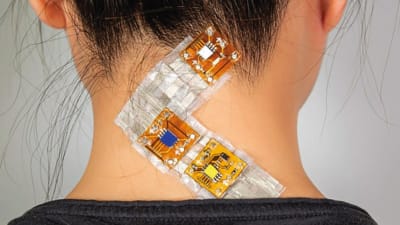
The next generation of wearable computing technology will be even closer to the wearer than a watch or glasses: It will be affixed to the skin.
Briefs: Automotive
Research reveals that expertly timed lasers shined at an approaching LIDAR system can create a blind spot in front of the vehicle.

Briefs: Sensors/Data Acquisition
To improve efficiency, it is necessary to characterize and reduce flow separation on curved surfaces.

Briefs: Sensors/Data Acquisition
The work shows the real-world viability of their easy-to-use and inexpensive methods of testing.

Briefs: Electronics & Computers
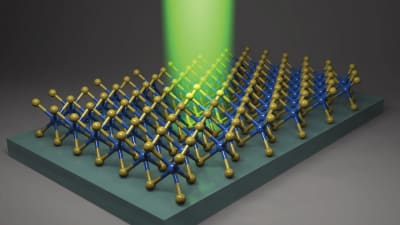
2D materials can be packed together more densely than conventional materials, so they could be used to make devices that run faster and perform better.
Briefs: Sensors/Data Acquisition
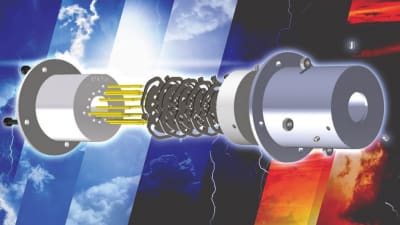
Scientists have created the first completely digitally manufactured plasma sensors — also known as retarding potential analyzers (RPAs) — for orbiting spacecraft.
Briefs: Wearables
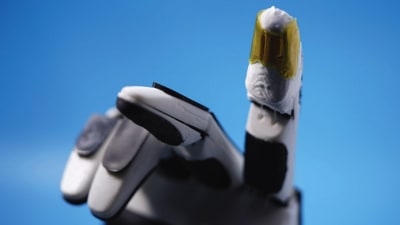
Real-time health monitoring and sensing abilities of robots require soft electronics but a challenge of using such materials lies in their reliability.
Briefs: Sensors/Data Acquisition
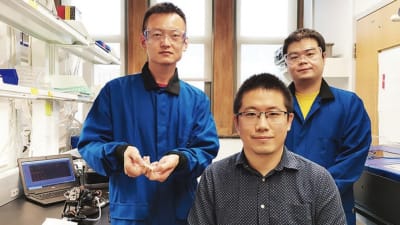
Engineers have developed a thin, flexible, stretchy sweat sensor that can show the level of glucose, lactate, sodium, or pH of your sweat — at the press of a finger.

Briefs: Sensors/Data Acquisition
The sensor can be stretched up to 50 percent with almost the same sensing performance.
Briefs: Medical
Using a suspended nanowire, a research team has created a tiny sensor that can simultaneously measure electrical and mechanical cellular responses in cardiac tissue — a first.

Briefs: Test & Measurement
The research team has been developing very large, detailed models — like their simulations of the San Francisco Bay Area for M7 Hayward fault earthquakes — which has 391 billion model grid points.

Briefs: Connectivity
A new study suggests mobile data collected while traveling over bridges could help evaluate their integrity.

Briefs: Design
The device is 100 percent electrically controllable regarding the colors of light it absorbs, which gives it massive potential for widespread usability.

Briefs: Robotics, Automation & Control
The model allows robots to ask clarifying questions to soldiers.

Briefs: Sensors/Data Acquisition
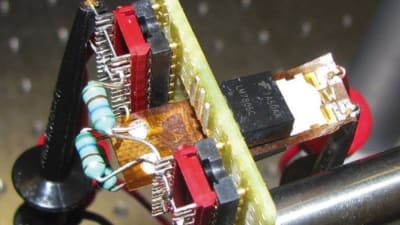
Potential uses include MEMS accelerometers, vibration monitoring, and other precision motion control applications.
Briefs: Aerospace
The tiny device accurately measures acceleration in smaller navigation systems and other devices.

Briefs: Mechanical & Fluid Systems
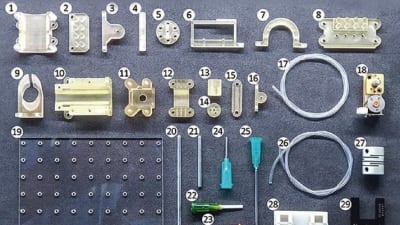
Users can download the design files to 3D print and assemble a customizable peristaltic pump.
Briefs: Test & Measurement
Device detects pulse rate and blood oxygen saturation in real time.

Briefs: Sensors/Data Acquisition
The respirator earned a 100 percent success rate for fit testing.

Briefs: Sensors/Data Acquisition
This set of oculomotor metrics provide valid and reliable measures of dynamic visual performance.

Briefs: Electronics & Computers
A new area of artificial intelligence called analog deep learning promises faster computation with a fraction of the energy usage.

Briefs: Robotics, Automation & Control
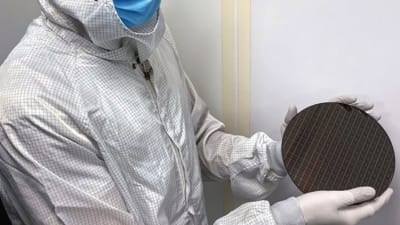
A team has installed electronic “brains” on solar-powered robots that are 100 to 250 micrometers in size so that they can walk autonomously.
Briefs: Design
The new system learns directly from visual inputs to let a robot with a two-fingered gripper see, simulate, and shape doughy objects.

Briefs: Mechanical & Fluid Systems
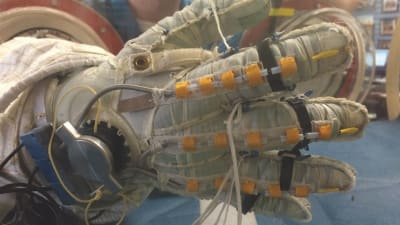
NASA is developing the next generation of spacesuits for future missions.
Briefs: Design
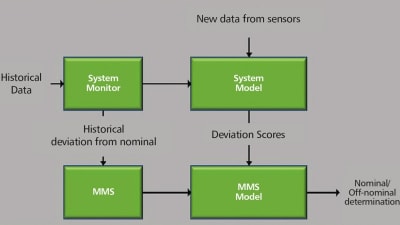
MMS was developed as an add-on to NASA Ames-patented Inductive Monitoring System (IMS), which estimates deviation from normal system operations.
Briefs: Sensors/Data Acquisition
The LiDAR sensor utilizes Frequency Modulated Continuous Wave (FMCW) technique to determine the distance to the target and the velocity between the sensor and target.
Briefs: Photonics/Optics
Compact, Temperature-Tuned OFDR Laser
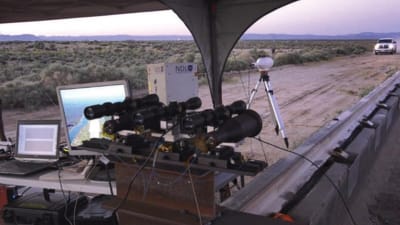
NASA has focused on OFDR, an alternative FBG interrogation technique based on laser interferometry.
Briefs: Materials
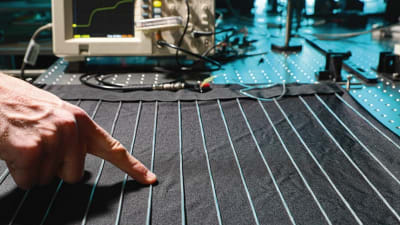
The fibers measure subtle and complex fabric deformations.
Briefs: Sensors/Data Acquisition
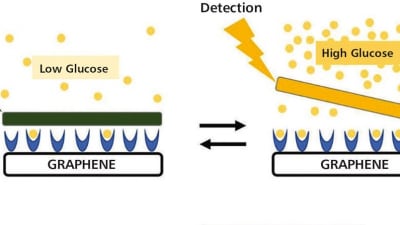
Since it is a chemical sensor instead of being enzyme-based, the new technology is robust, has a long shelf-life and can be tuned to detect lower glucose concentrations than current systems.
Top Stories
 Blog: Lighting

A Stretchable OLED that Can Maintain Most of Its Luminescence
 Blog: Energy

Batteries that Can Withstand the Cold
 INSIDER: Energy

Advancing All-Solid-State Batteries
 Quiz: Energy

 Blog: Physical Sciences

 Blog: Materials

Webcasts
 Upcoming Webinars: Test & Measurement

From Spreadsheets to Insights: Fast Data Analysis Without Complex...
 Upcoming Webinars: Electronics & Computers

Cooling a New Generation of Aerospace and Defense Embedded...
 Upcoming Webinars: Test & Measurement

Beyond AI-Copy-Paste Engineering: Advanced AI-Integration Success...
 Upcoming Webinars: Automotive

Battery Abuse Testing: Pushing to Failure
 Upcoming Webinars: Internet of Things

A FREE Two-Day Event Dedicated to Connected Mobility
 Upcoming Webinars: Test & Measurement

Choosing the Right N-Port Strategy: Multiport VNAs vs. Switch...