41,46
-1
1320
30
Briefs: Sensors/Data Acquisition
Position Sensing and Formation Flying Using Optical Beacons
One way of imaging exoplanets around nearby stars is to use a starshade in conjunction with a space telescope. Typically, the starshade, which resembles a sunflower in outline, is ~ 30 meters in diameter. The starshade is flown about 50,000 km in front of the telescope, and when positioned...
Briefs: Sensors/Data Acquisition
Multiple-Frequency-Band Software-Defined Radiometer
Remote sensing — the use of spacebased satellite technologies to obtain information on environmental variables — in combination with other types of data, can provide information on changes in the Earth’s surface and atmosphere that are critical for weather forecasting and responding to human...
Briefs: Data Acquisition
GRAVITE Pull Server
Government Resource for Algorithm Verification, Independent Test, and Evaluation (GRAVITE) system is a National Oceanic and Atmospheric Administration (NOAA) system, developed and deployed by Joint Polar Satellite System (JPSS) Ground Project to support Calibration and Validation (Cal/Val), Data Quality Monitoring, and Algorithm...
Briefs: Sensors/Data Acquisition
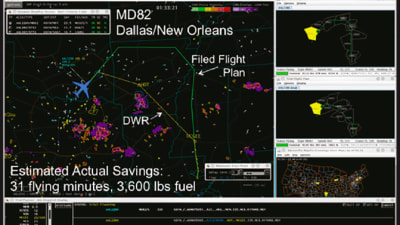
Convective weather systems, i.e., thunderstorms, are the leading cause of flight delay in U.S. airspace. Airline dispatchers must file their flight plans 1 to 2 hours before takeoff, and are often required to...
Briefs: Sensors/Data Acquisition
ATMS Antenna Beam Analysis Software
The Advanced Technology Microwave Sounder (ATMS) Antenna Beam Analysis Software uses a suite of test data to calculate the ATMS instrument beam pointing, and secondarily, the polarization state, in the coordinates of the onboard optical cube. The software uses measurement inputs of RF radiation pattern...
Briefs: Sensors/Data Acquisition
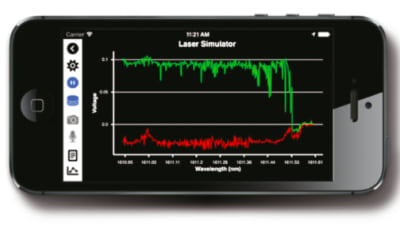
Most instruments under development rely on a traditional computer or laptop, LabVIEW software, and data acquisition (DAQ) components (which interface between the instrument and the...
Briefs: Sensors/Data Acquisition
GRAVITE Incinerator
Government Resource for Algorithm Verification, Independent Test, and Evaluation (GRAVITE) system is a National Oceanic and Atmospheric Administration (NOAA) system, developed and deployed by Joint Polar Satellite System (JPSS) Ground Project to support Calibration and Validation (Cal/Val), Data Quality Monitoring, and Algorithm...
Briefs: Sensors/Data Acquisition
GRAVITE Distribution
Government Resource for Algorithm Verification, Independent Test, and Evaluation (GRAVITE) system is a National Oceanic and Atmospheric Administration (NOAA) system, developed and deployed by Joint Polar Satellite System (JPSS) Ground Project to support Calibration and Validation (Cal/Val), Data Quality Monitoring, and...
Briefs: Sensors/Data Acquisition
GRAVITE Planner
Government Resource for Algorithm Verification, Independent Test, and Evaluation (GRAVITE) system is a National Oceanic and Atmospheric Administration (NOAA) system, developed and deployed by Joint Polar Satellite System (JPSS) Ground Project to support Calibration and Validation (Cal/Val), Data Quality Monitoring, and Algorithm...
Briefs: Sensors/Data Acquisition
GRAVITE Upload Tool
Government Resource for Algorithm Verification, Independent Test, and Evaluation (GRAVITE) system is a National Oceanic and Atmospheric Administration (NOAA) system, developed and deployed by Joint Polar Satellite System (JPSS) Ground Project to support Calibration and Validation (Cal/Val), Data Quality Monitoring, and Algorithm...
Briefs: Sensors/Data Acquisition
SMAP SDS Science Processing and Data Management System
The Science Processing and Data Management (SPDM) system’s primary functions are to control and monitor science processes and data products for Soil Moisture Active Passive (SMAP) Science Data System (SDS). SPDM adapts the Apache/OODT Framework 0.3 as the basic infrastructure. Although the...
Briefs: Sensors/Data Acquisition
Hyperlinked Overview of Piloted Evaluations (HOPE) Web- Based Data Archive
The Hyperlinked Overview of Piloted Evaluations (HOPE) application provides an interface for users to enter data on pilots, metrics, configurations, tasks, and data collection sessions, as well as descriptive information for each item and the experiment as a whole. As this...
Briefs: Sensors/Data Acquisition
GRAVITE Database
Government Resource for Algorithm Verification, Independent Test, and Evaluation (GRAVITE) system is a National Oceanic and Atmospheric Administration (NOAA) system, developed and deployed by Joint Polar Satellite System (JPSS) Ground Project to support Calibration and Validation (Cal/Val), Data Quality Monitoring, and Algorithm...
Briefs: Sensors/Data Acquisition
GRAVITE Monitor
Government Resource for Algorithm Verification, Independent Test, and Evaluation (GRAVITE) system is a National Oceanic and Atmospheric Ad - ministration (NOAA) system, developed and deployed by Joint Polar Satellite System (JPSS) Ground Project to support Calibration and Validation (Cal/Val), Data Quality Monitoring, and Algorithm...
Briefs: Sensors/Data Acquisition
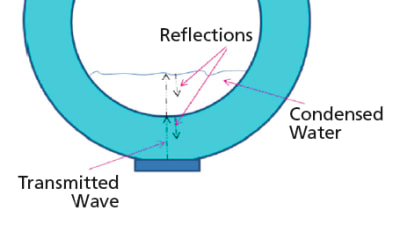
An algorithm for analyzing wave reflections and time-of-flight ultrasonic pulse-echo data has been developed for monitoring the health of steam...
Briefs: Sensors/Data Acquisition
Satellite Situation Update
Satellite Situation Update (SSUP) software shows the current locations of a selected set of orbiting spacecraft, along with each satellite’s ground track and/or orbit shape. SSUP is intended as a real-time display, showing multiple spacecraft, that is suitable for a large wall monitor meant to be in public spaces for...
Briefs: Test & Measurement
Optical Alignment of the Global Precipitation Measurement (GPM) Spacecraft
Theodolite autocollimation metrology continues to play an important part in spacecraft optical alignment. Spacecraft optical alignment is both art and science for using optical instruments to place or determine the orientation and envelope of critical components on...
Briefs: Sensors/Data Acquisition
Non-Intrusive, On-Line, Simultaneous Multi-Species Impurity Monitor for Hydrogen Gas
In testing hydrogen-fueled engines, the purity of the hydrogen fuel is important. Hydrogen may become contaminated with nitrogen (N2), argon (Ar), or oxygen (O2), thereby making the hydrogen unusable for engine testing at Stennis Space Center (SSC). Therefore, for...
Briefs: Sensors/Data Acquisition
X1 Human Interface Detection System (HIDS)
This innovation is a sensor technology that can detect pressures, such as ground force reactions, down to 30 g in weight with a minimum resolution of 5 × 5 mm (resolution dictated by the limitations of the resistor grid array). This device uses a commercially available resistor grid array and custom...
Briefs: Sensors/Data Acquisition
Spacesuit Glove Cut/Damage Warning System
Current spacesuit gloves used by astronauts on the International Space Station (ISS) have sustained cuts during extravehicular activities (EVAs) due to sharp edges and burrs, possibly on damaged ISS handrails. A warning system in the glove would aid in identifying the location of sharp objects and the...
Briefs: Test & Measurement
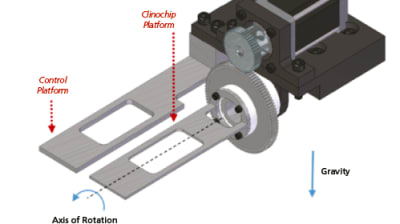
The deleterious effects of microgravity are undeniable: reduced bone mineral density, muscle atrophy, vascular remodeling, etc. These health issues...
Briefs: Test & Measurement
The primary function of a window is to allow observation of, and protection from, a potentially hazardous environment. Yet, from the window designer’s point of view,...

Briefs: Test & Measurement
Measurement of O-phthalaldehyde (OPA)
O-phthalaldehyde (OPA) is a high-level disinfectant commonly used, for example, for sterilization of heat-sensitive medical instruments; it demonstrates effective microbicidal activity against a wide range of microorganisms (including mycobacteria, gramnegative bacteria, and spores). On the International Space...
Briefs: Test & Measurement
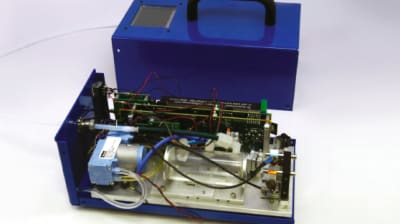
Fire safety in space vehicles is of utmost importance, especially for manned flight. On the International Space Station (ISS), events that may lead to fires, especially smoldering, must be...
Briefs: Test & Measurement
Decomposition Technique for Remaining Useful Life Prediction
Technology has been developed that provides a way to compute the remaining useful life (RUL) of a component or system. The estimation of the RUL of a degraded or faulty component is at the center of condition-based maintenance, and prognostics and health management. It gives operators a...
Briefs: Test & Measurement
Researchers at NASA’s Armstrong Flight Research Center have developed and tested a new strain gage that makes significant strides in the state of the art, particularly salient given the...
Briefs: Sensors/Data Acquisition
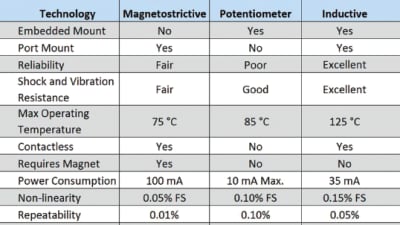
Position feedback sensors for hydraulic or pneumatic cylinders have used one of three traditional technologies: magnetostrictive, variable resistance, and variable inductance. As the...
Briefs: Sensors/Data Acquisition
Detection of Gases and Vapors Present at Low Concentrations
A nanostructure-based mechanism was developed for sensing the presence of, and estimating concentration values of, specified chemical components in a sample gas to which the mechanism is exposed, where the concentrations may be as low as five parts per billion. The mechanism receives a...
Briefs: Sensors/Data Acquisition
Broadband Photon-Counting Microwave Kinetic Inductance Detector
The planar Microwave Kinetic Inductance Detector (MKID) is very compact and allows a large number of detectors to be fabricated simultaneously and implemented in a focal plane of a telescope using a minimal number of wiring interfaces. In this detector, the incident power is guided...
Top Stories
 Blog: Lighting

A Stretchable OLED that Can Maintain Most of Its Luminescence
 Blog: Energy

Batteries that Can Withstand the Cold
 INSIDER: Energy

Advancing All-Solid-State Batteries
 Quiz: Energy

 Blog: Physical Sciences

 Blog: Materials

Webcasts
 Upcoming Webinars: Test & Measurement

From Spreadsheets to Insights: Fast Data Analysis Without Complex...
 Upcoming Webinars: Electronics & Computers

Cooling a New Generation of Aerospace and Defense Embedded...
 Upcoming Webinars: Test & Measurement

Beyond AI-Copy-Paste Engineering: Advanced AI-Integration Success...
 Upcoming Webinars: Automotive

Battery Abuse Testing: Pushing to Failure
 Upcoming Webinars: Internet of Things

A FREE Two-Day Event Dedicated to Connected Mobility
 Upcoming Webinars: Test & Measurement

Choosing the Right N-Port Strategy: Multiport VNAs vs. Switch...