-1
1110
30
Briefs: Robotics, Automation & Control
The software can be integrated with existing hardware to aid people using robotic prosthetics or exoskeletons.

Briefs: Mechanical & Fluid Systems
These “living machines” hold potential for applications from medical treatments to improving the environment.

Briefs: Propulsion
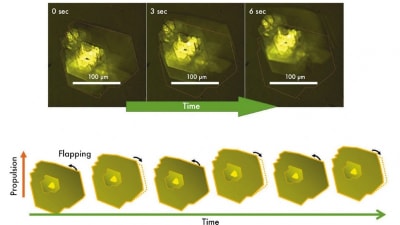
Synthesized micro-robots can convert their mechanical motion into a means of self-propulsion in water.
Briefs: Manufacturing & Prototyping
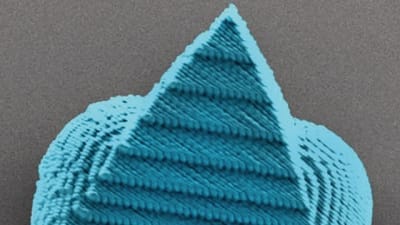
A remotely controlled microswimmer could navigate the human body and aid in drug delivery.
Briefs: Motion Control
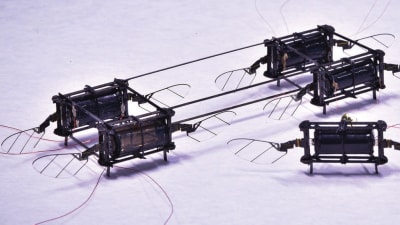
A new fabrication technique helps improve the performance of flying micro-robots.
Briefs: Electronics & Computers
A new fabrication methodology addresses the need for a thin, double-sided circuitry board.

Briefs: Electronics & Computers
Vibrating transducers create tunnels in a thin layer of oil to transport droplets across a chip without leaving a trace behind.

Briefs: Semiconductors & ICs
The sulfolane-additive process yields easy fabrication, low cost, and long operating life.

Briefs: Mechanical & Fluid Systems
A 3D-printable elastomer yields soft, elastic objects that feel like human tissue.

Briefs: Semiconductors & ICs
Sensing is incorporated directly into an object’s material, with applications for assistive technology and “intelligent” furniture.
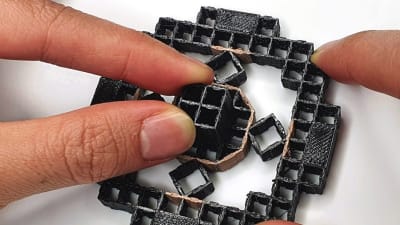
Briefs: Materials
Parts remain crack-free and defect-resistant, making them conducive for use in metal-based 3D-printing applications.
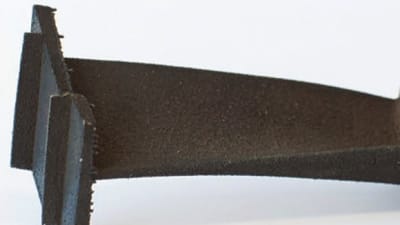
Briefs: Materials
Inspired by barnacles, the paste provides an effective way to treat traumatic injuries and help control bleeding during surgery.

Briefs: Energy
The synthetic material is soft but can withstand heavy loading with minimum wear and tear for engineering applications.
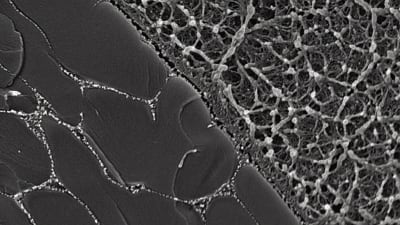
Briefs: Materials
The carbon fiber reinforced material can be repeatedly healed with heat.
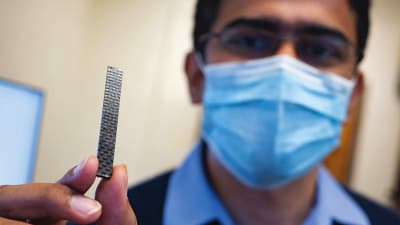
Briefs: Electronics & Computers
Textiles and items of clothing can be converted into e-textiles without affecting their original properties.
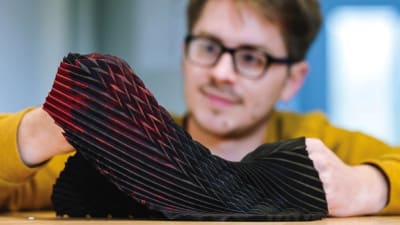
Briefs: AR/AI
This combination of technologies could enable developments for many optical applications.

Briefs: Sensors/Data Acquisition
Applications include aircraft-mounted and space-based interferometers, electronics fabrication, and military optics.
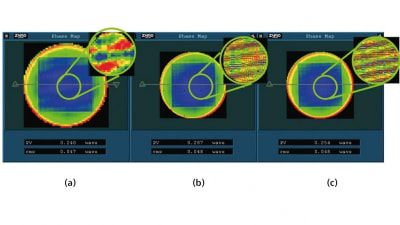
Briefs: Photonics/Optics
This new design overcomes a long-standing LED efficiency problem and can also transform it into a laser.
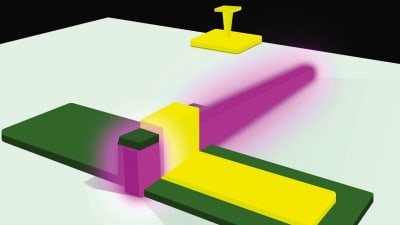
Briefs: Energy
Fano Resonance Optical Coatings can both transmit and reflect the same color simultaneously.
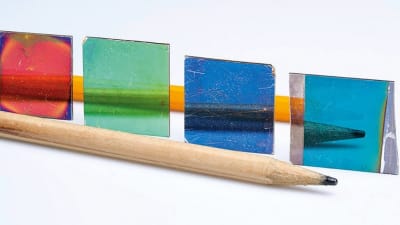
Briefs: RF & Microwave Electronics
Mechanical control and modulation of light on a silicon chip could enhance LiDAR.
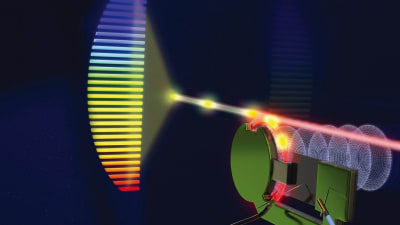
Briefs: Imaging
Using ambient light, the reflective screen keeps energy consumption to a minimum.

Briefs: Wearables
The camera captures pulse and respiration signals from a video of a person’s face.

Briefs: Photonics/Optics
The camera could have uses in faster disease diagnosis and thinner cellphones.
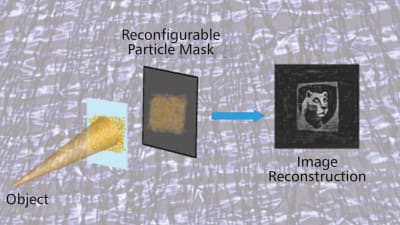
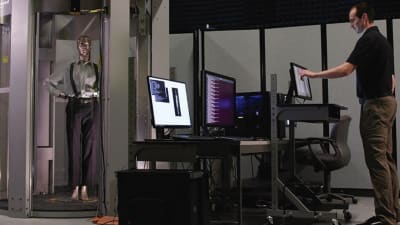
Briefs: Sensors/Data Acquisition
In an airport, the scanner could eliminate the need for passengers to remove shoes at the checkpoint, speeding the screening process.
Briefs: Imaging
This system enables fast analysis of hyperspectral images in disaster response or target detection scenarios.

Briefs: Manufacturing & Prototyping
The technology shines through fabrics to show notifications for email messages, time, weather, or other forms of basic information.

Briefs: Test & Measurement
A machine learning method promises to predict battery health with 10 times higher accuracy than the current industry standard.

Briefs: Electronics & Computers
The biofuel cells can power wearable electronics purely by using human sweat.

Briefs: Energy
The device is stretchy enough to wear like a ring, a bracelet, or any other accessory that touches the skin.

Top Stories
 Blog: Design

A Stretchable OLED that Can Maintain Most of Its Luminescence
 INSIDER: Design

Advancing All-Solid-State Batteries
 Blog: Power

My Opinion: We Need More Power Soon — Is Nuclear the Answer?
 Blog: Energy

Batteries that Can Withstand the Cold
 Quiz: Power

 Blog: Robotics, Automation & Control

Microscopic Swimming Machines that Can Sense, Respond to Surroundings
Webcasts
 On-Demand Webinars: Electronics & Computers

Advantages of Smart Power Distribution Unit Design for Automotive &...
 Upcoming Webinars: Unmanned Systems

Quiet, Please: NVH Improvement Opportunities in the Early Design...
 Upcoming Webinars: AR/AI

From Spreadsheets to Insights: Fast Data Analysis Without Complex...
 Upcoming Webinars: Defense

Cooling a New Generation of Aerospace and Defense Embedded...
 Upcoming Webinars: Software

Beyond AI-Copy-Paste Engineering: Advanced AI-Integration Success...
 Upcoming Webinars: Energy