-1
6090
30
Briefs: Photonics/Optics
Miniature Laser Magnetometer
A conceptual design has been developed for a miniature laser magnetometer (MLM) that will measure the scalar magnitude and vector components of near-Earth magnetic fields. The MLM incorporates a number of technical innovations to achieve high-accuracy and high-resolution performance while significantly reducing the size...
Briefs: Photonics/Optics
Low-Power, Self-Calibrated Vector Magnetometer
NASA satellites measure vector magnetic fields around planets to learn about the geology of the planets. Existing fluxgate magnetometers drift as a result of temperature and aging. A magnetometer whose calibration was stable would improve investigations of planets and the solar system.
Briefs: Physical Sciences
Dynamic Monitoring of Cleanroom Fallout Using an Air Particle Counter
The particle fallout limitations and periodic allocations for the James Webb Space Telescope are very stringent. Standard prediction methods are complicated by non-linearity and monitoring methods that are insufficiently responsive. A method for dynamically predicting the...
Briefs: Software
Test Generator for MATLAB Simulations
MATLAB Automated Test Tool, version 3.0 (MATT 3.0) is a software package that provides automated tools that reduce the time needed for extensive testing of simulation models that have been constructed in the MATLAB programming language by use of the Simulink and Real-Time Workshop programs. MATT 3.0 runs on top...
Briefs: Mechanical & Fluid Systems
Crush Test Abuse Stand
The purpose of this system is to simulate an internal short on battery cells by causing deformation (a crushing force) in a cell without penetration. This is performed by activating a hydraulic cylinder on one side of a blast wall with a hydraulic pump located on the other. The operator can control the rate of the crush by...
Briefs: Materials
Metal-Matrix/Hollow-Ceramic-Sphere Composites
A family of metal/ceramic composite materials has been developed that are relatively inexpensive, lightweight alternatives to structural materials that are typified by beryllium, aluminum, and graphite/epoxy composites. These metal/ceramic composites were originally intended to replace beryllium (which...
Briefs: Physical Sciences
Fused Reality for Enhanced Flight Test Capabilities
The feasibility of using Fused Reality-based simulation technology to enhance flight test capabilities has been investigated. In terms of relevancy to piloted evaluation, there remains no substitute for actual flight tests, even when considering the fidelity and effectiveness of modern...
Briefs: Physical Sciences
Enhancement to Non-Contacting Stress Measurement of Blade Vibration Frequency
A system for turbo machinery blade vibration has been developed that combines time-of-arrival sensors for blade vibration amplitude measurement and radar sensors for vibration frequency and mode identification. The enabling technology for this continuous blade monitoring...
Briefs: Physical Sciences
Thermography to Inspect Insulation of Large Cryogenic Tanks
Thermography has been used in the past to monitor active, large, cryogenic storage tanks. This approach proposes to use thermography to monitor new or refurbished tanks, prior to filling with cryogenic liquid, to look for insulation voids. Thermography may provide significant cost and...
Briefs: Electronics & Computers
UAVSAR Active Electronically Scanned Array
The Uninhabited Airborne Vehicle Synthetic Aperture Radar (UAVSAR) is a pod-based, L-band (1.26 GHz), repeatpass, interferometric, synthetic aperture radar (InSAR) used for Earth science applications. Repeat-pass interferometric radar measurements from an airborne platform require an antenna that can be...
Briefs: Electronics & Computers
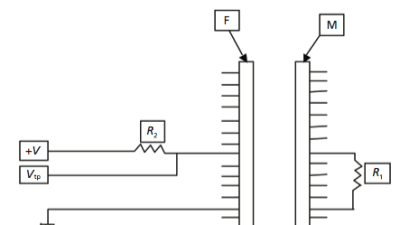
Current practice is to uniquely key the connectors, which, when mated, could not be verified by ground tests such as those used in explosive or non-explosive initiators...
Briefs: Electronics & Computers
Radiation-Tolerant Intelligent Memory Stack — RTIMS
This innovation provides reconfigurable circuitry and 2-Gb of error-corrected or 1-Gb of triple-redundant digital memory in a small package. RTIMS uses circuit stacking of heterogeneous components and radiation shielding technologies. A reprogrammable field-programmable gate array (FPGA), six...
Briefs: Electronics & Computers
Ultra-Low-Dropout Linear Regulator
A radiation-tolerant, ultra-low-dropout linear regulator can operate between –150 and 150 ºC. Prototype components were demonstrated to be performing well after a total ionizing dose of 1 Mrad (Si). Unlike existing components, the linear regulator developed during this activity is unconditionally stable over...
Briefs: Electronics & Computers
Excitation of a Parallel Plate Waveguide by an Array of Rectangular Waveguides
This work addresses the problem of excitation of a parallel plate waveguide by an array of rectangular waveguides that arises in applications such as the continuous transverse stub (CTS) antenna and dual-polarized parabolic cylindrical reflector antennas excited by a...
Briefs: Electronics & Computers
Lockout/Tagout (LOTO) Simulator
The Lockout/Tagout (LOTO) Simulator is a portable training aid, or demonstration tool, designed to physically illustrate real-time critical-safety concepts of electrical lockout/tagout. The objective is to prevent misinterpretations of what is off and what is on during maintenance and repair of complex electrical...
Briefs: Electronics & Computers
FPGA for Power Control of MSL Avionics
A PLGT FPGA (Field Programmable Gate Array) is included in the LCC (Load Control Card), GID (Guidance Interface & Drivers), TMC (Telemetry Multiplexer Card), and PFC (Pyro Firing Card) boards of the Mars Science Laboratory (MSL) spacecraft. (PLGT stands for PFC, LCC, GID, and TMC.) It provides the interface...
Briefs: Software
Sptrace
Sptrace is a general-purpose space utilization tracing system that is conceptually similar to the commercial “Purify” product used to detect leaks and other memory usage errors. It is designed to monitor space utilization in any sort of “heap,” i.e., a region of data storage on some device (nominally memory; possibly shared and...
Briefs: Software
Interplanetary Overlay Network Bundle Protocol Implementation
The Interplanetary Overlay Network (ION) system’s BP package, an implementation of the Delay-Tolerant Networking (DTN) Bundle Protocol (BP) and supporting services, has been specifically designed to be suitable for use on deep-space robotic vehicles. Although the ION BP implementation...
Briefs: Software
S-Band POSIX Device Drivers for RTEMS
This is a set of POSIX device driver level abstractions in the RTEMS RTOS (Real-Time Executive for Multiprocessor Systems real-time operating system) to SBand radio hardware devices that have been instantiated in an FPGA (field-programmable gate array). These include A/D (analog-to-digital) sample capture, D/A...
Briefs: Software
STRS SpaceWire FPGA Module
An FPGA module leverages the previous work from Goddard Space Flight Center (GSFC) relating to NASA’s Space Telecommunications Radio System (STRS) project. The STRS SpaceWire FPGA Module is written in the Verilog Register Transfer Level (RTL) language, and it encapsulates an unmodified GSFCcore (which is written in...
Briefs: Software
Geodetic Strain Analysis Tool
A geodetic software analysis tool enables the user to analyze 2D crustal strain from geodetic ground motion, and create models of crustal deformation using a graphical interface. Users can use any geodetic measurements of ground motion and derive the 2D crustal strain interactively. This software also provides a...
Briefs: Manufacturing & Prototyping
Silicon Carbide Mounts for Fabry-Perot Interferometers
Etalon mounts for tunable Fabry-Perot interferometers can now be fabricated from reaction-bonded silicon carbide structural components. These mounts are rigid, lightweight, and thermally stable. The fabrication of these mounts involves the exploitation of post-casting capabilities that (1)...
Briefs: Manufacturing & Prototyping
Measuring the In-Process Figure, Final Prescription, and System Alignment of Large Optics and Segmented Mirrors Using Lidar Metrology
The fabrication of large optics is traditionally a slow process, and fabrication capability is often limited by measurement capability. While techniques exist to measure mirror figure with nanometer precision,...
Briefs: Materials
Fiber-Reinforced Reactive Nano-Epoxy Composites
A family of metal/ceramic composite materials has been developed that are relatively inexpensive, lightweight alternatives to structural materials that are typified by beryllium, aluminum, and graphite/epoxy composites. These metal/ceramic composites were originally intended to replace beryllium...
Briefs: Materials
Iridium-Doped Ruthenium Oxide Catalyst for Oxygen Evolution
NASA requires a durable and efficient catalyst for the electrolysis of water in a polymer-electrolyte-membrane (PEM) cell. Ruthenium oxide in a slightly reduced form is known to be a very efficient catalyst for the anodic oxidation of water to oxygen, but it degrades rapidly, reducing...
Briefs: Materials
Dispersion-strengthened molybdenum-rhenium alloys for vacuum plasma spraying (VPS) fabrication of high-temperature-resistant components are undergoing development. In comparison with otherwise...

Briefs: Energy
Polymerization Initiated at the Sidewalls of Carbon Nanotubes
A process has been developed for growing polymer chains via anionic, cationic, or radical polymerization from the side walls of functionalized carbon nanotubes, which will facilitate greater dispersion in polymer matrices, and will greatly enhance reinforcement ability in polymeric...
Briefs: Materials
Piezoelectrically Enhanced Photocathodes
Doping of photocathodes with materials that have large piezoelectric coefficients has been proposed as an alternative means of increasing the desired photoemission of electrons. Treating cathode materials to increase emission of electrons is called “activation” in the art. It has been common practice to...
Briefs: Mechanical & Fluid Systems
Force Limit System
The Force Limit System (FLS) was developed to protect test specimens from inadvertent overload. The load limit value is fully adjustable by the operator and works independently of the test system control as a mechanical (nonelectrical) device.
Top Stories
 Blog: Lighting

A Stretchable OLED that Can Maintain Most of Its Luminescence
 INSIDER: Energy

Advancing All-Solid-State Batteries
 Blog: Power

My Opinion: We Need More Power Soon — Is Nuclear the Answer?
 Quiz: Energy

 Blog: Lighting Technology

Microscopic Swimming Machines that Can Sense, Respond to Surroundings
 Blog: Data Acquisition

Webcasts
 On-Demand Webinars: Electronics & Computers

Advantages of Smart Power Distribution Unit Design for Automotive &...
 Upcoming Webinars: Automotive

Quiet, Please: NVH Improvement Opportunities in the Early Design...
 Upcoming Webinars: Test & Measurement

From Spreadsheets to Insights: Fast Data Analysis Without Complex...
 Upcoming Webinars: Defense

Cooling a New Generation of Aerospace and Defense Embedded...
 Upcoming Webinars: Sensors/Data Acquisition

Beyond AI-Copy-Paste Engineering: Advanced AI-Integration Success...
 Upcoming Webinars: Power