-1
990
30
Briefs: Sensors/Data Acquisition
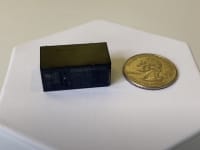
Foodborne illness hits about one in six people in the United States every year from more than 31 recognized pathogens including E. coli O157:H7, a particularly harsh strain of E. coli. Researchers...

Briefs: Sensors/Data Acquisition
Methanol is sometimes referred to as ethanol's deadly twin. While the latter is the intoxicating ingredient in wine, beer, and liquor, the former is a chemical that...

Briefs: Test & Measurement
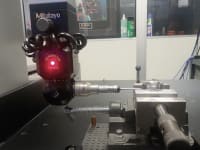
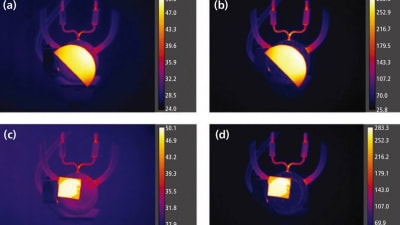
Engineers have remotely determined the temperature beneath the surface of certain materials using a new technique called depth thermography. The method may be useful in applications where...
Briefs: Test & Measurement
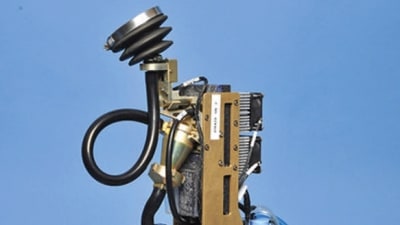
Any space, enclosed or open, can be vulnerable to the dispersal of harmful airborne biological agents. Silent and near-invisible, these bioagents can sicken or kill living things before steps...
Briefs: Wearables
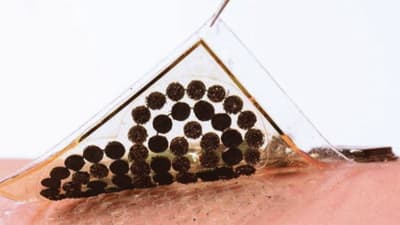
Researchers have developed electronic skin (e-skin) that is applied directly on top of real skin. Made from soft, flexible rubber, it can be embedded with sensors that monitor...
Briefs: Photonics/Optics
3D printers working in the millimeter range and larger are increasingly used in industrial production processes. Many applications, however, require precise printing on the micrometer scale...

Briefs: Materials
Living materials made by housing biological cells within a nonliving matrix have gained popularity as scientists recognize that often the most robust materials are those that...

Briefs: Transportation
Substances such as plastics, metals, and wax are used in 3D printers to make products and parts for larger items. Products created through the 3D printing of plastics include every-thing from toys...

Briefs: Manufacturing & Prototyping
Most conventional 3D printing processes rely on replicating a digital design model that is sliced into layers with the layers printed and assembled upward like a cake. A new method...
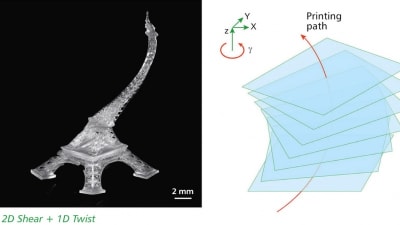
Briefs: Manufacturing & Prototyping
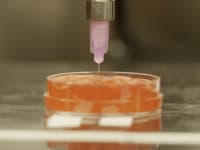
Scientists have developed a ceramic-based ink made of calcium phosphate to 3D print bone parts complete with living cells that could be used to repair damaged bone tissue. The 3D printer method is...

Briefs: Materials
Researchers combined additive manufacturing with conventional compression molding to produce high-performance thermoplastic composites reinforced with short carbon fibers. The approach...

Briefs: Electronics & Computers
A team of scientists at the U.S. Department of Energy's Argonne National Laboratory, have achieved efficient quantum coupling between two distant magnetic devices, which can host a certain...
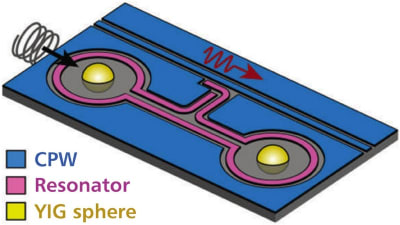
Briefs: Robotics, Automation & Control
Elastic polymers, known as elastomers, can be stretched and released repeatedly and are used in applications such as gloves and heart valves, where they need to last a long time without tearing. But...

Briefs: Materials
All solid materials, including glass, have a property called elastic stiffness — also known as elastic modulus. It's a measure of how much force per unit area is needed to make...
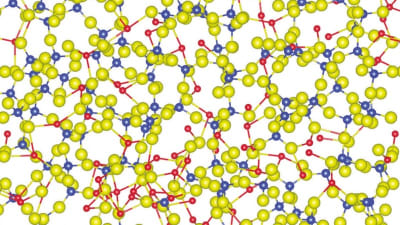
Briefs: Electronics & Computers
Graphene — hexagonally arranged carbon atoms in a single layer with superior pliability and high conductivity — could impact the development of future motion detection, tactile sensing,...

Briefs: Electronics & Computers
A Penn State-led team of interdisciplinary researchers developed a polymer with robust piezoelectric effectiveness, resulting in 60 percent more efficient electricity...

Briefs: Materials
A research team developed a thread made of conductive cellulose that offers practical possibilities for electronic textiles. Sewing the electrically conductive cellulose threads into a...

Briefs: Photonics/Optics
Researchers have developed tiny optical elements from metal nanoparticles and a polymer that could replace traditional refractive lenses to realize portable imaging systems and...
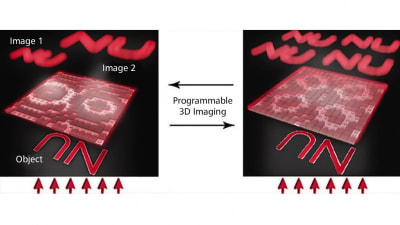
Briefs: Photonics/Optics
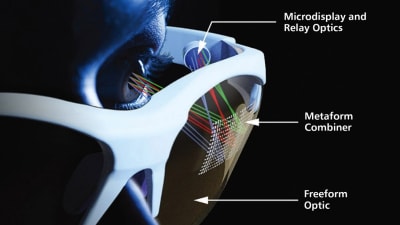
Consumers are looking for augmented reality/virtual reality (AR/VR) glasses that are compact and easy to wear, delivering high-quality imagery with socially acceptable optics that...
Briefs: Photonics/Optics
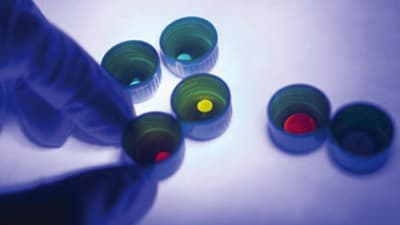
Researchers have developed technology to produce next-generation composite glass for lighting LEDs and smartphone, television, and computer screens. The technology was a step forward in perovskite...
Briefs: Electronics & Computers
Optical limiting — a manner of telecom switching without the use of electronics — is an all-optical method that could improve the speed and capacity of Internet communications. A...
Briefs: Transportation
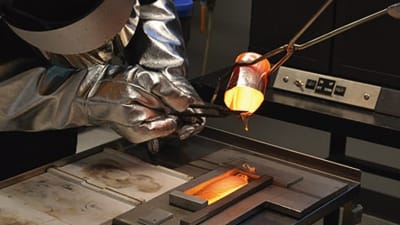
A new composition of germanosili-cate glass created by adding zinc oxide has properties good for lens applications. The new family of zinc germanosilicate glass has a high refractive index comparable to...
Briefs: Energy
Decreasing Anode Corrosion in Metal-Air Batteries
Metal-air batteries can be used in a variety of applications ranging from range extenders for electric vehicles to emergency power systems. Metal-sea-water batteries are primarily used for underwater applications ranging from torpedoes to underwater unmanned vehicles. A team of researchers at the...
Briefs: Transportation
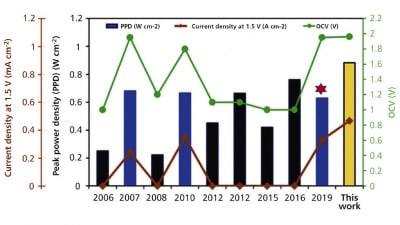
Electrification of the transportation sector is critical to future energy and environmental resilience and will require high-power fuel cells (either standalone or in conjunction with batteries) to...
Briefs: Transportation
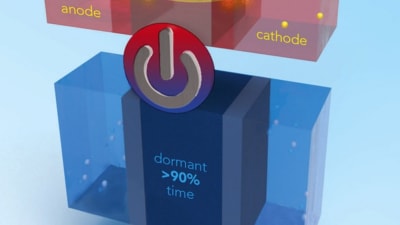
Electric vehicle batteries typically require a tradeoff between safety and energy density. If the battery has high energy and power density — required for uphill driving or merging on the...
Briefs: Electronics & Computers
Wearable electronic components incorporated directly into fabrics have been developed that could be used for flexible circuits, healthcare monitoring, energy conversion, and other applications. Graphene...

Briefs: Energy
Many technical processes only use part of the energy consumed. The remaining fraction leaves the system in the form of waste heat. Frequently, this heat is released into the...

Briefs: Communications
3D nanometer-scale metamaterial structures hold promise for advanced optical isolators.

Briefs: Data Acquisition
Optical Signals can be retrieved from inherent background noise using Talbot effect to amplify them.
Top Stories
 Blog: Design

A Stretchable OLED that Can Maintain Most of Its Luminescence
 INSIDER: Design

Advancing All-Solid-State Batteries
 Blog: Power

My Opinion: We Need More Power Soon — Is Nuclear the Answer?
 Blog: Energy

Batteries that Can Withstand the Cold
 Quiz: Power

 Blog: Robotics, Automation & Control

Microscopic Swimming Machines that Can Sense, Respond to Surroundings
Webcasts
 On-Demand Webinars: Electronics & Computers

Advantages of Smart Power Distribution Unit Design for Automotive &...
 Upcoming Webinars: Unmanned Systems

Quiet, Please: NVH Improvement Opportunities in the Early Design...
 Upcoming Webinars: AR/AI

From Spreadsheets to Insights: Fast Data Analysis Without Complex...
 Upcoming Webinars: Defense

Cooling a New Generation of Aerospace and Defense Embedded...
 Upcoming Webinars: Software

Beyond AI-Copy-Paste Engineering: Advanced AI-Integration Success...
 Upcoming Webinars: Energy