

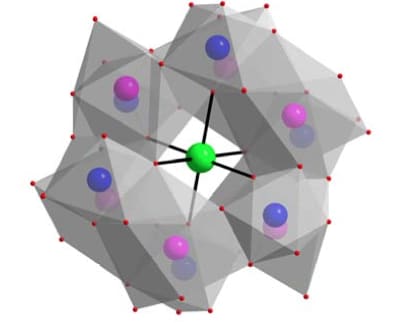
The specific application of using phosphors for improved color rendering of blue light-emitting diodes (LEDs) for solid-state lighting was explored. Discovery of an ideally suitable red phosphor for this application could potentially revolutionize this highly-competitive, advanced technology industry.
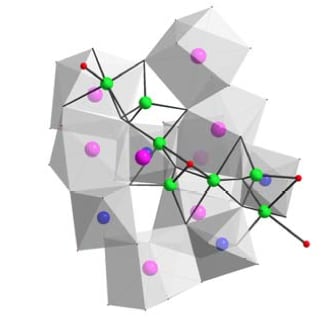
While Eu-doped LiLaTa phases proved to not be better than previously reported phases, the Mn-doped LiLaTa phases warrant further investigation. In particular, the significant adsorption of blue light via the Mn-doped LiLaTa-perovskite provides a promising material for blue LED down-converters for solid-state lighting. Additionally, this LiLaTa-perovskite phosphor is formed optimally by a unique ion-exchange process not previously reported in the scientific literature. Further work to optimize this material and related materials is planned.
This work was done by May D. Nyman and Lauren E. S. Rohwer of Sandia National Laboratories .
This Brief includes a Technical Support Package (TSP).
Self-Activating and Doped Tantalate Phosphors
(reference GDM0014) is currently available for download from the TSP library.
Don't have an account?
Overview
The Sandia Report SAND2011-0173, titled "Self-Activating and Doped Tantalate Phosphors," is a comprehensive study prepared by researchers May D. Nyman and Lauren E. S. Rohwer at Sandia National Laboratories. The report, published in January 2011, explores the properties and applications of tantalate phosphors, which are materials that exhibit luminescence and are used in various lighting and display technologies.
The research focuses on self-activating phosphors, which can emit light without the need for external activators, and doped phosphors, which have been intentionally modified with other elements to enhance their luminescent properties. The study highlights the significance of these materials in the development of efficient lighting solutions and advanced display technologies.
The report discusses the synthesis methods for creating tantalate phosphors, including the incorporation of different dopants to optimize their luminescent characteristics. It also examines the structural and optical properties of these materials, providing insights into how their composition affects their performance. The authors emphasize the importance of understanding the mechanisms behind luminescence in order to improve the efficiency and effectiveness of phosphors in practical applications.
Additionally, the report acknowledges the funding support from the Sandia National Laboratories LDRD program and expresses gratitude to Dr. Hongwu Xu of Los Alamos National Laboratory for conducting neutron diffraction studies on La2LiTaO6, a specific tantalate compound. This collaboration underscores the interdisciplinary nature of the research and the importance of advanced characterization techniques in understanding material properties.
The findings presented in this report are relevant to various fields, including solid-state lighting, display technologies, and materials science. By advancing the knowledge of tantalate phosphors, the research contributes to the ongoing efforts to develop more sustainable and efficient lighting solutions, which are crucial for reducing energy consumption and environmental impact.
In summary, the Sandia Report SAND2011-0173 provides a detailed examination of self-activating and doped tantalate phosphors, highlighting their synthesis, properties, and potential applications. The work represents a significant contribution to the field of luminescent materials and offers valuable insights for future research and development in this area.











