8,33,42,44,45,47,52,54,68
-1
330
30
Briefs: Photonics/Optics
Researchers at the University of California San Diego have developed soft devices containing algae that glow in the dark when experiencing mechanical stress, such as being squished, stretched, twisted, or bent.

Briefs: Manufacturing & Prototyping
Researchers have developed a viable dust, water, and ice mitigation optical coating for space flight, aeronautical, and ground applications. The innovation of the LOTUS coating prevents contamination on sensitive surfaces.

Briefs: Photonics/Optics
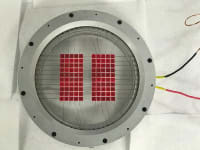
A team of researchers demonstrated the first light-emitting array with 49 different colors on a single chip. This novel optoelectronic device is built on metal-oxide semiconductor capacitors.
Briefs: Materials
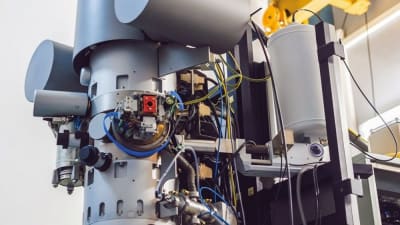
With a new microscopy technique that uses blue light to measure electrons in semiconductors and other nanoscale materials, a team of researchers is opening a new realm of possibilities in the study of these critical components, which can help power devices like mobile phones and laptops.
Briefs: Photonics/Optics
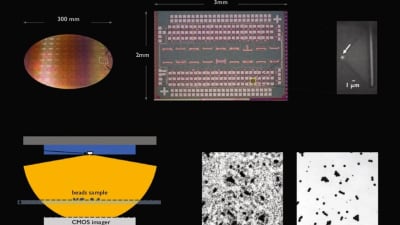
Researchers have developed the world’s smallest LED. It enables the conversion of existing mobile phone cameras into high-resolution microscopes. Smaller than the wavelength of light, the new LED was used to build the world’s smallest holographic microscope.
Briefs: Photonics/Optics
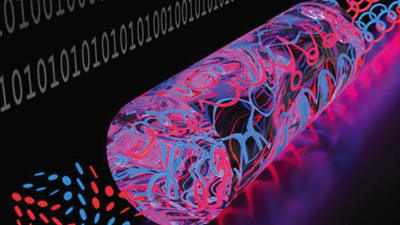
Researchers have outlined a new optical communication protocol that exploits spatial patterns of light for multi-dimensional encoding in a manner that does not require the patterns to be recognized, thus overcoming the prior limitation of modal distortion in noisy channels.
Briefs: Energy
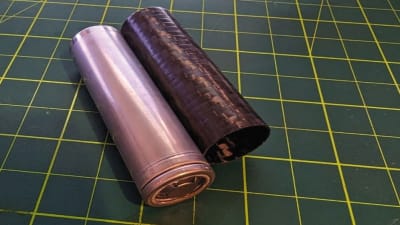
Innovators at NASA Johnson Space Center have developed a carbon fiber reinforced polymer (CFRP) sleeve, that, when fitted over a cylindrical Li-ion battery cell, can prevent cell-to-cell propagation by containing a thermal runaway (TR) event to the originating cell.
Briefs: Power
Engineers have made progress toward lithium-metal batteries that charge as fast as an hour. This fast charging is thanks to lithium metal crystals that can be seeded and grown — quickly and uniformly — on a surprising surface.

Briefs: Energy
Researchers continue to refine the process to improve electrochemical performance. The goal is to balance the benefits and drawbacks of the thicker electrode: It has the potential for higher energy loading and is easy to roll, but it may provide less power, since the ions have further to travel.

Briefs: Energy
Most space satellites are powered by photovoltaic cells that convert sunlight to electricity. Exposure to certain orbit radiation can damage the devices. Scientists have proposed a radiation-tolerant photovoltaic cell design that features an ultrathin layer of light-absorbing material.
Briefs: Sensors/Data Acquisition
Research reveals that expertly timed lasers shined at an approaching LIDAR system can create a blind spot in front of the vehicle.

Briefs: Sensors/Data Acquisition
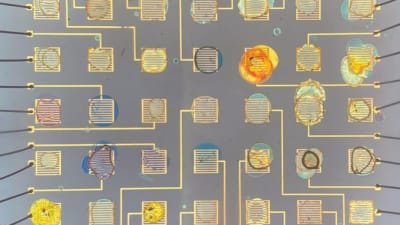
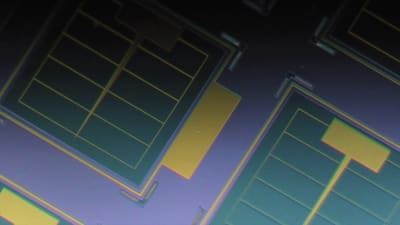
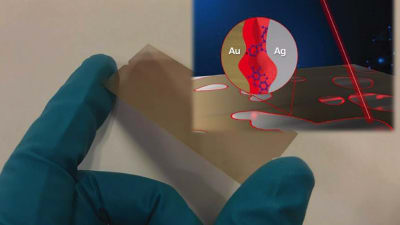
Study shows improvements to chemical sensing chip that aims to quickly and accurately identify drugs and other trace chemicals.
Briefs: Energy
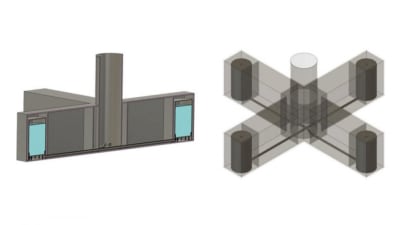
NASA engineers have developed a new approach to mitigating unwanted motion in floating structures. Ideally suited to applications including offshore wind energy platforms and barges, the innovation uses water ballast as a motion damping fluid.
Briefs: Manufacturing & Prototyping
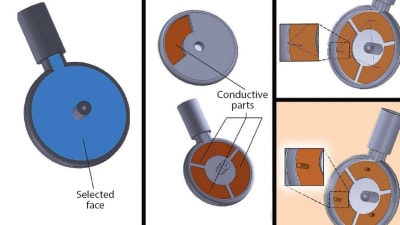
Integrating sensors into rotational mechanisms could make it possible for engineers to build smart hinges that know when a door has been opened, or gears inside a motor that tell a mechanic how fast they are rotating. Engineers have now developed a way to easily integrate sensors into these types of mechanisms.
Briefs: AR/AI
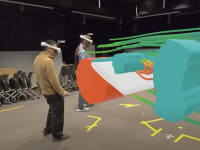
Praneeth Namburi is a research scientist at the MIT.nano Immersion Lab. One project that bridges the physical and digital worlds uses VR simulations to train people to fabricate computer chips and semiconductors.

Briefs: Lighting
Touchless switches are an ideal solution for industries such as food, beverage, pharmaceuticals, medical, and chemicals where sanitary design is important. They are also useful for protecting the well-being of users in everyday commercial applications.

Briefs: Materials
A Northwestern University research team has developed a revolutionary transistor that is expected be ideal for lightweight, flexible, high-performance bioelectronics. The electrochemical transistor is compatible with blood and water and can amplify important signals.

Briefs: Materials
Thermoelectric Cooler Improves Cooling Power and Efficiency
A new thermoelectric cooler developed by Penn State scientists greatly improves the cooling power and efficiency compared to current commercial thermoelectric units and may help control heat in future high-power electronics, the researchers said.
Briefs: Manufacturing & Prototyping
Imagine a thin, digital display so flexible that you can wrap it around your wrist, fold it in any direction, or even curve it over your car’s steering wheel. Well, imagine no more — researchers at the Pritzker School of Molecular Engineering at the University of Chicago have designed such a material.

Briefs: RF & Microwave Electronics
In 1978, NASA scientist Donald J. Kessler theorized that an increasing amount of space pollution would lead to more collisions between objects in orbit, and thus more debris — the Kessler Syndrome. Multiple teams of researchers are working on solutions.

Briefs: Energy
Artificial Photosynthesis Produces Food without Sunshine
Scientists at UC Riverside and the University of Delaware have found a way to bypass the need for biological photosynthesis altogether and create food independent of sunlight by using artificial photosynthesis.
Briefs: Photonics/Optics
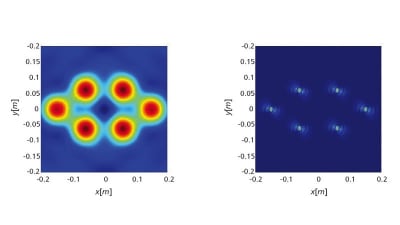
A team has introduced a new method for taking high-res images of fast-moving and rotating objects in space, such as satellites or debris in low-Earth orbit.
Briefs: Test & Measurement
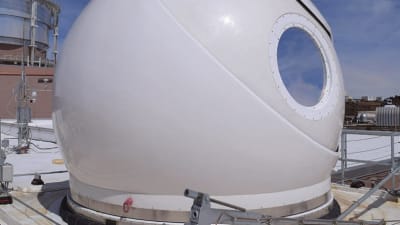
The Laser Communications Relay Demonstration (LCRD) will usher in a new era of laser communications.
Briefs: Energy
The future of wearable technology just got a big boost thanks to a team of University of Houston researchers who designed, developed, and delivered a successful prototype of a fully stretchable fabric-based lithium-ion (Li-ion) battery.

Briefs: Energy
A Calcium Rechargeable Battery with Long Cycle Life
A research group has developed a prototype calcium (Ca) metal rechargeable battery capable of 500 cycles of repeated charge-discharge – the benchmark for practical use.
Briefs: Materials
A team Led by Worcester Polytechnic Institute (WPI) researcher Yan Wang has developed a solvent-free process to manufacture Li-ion battery electrodes that are greener, cheaper, and charge faster than electrodes currently on the market.

Briefs: Energy
In critical applications such as electric vehicles, there is a growing demand for a device that can efficiently produce both high power and high energy over a significant number of cycles.

Briefs: Power
Two of humanity’s most ubiquitous historical materials, cement, and carbon black may form the basis for a novel, low-cost energy storage system, according to a new study by MIT researchers.

Briefs: Imaging
A research team has developed a 3D imaging sensor that has an extremely high angular resolution — it can distinguish points of an object separated by an angular distance, of as little as 0.0018°. The sensor operates on a unique angle-to-color conversion principle.

Top Stories
 Blog: Lighting

A Stretchable OLED that Can Maintain Most of Its Luminescence
 Blog: Energy

Batteries that Can Withstand the Cold
 INSIDER: Energy

Advancing All-Solid-State Batteries
 Blog: Power

My Opinion: We Need More Power Soon — Is Nuclear the Answer?
 Quiz: Power

 Blog: Data Acquisition

Webcasts
 Upcoming Webinars: Test & Measurement

From Spreadsheets to Insights: Fast Data Analysis Without Complex...
 Upcoming Webinars: Defense

Cooling a New Generation of Aerospace and Defense Embedded...
 Upcoming Webinars: AR/AI

Beyond AI-Copy-Paste Engineering: Advanced AI-Integration Success...
 Upcoming Webinars: Automotive

Battery Abuse Testing: Pushing to Failure
 Upcoming Webinars: Connectivity

A FREE Two-Day Event Dedicated to Connected Mobility
 Upcoming Webinars: RF & Microwave Electronics

Choosing the Right N-Port Strategy: Multiport VNAs vs. Switch...