8,33,42,44,45,47,52,54,68
-1
210
30
Briefs: Photonics/Optics
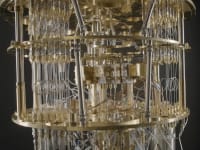
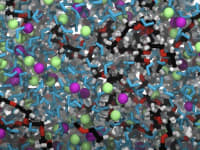
Researchers have developed standards and calibrations for optical microscopes that allow quantum dots to be aligned with the center of a photonic component to within an error of 10 to 20 nanometers (about one-thousandth the thickness of a sheet of paper). Such alignment is critical for chip-scale devices that employ the radiation emitted by quantum dots to store and transmit quantum information. Read on to learn more.

Briefs: AR/AI
Because they can go where humans can’t, robots are especially suited for safely working with hazardous nuclear waste. Now, scientists at the U.S. Department of Energy’s (DOE) Argonne National Laboratory have designed and tested a remote-controlled, dual-arm telerobotics system with human-like capabilities that has the potential to revolutionize hazardous waste clean-up and holds potential for broader applications.

Briefs: Unmanned Systems
A team of researchers at Delft University of Technology has developed a drone that flies autonomously using neuromorphic image processing and control based on the workings of animal brains.

Briefs: Electronics & Computers
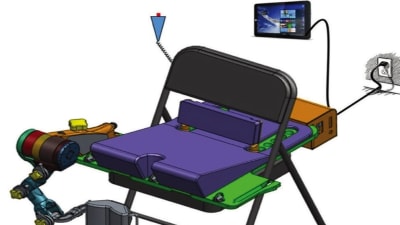
Researchers at NASA Johnson Space Center have developed the Portable Knee Dynamometer, a device that enables quadricep and hamstring strength assessment, rehabilitation, and exercise capabilities for a user outside of a traditional clinical setting.
Briefs: Imaging
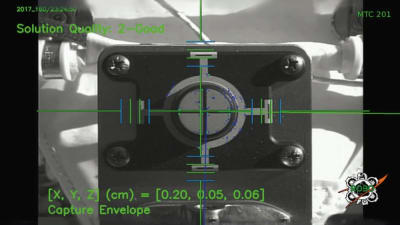
Innovators at NASA’s Johnson Space Center (JSC) have developed computer vision software that derives target posture determinations quickly and then instructs an operator how to properly align a robotic end-effector with a target that they are trying to grapple.
Briefs: Manned Systems
Innovators at NASA Johnson Space Center have developed and successfully flight tested a high-performance computing platform, known as the Descent and Landing Computer (DLC), to suit the demands of safe, autonomous, extraterrestrial spacecraft landings for robotic and human exploration missions.

Briefs: Information Technology
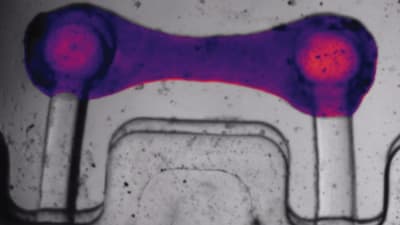
A promising way to study disease and test new drugs is to use cellular and engineered tissue models in a dish, but existing methods to study heart cell contraction and calcium handling require a good deal of manual work, are prone to errors, and need expensive specialized equipment. Researchers at Columbia Engineering unveiled a groundbreaking new tool today that addresses these challenges head-on: BeatProfiler.
Briefs: Energy
The team hopes this project can better position renewable energy as the primary source of electricity in the industry sector. The project aims to enable researchers and renewable energy installation companies to determine the optimal number of solar panels and wind turbines needed to prevent over or under production.

Briefs: Materials
The team plans to integrate such CO2-capturing materials with its earlier porous sponge platform, which has been developed to remove environmental toxins including oil, phosphates, and microplastics.

Briefs: Energy
According to the researchers, this proof-of-concept system could be adapted to help produce precursors for plastics or other chemical feedstocks, as well as scaled up to produce larger amounts of sustainable biofuels.

Briefs: Power
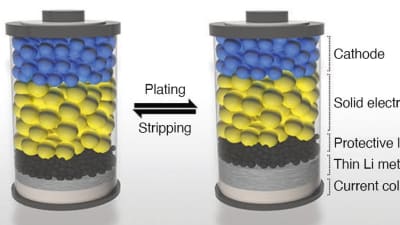
A research team from Pohang University has successfully enhanced the performance and durability of all-solid-state batteries. This breakthrough was made possible through the implementation of a novel approach known as bottom electrodeposition. Read on to learn more.
Briefs: Power
Examining lithium metal batteries using nuclear magnetic resonance spectroscopy may help in the design of new electrolytes and anode surfaces for high-performance batteries. Read on to learn more.

Briefs: Energy
A new battery formulation captures carbon dioxide from industrial emissions and converts it into a solid form that has the potential to be used in other products. Read on to learn more.

Briefs: Energy
A new synthesis process for solid electrolytes marks a crucial stride toward the commercialization of all-solid-state batteries free from the risks of explosion and fire. Read on to learn more.

Briefs: Energy
A research team has developed a high-energy, high-power hybrid sodium-ion battery capable of rapid charging. The innovative hybrid energy storage system integrates anode materials typically used in batteries with cathodes suitable for supercapacitors. Read on to learn more.

Briefs: Sensors/Data Acquisition
Researchers from Tsinghua University worked to break through the difficulties of robotic recognition of various common, yet complex, items. Read on to learn more.

Briefs: Physical Sciences
In a recent study published in the journal ACS Applied Energy Materials, researchers have utilized poly(vinylphosphonic acid) (PVPA) as a binder for a micro-SiO electrodes, achieving superior performance compared to conventional cells. Read on to learn more.

Briefs: Energy
Researchers at the Department of Energy’s Oak Ridge National Laboratory are taking cleaner transportation to the skies by creating and evaluating new batteries for airborne electric vehicles that take off and land vertically. Read on to learn more.

Briefs: Energy
A global team of researchers and industry collaborators led by RMIT University has invented recyclable ’water batteries’ that won’t catch fire or explode. Read on to learn more.
Briefs: Power
A team of researchers from Japanese and French universities has developed a practical nickel-based electrode material that opens new avenues to cobalt-free batteries for electric vehicles. Read on to learn more.

Briefs: Unmanned Systems
Professor Angela Schoellig from the Technical University of Munich uses ChatGPT to develop choreographies for swarms of drones to perform along to music. An additional safety filter prevents mid-air collisions. Read on to learn more.
Briefs: Manufacturing & Prototyping
In bringing bio-inspired robots to life, scientists must first create soft matter counterparts that match the softness and functionality of biological tissue. University of Nebraska–Lincoln engineer Eric Markvicka is at the forefront of these efforts. Read on to learn more.

Briefs: Motion Control
MIT engineers are aiming to give robots a bit of common sense when faced with situations that push them off their trained path. They’ve developed a method that connects robot motion data with the “common sense knowledge” of large language models, or LLMs.
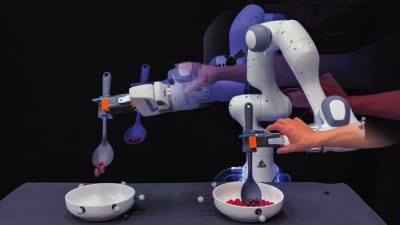
Briefs: Sensors/Data Acquisition
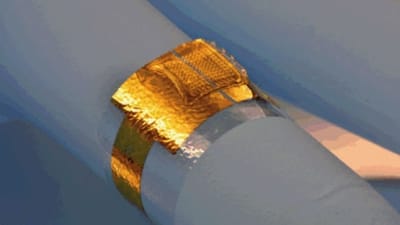
A research team from Kyushu University, in collaboration with Japanese company Nitto Denko, has developed a tape that can be used to stick 2D materials to many different surfaces, in an easy and user-friendly way.

Briefs: RF & Microwave Electronics
Innovators have developed a method and apparatus to multiplex Radio Frequency Identification (RFID) signals efficiently. The resulting Hyper-Distributed RFID Antenna (HYDRA) system enhances distribution of the RFID reader signal, providing improved coverage for large areas as well as for small, fixed regions requiring a high density of reader antennas.

Briefs: Energy
Because it requires no battery that must be recharged or replaced, and because it requires no special wiring, such a sensor could be embedded in a hard-to-reach place, like inside the inner workings of a ship’s engine. There, it could automatically gather data on the machine’s power consumption and operations for long periods of time.

Briefs: Electronics & Computers
Researchers have found ways to develop soft OECTs for wearable pressure sensors. They first experimented with a solid type of gating substance: a charged, gelatinous substance called an ionic hydrogel. Read on to learn more.
Briefs: Materials
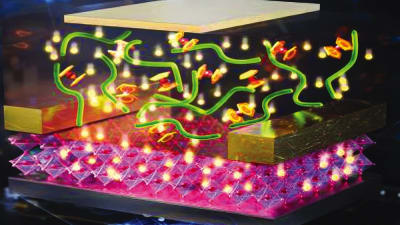
Microelectronics face a key challenge because of their small size. To avoid overheating, microelectronics need to consume only a fraction of the electricity of conventional electronics while still operating at peak performance. Researchers have achieved a breakthrough that could allow for a new kind of microelectronic material to do just that.
Briefs: Electronics & Computers
Modern PLC+HMI platforms have overcome weaknesses of older devices and now provide a top-performing and space-optimized option for designers to implement control and visualization for a variety of diverse applications.

Top Stories
 Blog: Lighting

A Stretchable OLED that Can Maintain Most of Its Luminescence
 Blog: Energy

Batteries that Can Withstand the Cold
 INSIDER: Energy

Advancing All-Solid-State Batteries
 Blog: Power

My Opinion: We Need More Power Soon — Is Nuclear the Answer?
 Quiz: Power

 Blog: Data Acquisition

Webcasts
 Upcoming Webinars: Test & Measurement

From Spreadsheets to Insights: Fast Data Analysis Without Complex...
 Upcoming Webinars: Defense

Cooling a New Generation of Aerospace and Defense Embedded...
 Upcoming Webinars: AR/AI

Beyond AI-Copy-Paste Engineering: Advanced AI-Integration Success...
 Upcoming Webinars: Automotive

Battery Abuse Testing: Pushing to Failure
 Upcoming Webinars: Connectivity

A FREE Two-Day Event Dedicated to Connected Mobility
 Upcoming Webinars: RF & Microwave Electronics

Choosing the Right N-Port Strategy: Multiport VNAs vs. Switch...