8,33,42,44,45,47,52,54,68
-1
60
30
Briefs: Software
Engineers at the University of California San Diego have achieved a long-sought milestone in photonics: creating tiny optical devices that are both highly sensitive and durable — two qualities that have long been considered fundamentally incompatible. Read on to learn more.
Briefs: Photonics/Optics
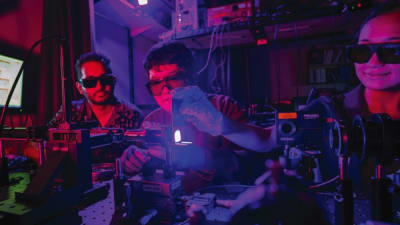
Researchers have invented a new type of tunable semiconductor laser that combines the best attributes of today’s most advanced laser products, demonstrating smooth, reliable, wide-range wavelength tuning in a simple, chip-sized design. Read on to learn more about it.

Briefs: Lighting Technology
Engineers at NASA Langley Research Center have developed a cutting-edge thermal inspection technology that enhances defect detection on low-emissivity surfaces by eliminating false readings caused by infrared reflections. Read on to learn more.

Briefs: Software
A research team led by scientists at Lawrence Berkeley National Laboratory (Berkeley Lab) has developed a new fabrication technique that could improve noise robustness in superconducting qubits, a key technology for enabling large-scale quantum computers. Read on to learn more.

Briefs: Lighting
A new computer vision technique developed by MIT engineers significantly speeds up the characterization of newly synthesized electronic materials. The technique automatically analyzes images of printed semiconducting samples and quickly estimates two key electronic properties for each sample. Read on to learn more.

Briefs: Energy
Solar cells account for approximately six percent of the electricity used on Earth; however, in space, they play a significantly larger role, with nearly all satellites relying on advanced solar cells for their power. That’s why Georgia Tech researchers will soon be sending 18 photovoltaic cells to the International Space Station (ISS) for a study of how space conditions affect the devices’ operation over time. Read on to learn more.

Briefs: Power
For years, researchers have been developing tools to accelerate the materials discovery and development of new energy storage technologies, including those that can predict the performance of the batteries systems for long-term grid services. With a new physics-based simulation tool, EZBattery Model, it now takes less than a second to predict the performance of redox flow batteries and its variants. Read on to learn more.
Briefs: Green Design & Manufacturing
Idle Trucks to Power the Grid with Clean Energy
University of Waterloo researchers are tapping into idled electric vehicles to act as mobile generators and help power overworked and aging electricity grids. Read on to learn more about it.
Briefs: Materials
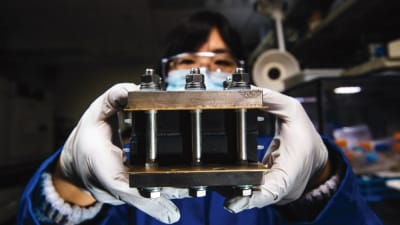
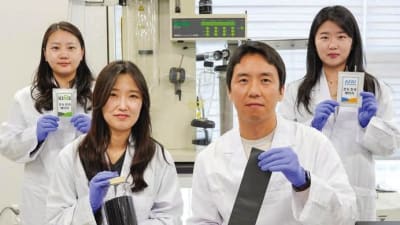
The Korea Electrotechnology Research Institute (KERI) and the Korea Institute of Materials Science have jointly developed spray drying technology-based high-performance dry electrode manufacturing technology for the realization of high-capacity secondary batteries. Read on to learn more.
Briefs: Energy
Researchers at Tohoku University developed a data-driven AI framework that points out potential solid-state electrolyte candidates that could be “the one” to create an ideal sustainable energy solution. Read on to learn more.

Briefs: Energy
A team of chemists led by Feng Lin and Louis Madsen found a way to see into battery interfaces, which are tight, tricky spots buried deep inside the cell. Read on to learn what this means.

Briefs: Energy
Battery performance suffers over time, like when a phone needs to be charged more frequently after years of use. A thin film that forms on the metal anode when the battery is charging and discharging plays a part in that issue. This film has benefits, but its roughness gradually wears the battery down. Researchers have discovered a temporary version of this film that appears at rapid discharge speeds and dissolves back into the battery when the process finishes. Read on to learn more.
Briefs: Robotics, Automation & Control
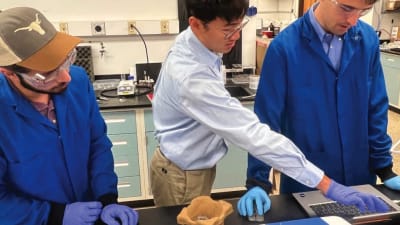
Researchers from Duke University have developed a novel framework named WildFusion that fuses vision, vibration, and touch to enable robots to “sense” complex outdoor environments much like humans do. Read on to learn more.

Briefs: Software
A human clearing junk out of an attic can often guess the contents of a box simply by picking it up and giving it a shake, without the need to see what’s inside. Researchers from MIT, Amazon Robotics, and the University of British Columbia have taught robots to do something similar. Read on to learn more.

Briefs: RF & Microwave Electronics
Despite all the technological evolution in navigation, waters just off coastal shores around the globe have remained a black box. That is, until researchers from The University of Texas at Austin and Oregon State University developed a new technology that uses satellites in space to map out these tricky areas. Read on to learn more about it.

Briefs: Materials
With this groundbreaking discovery of time-dependent changes in networked nanodomains, developers are on the path to building adaptive networks for information storage and processing. Read on to learn more.

Briefs: Energy
Using a new technology, Juan-Pablo Correa-Baena's lab has found a way to stabilize perovskite solar cells, which are built like a battery. Read on to learn more.
Briefs: Green Design & Manufacturing
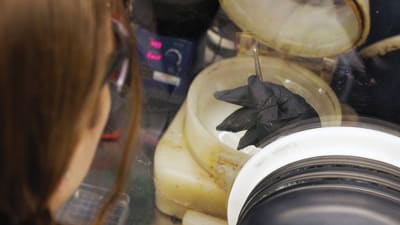
Scientists at the U.S. Department of Energy’s Argonne National Laboratory have developed a novel technology that creates a cost-competitive sustainable aviation fuel (SAF) that could reduce GHG emissions in the aviation industry by up to 70 percent. Read on to learn more.

Briefs: Software
Researchers from MIT and NVIDIA Research have developed a novel algorithm that dramatically speeds up a robot’s planning process. Their approach enables a robot to “think ahead” by evaluating thousands of possible solutions in parallel and then refining the best ones to meet the constraints of the robot and its environment. Read on to learn more.

Briefs: Energy
This research has far-reaching implications, offering a path to safer, more efficient batteries that can support the growing demand for electric vehicles. As the world moves towards cleaner energy solutions, these advancements are crucial for making EVs more viable and attractive for consumers. Read on to learn more.

Briefs: Energy
In the race to meet the growing global demand for lithium, a team of researchers from Rice University’s Elimelech lab has developed a breakthrough lithium extraction method that could reshape the industry. Read on to learn more about it.

Briefs: Energy
A team led by Kelsey Hatzell, Associate Professor of Mechanical and Aerospace Engineering and the Andlinger Center for Energy and the Environment, has uncovered insights that could help power a new type of battery, called an anode-free solid-state battery, past lithium-ion’s limitations.

Briefs: Design
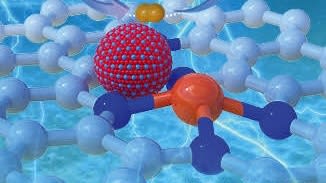
Aqueous zinc-ion batteries have attracted extensive attention due to their high safety, abundant reserves, and environmental friendliness. However, the low electrical conductivity of iodine hinders the redox conversion for an efficient energy storage process with zinc. Read on to learn how a research team addressed the existing issues in Zn-I2 batteries.
Briefs: Materials
To create the new batteries needed for EVs, mobile devices, and renewable energy storage, researchers have explored new materials, new designs, new configurations, and new chemistry. But one aspect — the texture of the metals used — has been historically overlooked. Read on to learn more.

Briefs: Electronics & Computers
Researchers have developed a compact and versatile robot that can maneuver through tight spaces and transport payloads much heavier than itself. Smaller than a credit card and weighing 6 grams, the nimble swimming robot is ideal for environments with limited space like rice fields, or for performing inspections in waterborne machines. Read on to learn more.

Briefs: Materials
Researchers have developed a new type of sensor platform using a gold nanoparticle array. The sensor is made up of a series of gold disk-shaped nanoparticles on a glass slide. When an infrared laser is pointed at a precise arrangement of the particles, they start to emit unusual amounts of ultraviolet light. Read on to learn more.

Briefs: Wearables
This technology has potential as a portable power supply in several applications, including electric vehicles, cellphones, and wearable technology.
Briefs: Power
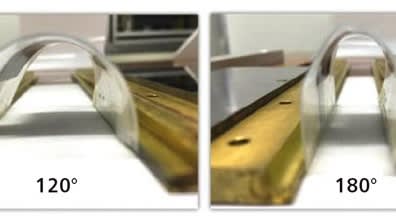
Researchers have developed a hybrid solar energy converter that generates electricity and steam with high efficiency and low cost. The hybrid converter utilizes an approach that more fully captures the whole spectrum of sunlight. Read on to learn more about it.

Briefs: Energy
Microwaves Power a New Technology for Batteries
Researchers have created a technique to turn waste polyethylene terephthalate (PET), one of the most recyclable polymers, into components of batteries. Read on to learn more about it.
Top Stories
 Blog: Lighting

A Stretchable OLED that Can Maintain Most of Its Luminescence
 Blog: Energy

Batteries that Can Withstand the Cold
 INSIDER: Energy

Advancing All-Solid-State Batteries
 Blog: Power

My Opinion: We Need More Power Soon — Is Nuclear the Answer?
 Quiz: Power

 Blog: Data Acquisition

Webcasts
 Upcoming Webinars: Test & Measurement

From Spreadsheets to Insights: Fast Data Analysis Without Complex...
 Upcoming Webinars: Defense

Cooling a New Generation of Aerospace and Defense Embedded...
 Upcoming Webinars: AR/AI

Beyond AI-Copy-Paste Engineering: Advanced AI-Integration Success...
 Upcoming Webinars: Automotive

Battery Abuse Testing: Pushing to Failure
 Upcoming Webinars: Connectivity

A FREE Two-Day Event Dedicated to Connected Mobility
 Upcoming Webinars: RF & Microwave Electronics

Choosing the Right N-Port Strategy: Multiport VNAs vs. Switch...