8,33,42,44,45,47,52,54,68
-1
90
30
Briefs: RF & Microwave Electronics
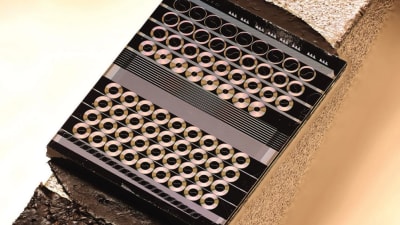
Researchers have developed a photonic chip-based traveling wave parametric amplifier that achieves ultra-broadband signal amplification in an unprecedentedly compact form. Read on to learn more about it.
Briefs: Materials
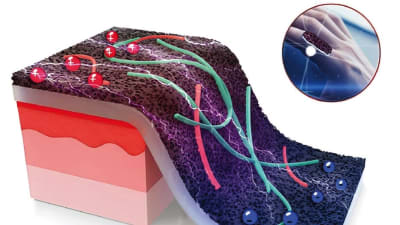
A major challenge in self-powered wearable sensors for health care monitoring is distinguishing different signals when they occur at the same time. Researchers addressed this issue by uncovering a new property of a sensor material, enabling the team to develop a new type of flexible sensor that can accurately measure both temperature and physical strain simultaneously but separately to more precisely pinpoint various signals. Read on to learn more.
Briefs: Sensors/Data Acquisition
Residents of the Manu’a Islands in American Samoa were feeling the earth shake, raising concerns of an imminent volcanic eruption or tsunami. Scientists from the U.S. Geological Survey used machine learning and a technique called template matching on shaking data recorded from a single seismic sensor located 250 kilometers away to locate the source of the shaking. Read on to learn more.

Briefs: Electronics & Computers
Computer scientists have invented a highly effective, yet incredibly simple, algorithm to decide which items to toss from a web cache to make room for new ones. Known as SIEVE, the new open-source algorithm holds the potential to transform the management of web traffic on a large scale. Read on to learn more.

Briefs: Software
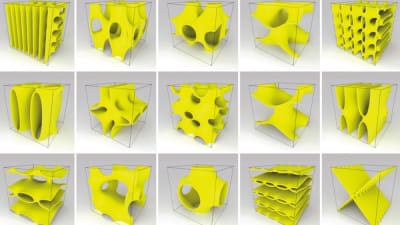
Researchers from MIT and the Institute of Science and Technology Austria have developed a computational technique that makes it easier to quickly design a metamaterial cell from smaller building blocks like interconnected beams or thin plates, and then evaluate the resulting metamaterial’s properties. Read on to learn more.
Briefs: Green Design & Manufacturing
Southwest Research Institute is working to expand software normally used to model electrolytes and predict corrosion and turn it into a tool that can help determine whether ice-covered worlds have the right conditions for microbial life. Read on to learn more.

Briefs: Electronics & Computers
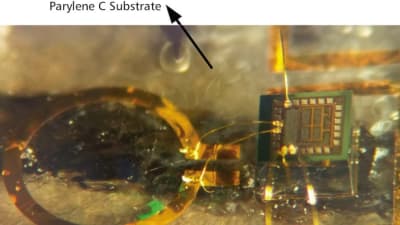
An invention that uses microchip technology in implantable devices and other wearable products such as smart watches can be used to improve biomedical devices including those used to monitor people with glaucoma and heart disease. Read on to learn more.
Briefs: Electronics & Computers
Magnets generate invisible fields that attract certain materials. Far more important to our everyday lives, magnets also can store data in computers. Exploiting the direction of the magnetic field, microscopic bar magnets each can store one bit of memory as a zero or a one — the language of computers.

Briefs: Physical Sciences
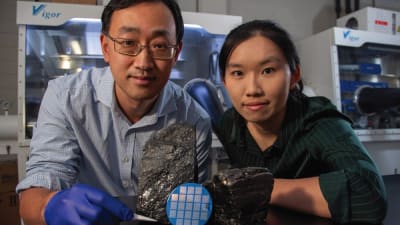
A joint research effort led by the University of Illinois Urbana-Champaign has shown how coal can play a vital role in next-generation electronic devices. Read on to learn more about it.
Briefs: Semiconductors & ICs
Researchers have designed and synthesized a unique material with controllable capabilities that make it promising for future electronics including cellphones and computers. Read on to learn more.

Briefs: Electronics & Computers
The mass production of conventional silicon chips relies on a successful business model with large “semiconductor fabrication plants” or “foundries.” New research by KU Leuven and imec shows that this “foundry” model can also be applied to the field of flexible, thin-film electronics. Read on to learn more.

Briefs: Energy
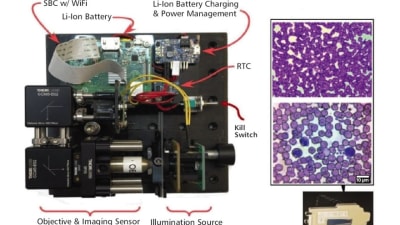
Innovators at NASA Johnson Space Center have developed a handheld digital microscope to fill the critical microscopy needs of human space exploration by providing flight crews in situ hematological diagnostic and tracking ability to assess and monitor crew health in the absence of gravity. Read on to learn more.
Briefs: Energy
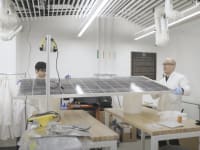
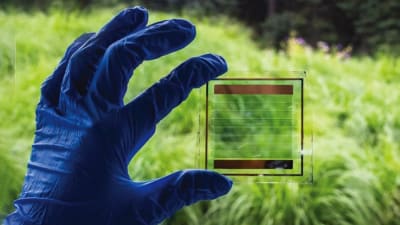
In an important step toward bringing transparent solar cells to home windows, researchers at the University of Michigan have developed a way to manufacture highly efficient and semitransparent solar cells. Read on to learn more about it.
Briefs: Energy
Researchers have found a way to tease hydrogen out of the ocean by funneling seawater through a double-membrane system and electricity. The design successfully generated hydrogen gas without producing large amounts of harmful byproducts. Read on to learn more.

Briefs: Green Design & Manufacturing
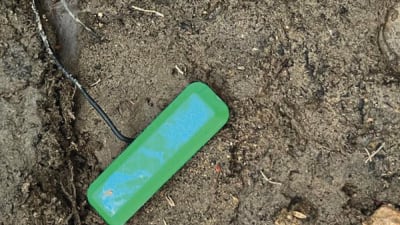
A Northwestern University-led team of researchers has developed a new fuel cell that harvests energy from microbes living in dirt. About the size of a standard paperback book, the completely soil-powered technology could fuel underground sensors used in precision agriculture and green infrastructure. Read on to learn more.
Briefs: Materials
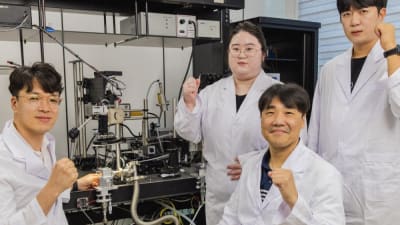
A research team led by Dr. Daeho Kim and Dr. Jong Hwan Park at the Nano Hybrid Technology Research Center of the Korea Electrotechnology Research Institute has developed a groundbreaking process technology that enables ultrafast, 30-second preparation of hard carbon anodes for sodium-ion batteries, using microwave induction heating. Read on to learn more.
Briefs: Materials
The triple-layer solid electrolyte features a robust middle layer that boosts the battery’s mechanical strength, while its soft outer surface ensures an excellent electrode contact, facilitating an easy movement of lithium ions. Read on to learn more.

Briefs: Energy
A team of researchers from Japan has developed a non-flammable quasi-solid-state LIB that can overcome the limitations of conventional batteries. Read on to learn more.
Briefs: Green Design & Manufacturing
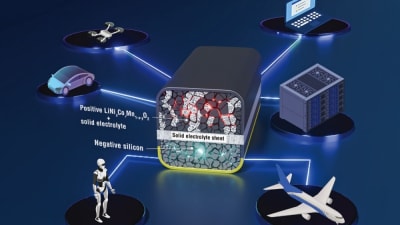
A research team has developed a novel technology for directly recycling spent cathode materials from lithium-ion batteries through a simple process that addresses the limitations of conventional recycling methods. This innovative approach restores the spent cathode to its original state. Read on to learn more.

Briefs: Robotics, Automation & Control
A team of MIT engineers has developed a training method for multiagent systems that can guarantee their safe operation in crowded environments. Read on to learn more about it.

Briefs: Software
A new study, published in the journal Results in Engineering, introduced a meticulously designed dataset aimed at enhancing the performance of 6D pose estimation algorithms. Read on to learn more.

Briefs: Energy
Researchers at Rice University have found a new way to improve a key element of thermophotovoltaic systems, which convert heat into electricity via light. Read on to learn more about it.

Briefs: Energy
Batteries in electric vehicles can fail quickly, sometimes catching fire without much warning. Sandia National Laboratories is working to detect these failures early and provide sufficient warning time to vehicle occupants. Read on to learn more about it.

Briefs: Power
Innovators at NASA Johnson Space Center have designed a pneumatic nail penetration trigger system that drives a Li-ion battery cell into thermal runaway using a tungsten nail. Read on to learn more.

Briefs: Sensors/Data Acquisition
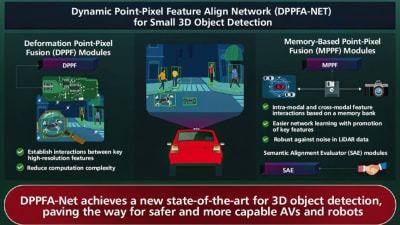
Scientists have developed multi-modal 3D object detection methods that combine 3D LiDAR data with 2D RGB images taken by standard cameras. While the fusion of 2D images and 3D LiDAR data leads to more accurate 3D detection results, it still faces its own set of challenges, with accurate detection of small objects remaining difficult. Read on to learn more about it.
Briefs: Sensors/Data Acquisition
A team has created a prototype for what it calls “living bioelectronics” — a combination of living cells, gel, and electronics that can integrate with living tissue. The patches are made of sensors, bacterial cells, and a gel made from starch and gelatin. Tests in mice found that the devices could continuously monitor and improve psoriasis-like symptoms, without irritating skin. Read on to learn more.

Briefs: Materials
A Duke University team's approach takes a metallic nanotube, which always lets current through, and transforms it into a semiconducting form that can be switched on and off. Read on to learn more.

Briefs: Manufacturing & Prototyping
Manufacturing More Efficient Spintronics Devices
Researchers have developed a breakthrough process for making spintronic devices that has the potential to become the new industry standard for semiconductors chips that make up computers, smartphones, and many other electronics. The new process will allow for faster, more efficient spintronics devices that can be scaled down smaller than ever before. Read on to learn more about it.
Briefs: Connectivity
The Brown University research team created a novel approach for a wireless communication network that can efficiently transmit, receive, and decode data from thousands of microelectronic chips that are each no larger than a grain of salt. Read on to learn more about it.
Top Stories
 Blog: Lighting

A Stretchable OLED that Can Maintain Most of Its Luminescence
 Blog: Energy

Batteries that Can Withstand the Cold
 INSIDER: Energy

Advancing All-Solid-State Batteries
 Blog: Power

My Opinion: We Need More Power Soon — Is Nuclear the Answer?
 Quiz: Power

 Blog: Data Acquisition

Webcasts
 Upcoming Webinars: Test & Measurement

From Spreadsheets to Insights: Fast Data Analysis Without Complex...
 Upcoming Webinars: Defense

Cooling a New Generation of Aerospace and Defense Embedded...
 Upcoming Webinars: AR/AI

Beyond AI-Copy-Paste Engineering: Advanced AI-Integration Success...
 Upcoming Webinars: Automotive

Battery Abuse Testing: Pushing to Failure
 Upcoming Webinars: Connectivity

A FREE Two-Day Event Dedicated to Connected Mobility
 Upcoming Webinars: RF & Microwave Electronics

Choosing the Right N-Port Strategy: Multiport VNAs vs. Switch...