36,38
-1
1710
30
Briefs: Materials
Predictive Modeling of Corrosion Efficiencies and Toxicities
Atmospheric corrosion is significantly accelerated by the presence of heat, humidity, corrosive salts, and sunlight. At Kennedy Space Center (KSC), all of these accelerants are present, producing an extremely corrosive environment. Toxicity and environmental impacts of some inorganic...
Briefs: Materials
Improving Foreign Object Damage Performance for 2D Woven Ceramic Matrix Composites
As the power density of advanced engines increases, the need for new materials that are capable of high operating temperatures, such as ceramic matrix composites (CMCs), is critical for turbine hot-section static and rotating components. Such advanced materials can...
Briefs: Manufacturing & Prototyping
Process for Coating Substrates With Catalytic Materials
This invention relates to the process of coating substrates with one or more components to form a catalyst; specifically, the process of layering one or more catalytic components onto a honeycomb monolith to form a carbon monoxide oxidation that combines CO and O2 to form CO2, or...
Briefs: Manufacturing & Prototyping
Portable Friction Stir Welding Machine
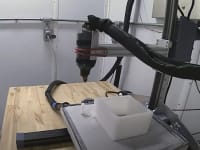
A preliminary design of a portable friction stir welding (FSW) machine for use in space has been developed. The in-space FSW machine takes the form of a handheld router tool that is historically used in woodworking applications. With the design of the in-space FSW machine, the FSW tool is directly connected to...
Briefs: Manufacturing & Prototyping
Multimode, Fiber-Coupled, Tungsten Silicide, Superconducting Nanowire Single-Photon Detector Array
The superconducting nanowire single-photon detector (SNSPD) arrays created in this innovation were fabricated using a WSi nanowire process. A gold mirror layer is deposited on an oxidized silicon wafer, and amorphous-state WSi is sputtered from a...
Briefs: Manufacturing & Prototyping
Sidewall Passivation of GaN Avalanche Photodiodes via Atomic Layer Deposition
The visible-blind detection of UV light has important applications in planetary imaging and spectroscopy, astronomy, communications, and defense-related imaging. Future instruments for imaging in the ultraviolet will require improvements in detector capabilities. An...
Briefs: Manufacturing & Prototyping
Design and Analysis of Metal-to-Composite Nozzle Extension Joints
Analysis, design, fabrication, and testing were performed to create a new joint design for potential use in attaching a domestically available carbon-carbon (C–C) nozzle extension to the turbine exhaust manifold of a J-2X engine. Various attachment methods were investigated for a...
Briefs: Manufacturing & Prototyping
Modeling Laser Ablation and Plume Chemistry in a Boron Nitride Nanotube Production Rig
The future of manned and unmanned spaceflight and exploration depends on economical access to space through multifunctional, lightweight materials. Boron nitride nanotube (BNNT) composites offer distinct advantages for enhanced survivability during long-term...
Briefs: Manufacturing & Prototyping
Damage-Free Finishing of Silicon X-Ray Optics Using Magnetic Field-Assisted Finishing
Thin, segmented mirrors have been fabricated from monocrystalline silicon blocks. The material is economically viable, and is virtually free of internal stress because of its nearly perfect crystalline structure. The mirror surfaces will first be accurately...
Briefs: Manufacturing & Prototyping
Smart Crucibles and Heat Pipes
Near-net-shape vacuum plasma spray (VPS) forming techniques were developed to produce advanced components with internal features such as smart heat pipes and crucibles. The initial results demonstrated the ability to incorporate features such as channels and a porous layer within the wall of a smart crucible.
Briefs: Manufacturing & Prototyping
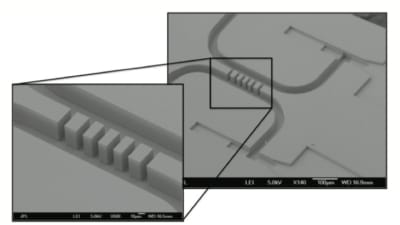
Terahertz (THz) frequency radiometers, spectrometers, and radars are promising instruments for the remote sensing of planetary atmospheres such as Mars, Venus, Jupiter, and...
Briefs: Manufacturing & Prototyping
Plasma Reduction of Lunar Regolith for In-Space Fabrication
The in situ production of vital gases and raw materials on the lunar surface is an integral part of NASA’s exploration vision. Development of processes for extraction of oxygen and metallics from the lunar regolith will be vital not only for life support on the lunar surface, but also...
Briefs: Manufacturing & Prototyping
Method for Determining Self-Reacting Friction Stir Weld Schedules
This invention establishes a process to define a viable self-reacting friction stir weld (SR-FSW) schedule (parameter settings) for a given material combination. The focus of this process results in a SR-FSW schedule that is insensitive to intentional changes or normal process...
Briefs: Manufacturing & Prototyping
Flexible, Lightweight Vacuum Shell for Load-Responsive Multilayer Insulation for High Thermal Performance
Better thermal insulation is needed to insulate cryogenic propellants used by NASA for launch vehicles, spacecraft, and orbiting fuel depots. In particular, cryotank insulation during in-air pre-launch and launch ascent stages currently uses...
Briefs: Manufacturing & Prototyping
Bulk Separation and Manipulation of Carbon Nanotubes by Type
The utility of this invention is to extract metals (semi-metals) or semiconductors from bulk nanotube samples. The bulk material is a mixture of the two. These materials can then be used to clone a particular type of nanotube, place a particular type in a device, generate smart materials,...
Briefs: Materials
PICA-on-Edge
The current baseline ablator material for the Advanced Development Program (ADP) for the thermal protection system (TPS) of the Orion heat shield is phenolic impregnated carbon ablator (PICA). PICA is a low-density, low-strength material that must be isolated from mechanically and thermally induced deformations and strains of the...
Briefs: Materials
Layered Composite Thermal Insulation System for Non-Vacuum Applications
Ambient air insulation systems for low-temperature (sub-ambient) applications are difficult to achieve because of moisture ingress and environmental degradation, as well as thermal stress-cracking. Most currently accepted methods for externally applied outdoor environments are...
Briefs: Materials
White, Electrically Dissipative Thermal Control Coating
A highly reflective, white conductive coating system was developed using various layered coatings to maximize the structural, electrical, and optical reflectance properties for spacecraft radiators. The top layer of the system contains a highly reflective white pigment within a dissipative...
Briefs: Materials
Ultra-High-Temperature Ceramic Composites with SiC Reinforcements
Future-generation materials for use on space transportation vehicles require substantial improvements in material properties, leading to increased reliability and safety, as well as intelligent design to allow for current materials to meet future needs. Ultra-high-temperature...
Briefs: Materials
Cathode Discharge Catalytic Systems for Hydrogen Recovery from Methane
In the process of recovery and regeneration of cabin atmosphere to supply oxygen to facilitate extended-duration manned missions, including expeditions to Mars or a return to the Moon, one of the byproducts of this reaction is waste methane, which is vented into space. This...
Briefs: Materials
Beneficiation of Planetary Regolith by Pneumatically Enhanced Tribocharging of Granular Material
Liberation of oxygen from the mineral ilmenite (FeTiO3), which may be found on the Moon, Mars, or asteroids, is inefficient due to the abundance of other minerals in the excavated regolith that are present but not needed during the chemical processing....
Briefs: Manufacturing & Prototyping
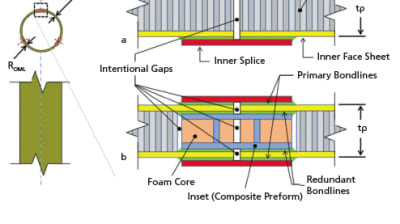
NASA’s next-generation launch vehicles will be enabled by high-performance composite materials and innovative manufacturing methods. As such, NASA uses adhesively...
Briefs: Manufacturing & Prototyping
Ohmic Contact to N- and P-Type Silicon Carbide
Electrical ohmic contacts can be simultaneously formed on silicon carbide (SiC) semiconductors having donor and acceptor impurities (n- and p-type doping, respectively). This implies that such contacts can be formed on SiC layers in one process step during the fabrication of the semiconductor device....
Briefs: Manufacturing & Prototyping
Flap Edge Noise Reduction Fins
Aircraft noise is a significant problem with both economic and public health implications, especially for communities near airports. As a result, increasingly stringent constraints are being placed on aircraft carriers worldwide to reduce this noise. The current disclosure focuses on airframe noise generated at or...
Briefs: Materials
Toughened Uni-piece Fibrous Reinforced Oxidation-Resistant Composite (TUFROC)
TUFROC has an exposed surface edge design and an appropriate materials combination for a space vehicle that will survive the mechanical stresses induced in the initial ascent, and will subsequently survive the extreme heating and mechanically stressful environment of...
Briefs: Materials
High-Efficiency Tantalum-Based Ceramic Composite Structures
High-efficiency tantalum-based ceramic (HETC) composite structures are suitable for use in thermal protection systems. These composite structures have high-efficiency surfaces (low catalytic efficiency and high-emittance), thereby reducing heat flux to a spacecraft during planetary...
Briefs: Materials
Use of Solvent-Free Conditions/Dry Mixing for Functionalizing Carbon Nanotubes
Two methods have been developed for functionalizing carbon nanotubes in solvent-free conditions. In one method, purified single-walled carbon nanotubes (SWNTs) and a diazonium salt are added to a metal vial, which is loaded with a stainless steel ball bearing. The metal...
Briefs: Materials
Synthesis of Novel Copoly(alkyl ether imide)s With Unique Surface Properties
Copoly(alkyl ether imide)s were synthesized for the purposes of tailoring surface chemistry. Alkyl ether oligomers with amine end groups were synthesized from the hydroxyl-terminated species, and subsequently reacted with aromatic dianhydrides and diamines to make the...
Briefs: Materials
A self-healing advanced composite system was designed and optimized using minimum self-healing (SH) agent (~0.02%) deposited in microscopically ordered arrays through...

Top Stories
 Blog: Lighting

A Stretchable OLED that Can Maintain Most of Its Luminescence
 Blog: Energy

Batteries that Can Withstand the Cold
 INSIDER: Energy

Advancing All-Solid-State Batteries
 Quiz: Energy

 Blog: Physical Sciences

 Blog: Materials

Webcasts
 Upcoming Webinars: Test & Measurement

From Spreadsheets to Insights: Fast Data Analysis Without Complex...
 Upcoming Webinars: Electronics & Computers

Cooling a New Generation of Aerospace and Defense Embedded...
 Upcoming Webinars: Test & Measurement

Beyond AI-Copy-Paste Engineering: Advanced AI-Integration Success...
 Upcoming Webinars: Automotive

Battery Abuse Testing: Pushing to Failure
 Upcoming Webinars: Internet of Things

A FREE Two-Day Event Dedicated to Connected Mobility
 Upcoming Webinars: Test & Measurement

Choosing the Right N-Port Strategy: Multiport VNAs vs. Switch...