40,51
-1
90
30
Briefs: Electronics & Computers
In the future, the researchers want to derive simple, rule-based insights from their neural model, since the decisions of the neural network can be opaque and difficult to interpret. Simpler, rule-based methods could also be easier to implement and maintain in actual robotic warehouse settings.

Briefs: Materials
Robots and cameras of the future could be made of liquid crystals, thanks to a new discovery that significantly expands the potential of the chemicals already common in computer displays and digital watches. The findings are a simple and inexpensive way to manipulate the molecular properties of liquid crystals with light exposure.

Briefs: Manufacturing & Prototyping
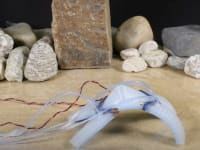
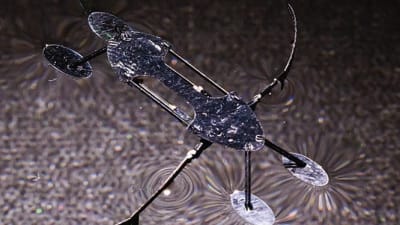
Reporting on their work in the proceedings of the IEEE Robotics and Automation Society’s International Conference on Intelligent Robots and Systems, the mini-bug weighs in at eight milligrams, while the water strider weighs 55 milligrams. Both can move at about six millimeters a second.
Briefs: Electronics & Computers
This new technology — developed by engineers at Delft University of Technology, Vrije Universiteit Amsterdam, and VSL, and which can achieve an accuracy of 10 centimeters — is important for the implementation of a range of location-based applications, such as automated vehicles, quantum communication, and next-generation mobile communication systems.

Briefs: Medical
This advancement, one of the first of its kind, enables a useful new capability for a variety of applications, including improved prostheses, haptics for new modalities in augmented reality (AR), and thermally modulated therapeutics for applications such as pain management. The technology also has a variety of potential industrial and research applications.
Briefs: Robotics, Automation & Control
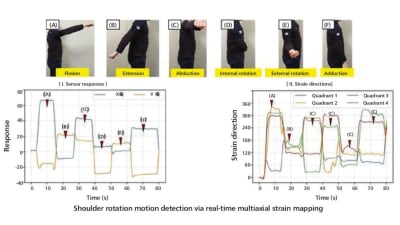
A research team has successfully overcome the limitations of soft strain sensors by integrating computer vision technology into optical sensors. The team developed a sensor technology known as computer vision-based optical strain (CVOS) during its study. Unlike conventional sensors reliant on electrical signals, CVOS sensors employ computer vision and optical sensors to analyze microscale optical patterns, extracting data regarding changes.
Briefs: Robotics, Automation & Control
Meet Air-Guardian: A system developed by researchers at the MIT Computer Science and Artificial Intelligence Laboratory (CSAIL). As modern pilots grapple with an onslaught of information from multiple monitors, especially during critical moments, Air-Guardian acts as a proactive co-pilot; a partnership between human and machine, rooted in understanding attention.

Briefs: Mechanical & Fluid Systems
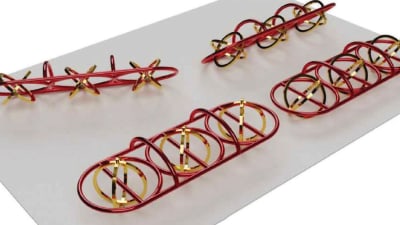
A technique enables manufacturing of minuscule robots by interlocking multiple materials in a complex way.
Briefs: Robotics, Automation & Control
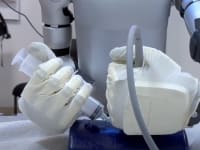
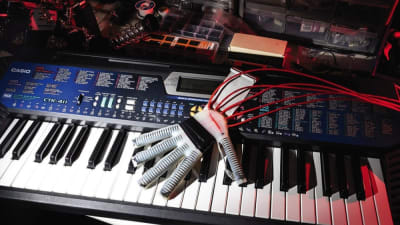
A first-of-its-kind robotic glove is lending a “hand” and providing hope to piano players who have suffered a disabling stroke. Developed by researchers from Florida Atlantic University’s College of Engineering and Computer Science, the soft robotic hand exoskeleton uses artificial intelligence to improve hand dexterity.
Briefs: Software
Innovators at NASA’s Johnson Space Center have designed a circumferential scissor spring mechanism, that when incorporated into a hand controller, improves the restorative force to a control stick’s neutral position. The design also provides for operation on a more linear portion of the spring’s force deflection curve, yielding better feedback to the user.

Briefs: Mechanical & Fluid Systems
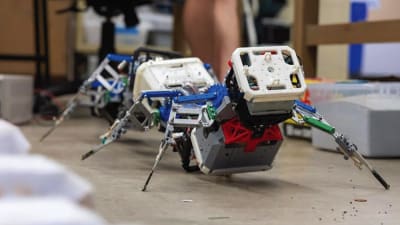
Intrigued to see if many limbs could be helpful for locomotion in this world, a team at the Georgia Institute of Technology is using a centipede's style of movement to its advantage. They developed a new theory of multilegged locomotion and created many-legged robotic models.
Briefs: Robotics, Automation & Control
MIT researchers developed a machine-learning technique called Diffusion-CCSP. Diffusion models learn to generate new data samples that resemble samples in a training dataset by iteratively refining their output.

Briefs: Materials
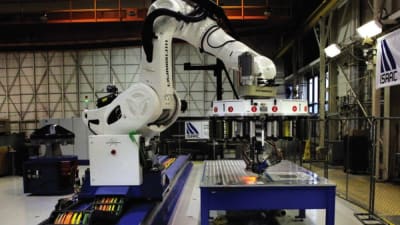
NASA’s Langley Research Center has developed a simplified, tool-less automated tow/tape placement (ATP) system. This invention enables several benefits that mitigate limitations associated with conventional ATP systems. Read on to learn more.
Briefs: Photonics/Optics
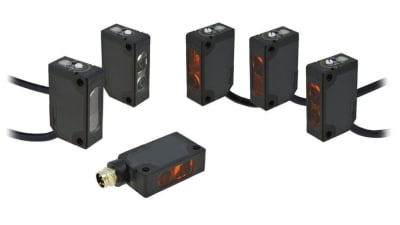
Photoelectric (PE) sensors represent a discrete sensor technology widely used throughout industry. They use the presence or absence of light to provide an on/off output to supervisory automation and monitoring systems, and are often the better choice for sensing manufacturing products.
Briefs: Robotics, Automation & Control
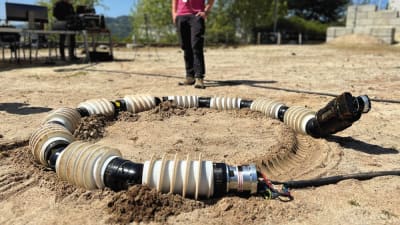
Called EELS (Exobiology Extant Life Surveyor), the self-propelled, autonomous robot was inspired by a desire to look for signs of life in the ocean hiding below the icy crust of Saturn's moon Enceladus by descending narrow vents in the surface that spew geysers into space.
Briefs: Manufacturing & Prototyping
Using a new type of dual-polymer material capable of responding dynamically to its environment, researchers have developed a set of modular hydrogel components that could be useful in a variety of soft robotic and biomedical applications.

Briefs: Energy
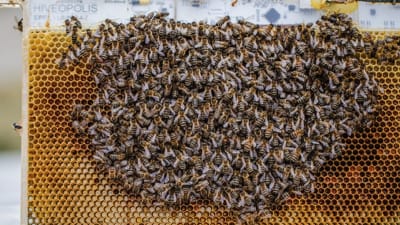
A research team has developed a robotic system that can be unobtrusively built into the frame of a standard honeybee hive. Composed of an array of thermal sensors and actuators, the system measures and modulates honeybee behavior through localized temperature variations.
Briefs: Sensors/Data Acquisition
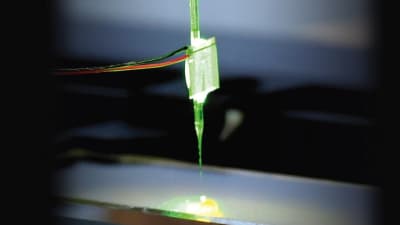
A team at ETH Zurich has developed an ultrasonically actuated glass needle that can be attached to a robotic arm. This lets them pump and mix minuscule amounts of liquid and trap particles.
Briefs: Manufacturing & Prototyping
Cornell researchers have combined soft microactuators with high-energy-density chemical fuel to create an insect-scale quadrupedal robot that is powered by combustion and can outrace, outlift, outflex, and outleap its electric-driven competitors.
Briefs: Robotics, Automation & Control
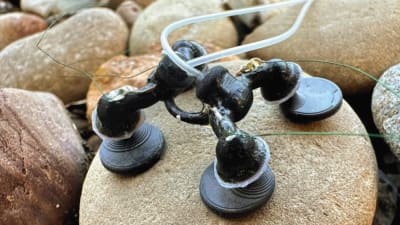
MIT researchers have developed a camera-based touch sensor that is long, curved, and shaped like a human finger. Their device provides high-resolution tactile sensing over a large area. The sensor, called the GelSight Svelte, uses two mirrors to reflect and refract light.

Briefs: Robotics, Automation & Control
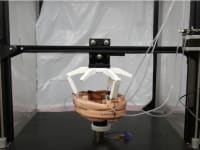
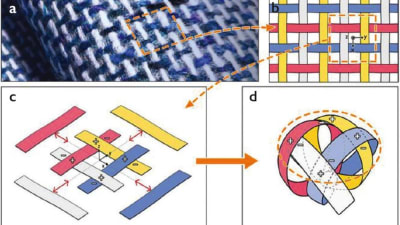
Dr. Song Kahye along with Professor Lee, Dae-Young have jointly developed a soft gripper with a woven structure that can grip objects weighing more than 100 kg with 130 g of material. To increase the loading capacity of the soft robot gripper, the team applied a new structure inspired by textiles.
Briefs: Robotics, Automation & Control
A new soft sensor developed by UBC and Honda researchers opens the door to a wide range of applications in robotics and prosthetics. When applied to the surface of a prosthetic arm or a robotic limb, the sensor skin provides touch sensitivity and dexterity, enabling tasks that can be difficult for machines such as picking up a piece of soft fruit.

Briefs: Robotics, Automation & Control
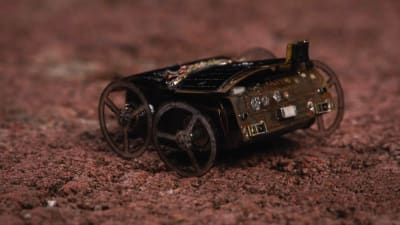
Moving robots demands a lot of energy, and batteries, the typical power source, limit lifetime and raise environmental concerns. Researchers at the University of Washington have now created MilliMobile, a tiny, self-driving robot powered only by surrounding light or radio waves.
Briefs: Manufacturing & Prototyping
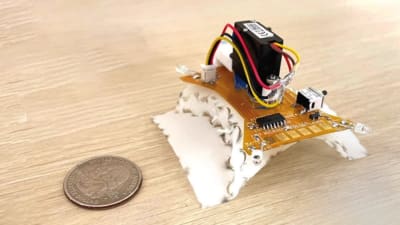
Centimeter-scale walking and crawling robots are in demand both for their ability to explore tight or cluttered environments and for their low fabrication costs. Pulling from origami-inspired construction, researchers have crafted a more simplified approach to the design and fabrication of these robots.
Briefs: AR/AI
Researchers at The Ohio State University have developed new software to aid in the development, evaluation, and demonstration of safer autonomous, or driverless, vehicles. Called the Vehicle-in-Virtual-Environment (VVE) method, it allows the testing of driverless cars in a perfectly safe environment.

Briefs: Robotics, Automation & Control
A Software Model Makes Transport Robots Smarter
Imagine a team of humans and robots working together to process online orders — real-life workers strategically positioned among their automated coworkers who are moving intelligently back and forth in a warehouse space. This could become a reality sooner than later, thanks to researchers at the University of Missouri.
Briefs: Photonics/Optics
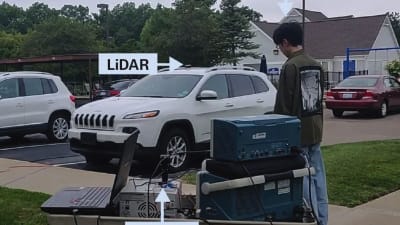
Research reveals that expertly timed lasers shined at an approaching LIDAR system can create a blind spot in front of the vehicle.
Briefs: Robotics, Automation & Control
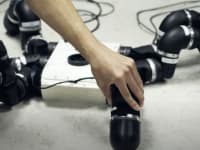
Engineers at CU Boulder have designed a robot called CLARI, which stands for Compliant Legged Articulated Robotic Insect, that has the potential to aid first responders after major disasters in an entirely new way.

Briefs: Robotics, Automation & Control
Research teams at University of Galway and MIT have detailed a new breakthrough in medical device technology that could lead to intelligent, long-lasting, tailored treatment for patients thanks to soft robotics and artificial intelligence.

Top Stories
 Blog: Lighting

A Stretchable OLED that Can Maintain Most of Its Luminescence
 Blog: Energy

Batteries that Can Withstand the Cold
 INSIDER: Energy

Advancing All-Solid-State Batteries
 Quiz: Energy

 Blog: Physical Sciences

 Blog: Materials

Webcasts
 Upcoming Webinars: Sensors/Data Acquisition

From Spreadsheets to Insights: Fast Data Analysis Without Complex...
 Upcoming Webinars: Electronics & Computers

Cooling a New Generation of Aerospace and Defense Embedded...
 Upcoming Webinars: Sensors/Data Acquisition

Beyond AI-Copy-Paste Engineering: Advanced AI-Integration Success...
 Upcoming Webinars: Power

Battery Abuse Testing: Pushing to Failure
 Upcoming Webinars: Connectivity

A FREE Two-Day Event Dedicated to Connected Mobility
 Upcoming Webinars: Test & Measurement

Choosing the Right N-Port Strategy: Multiport VNAs vs. Switch...