Stories
6,36,37,43,46,48,50,56,58,59,60
7,8,36,110,131,134,135,138,139,141,142,144,145,151,152,201,202
-1
780
30
Special Reports: Materials

Aerospace Manufacturing - February 2024
From AI to digital twins to extended reality (XR), an array of new technologies are coming together to shape the future of manufacturing. Read all about it in this compendium of articles from the editors...Events: Aerospace
Home How to Enter Terms & Conditions Meet the Judges Hall of Stars Sponsors
Platinum Sponsors
See all sponsors
The wait is over. We’re thrilled to announce the...

Events: Materials
Home How to Enter Terms & Conditions Meet the Judges Hall of Stars Sponsors
Nominations for the 2025 Rising Star Awards have closed.
All entries are being evaluated by a panel of judges...

Events: Medical
Home How to Enter Terms & Conditions Meet the Judges Hall of Stars Sponsors
The Women in Engineering: Rising Star Awards program celebrates and recognizes women engineers who are enhancing the...

Events: AR/AI
Home How to Enter Terms & Conditions Meet the Judges Hall of Stars Sponsors
Thank you to our esteemed panel of judges, comprising leaders from engineering and technology fields, who bring...

Events: Automotive
Home How to Enter Terms & Conditions Meet the Judges Hall of Stars Sponsors
Meet the trailblazing women engineers who made history as winners of last year’s Rising Star Awards, chosen...

Events: Aerospace
Home How to Enter Terms & Conditions Meet the Judges Hall of Stars Sponsors
We are deeply grateful to our sponsors for their invaluable support of this year’s Rising Star Awards...

News: Transportation
Women have been making significant improvements to engineering and are at the forefront of innovation and sustainable development. SAE Media Group shines the spotlight on their achievements with its inaugural...

Podcasts: Wearables
Wearable medical devices must balance the need for continuous monitoring with power efficiency.

Q&A: Design
Distinguished Professor of Mechanical Engineering Ron Miles and his team at Binghamton University, New York, have developed an entirely new microphone technology based on research into how spiders hear.

Podcasts: Aerospace
Michael O’Hara, CUAS Mission Manager, Northrop Grumman, is the guest on this episode of the Aerospace & Defense Technology podcast.

NASA Spinoff: Imaging
A ruggedized video camera designed to withstand the shock, vibration, and extreme temperatures of space is now ready for extreme conditions on Earth.

Podcasts: Defense
The guest on this first episode of the new A&DT podcast is Shaan Shaikh, a fellow with the Missile Defense Project at the Center for Strategic and International Studies (CSIS).

Podcasts: Medical
Achieving interoperability as medical-grade wearables integrate with diverse healthcare systems.

Special Reports: Aerospace

Award–Winning Breakthrough Inventions - February 2024
The Create the Future Design Contest recognizes and rewards engineering innovations that benefit humanity, the environment, and the economy. In this special report, learn about the eight...Articles: Test & Measurement
NASA’s Artemis program consists of a series of missions designed to land humans on the Moon and establish a sustainable, continuing presence. A long-term foothold on the Moon’s surface enables invaluable research and testing opportunities that will set the stage for future groundbreaking missions, including the first human mission to Mars.

Briefs: Materials
NASA’s Langley Research Center has developed a simplified, tool-less automated tow/tape placement (ATP) system. This invention enables several benefits that mitigate limitations associated with conventional ATP systems. Read on to learn more.

Briefs: Materials
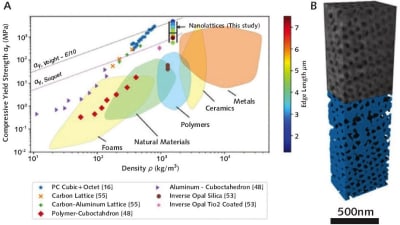
Scientists at the Columbia University, University of Connecticut, and the U.S. Department of Energy’s (DOE) Brookhaven National Laboratory were able to fabricate a pure form of glass and coat specialized pieces of DNA with it to create a material that was not only stronger than steel, but incredibly lightweight.
Briefs: Physical Sciences
A series of buzzing “loop-currents” could explain a recently discovered, never-before-seen phenomenon in a type of quantum material. The quantum material is known by the chemical formula Mn 3Si2Te6, but it’s safe to call it “honeycomb.” Read on to learn more.

Briefs: Nanotechnology
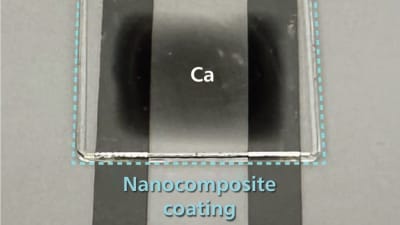
Developed by a team led by Lawrence Berkeley National Laboratory, a self-assembling nanosheet could significantly extend the shelf life of consumer products. And because the new material is recyclable, it could also enable a sustainable manufacturing approach that keeps single-use packaging and electronics out of landfills.
Briefs: Photonics/Optics
Researchers at the U.S. Department of Energy’s (DOE) Argonne National Laboratory have developed an autonomous, or self-driving, microscopy technique. It uses AI to selectively target points of interest for scanning. Read on to learn more.

Briefs: Materials
A team from Chalmers University of Technology has succeeded in observing how the lithium metal in the cell behaves as it charges and discharges. The new method may contribute to batteries with higher capacity and increased safety in our future cars and devices.

Briefs: Manufacturing & Prototyping
Using 3D Bioprinting to Create Eye Tissue
The research team from the National Eye Institute printed a combination of cells that form the outer blood-retina barrier — eye tissue that supports the retina’s light-sensing photoreceptors. The technique provides a theoretically unlimited supply of patient-derived tissue to study degenerative retinal diseases such as age-related macular degeneration.
Briefs: Energy
A stretchable system that can harvest energy from human breathing and motion for use in wearable health-monitoring devices may be possible, according to an international team of researchers.

Briefs: Design
The ventilators are simpler and cheaper to make than those currently available.

Briefs: Medical
MIT researchers have engineered both the nanoparticles used to deliver the COVID-19 antigen and the antigen itself, to boost the immune response, without the need for a separate adjuvant. If further developed for use in humans, this type of RNA vaccine could help to reduce costs, the dosage needed, and potentially lead to longer-lasting immunity.

INSIDER: Physical Sciences
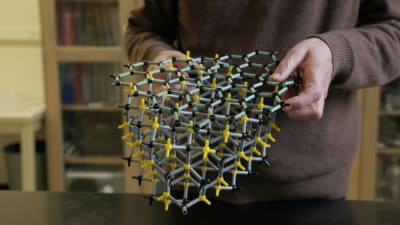
Researchers at the Georgia Institute of Technology have created the world’s first functional semiconductor made from graphene, a single sheet of carbon atoms held...
INSIDER: Design
MIT researchers have developed a battery-free, self-powered sensor that can harvest energy from its environment.

Blog: Energy
Researchers constructed an electrocrystallization strategy to induce zinc texture growth. The adsorption of DMA induces Zn (002) texture growth and inhibits harmful side reactions.

Top Stories
 Blog: Power

My Opinion: We Need More Power Soon — Is Nuclear the Answer?
 Blog: AR/AI

Aerial Microrobots That Can Match a Bumblebee's Speed
 News: Energy

 Blog: Electronics & Computers

Turning Edible Fungi into Organic Memristors
 Blog: Robotics, Automation & Control

Microscopic Swimming Machines that Can Sense, Respond to Surroundings
 INSIDER: Sensors/Data Acquisition

Webcasts
 Upcoming Webinars: Energy

Hydrogen Engines Are Heating Up for Heavy Duty
 Upcoming Webinars: Electronics & Computers

Advantages of Smart Power Distribution Unit Design for Automotive...
 Upcoming Webinars: Unmanned Systems

Quiet, Please: NVH Improvement Opportunities in the Early Design...
 Upcoming Webinars: AR/AI

From Spreadsheets to Insights: Fast Data Analysis Without Complex...
 Upcoming Webinars: Automotive

Battery Abuse Testing: Pushing to Failure
 Upcoming Webinars: AR/AI