36
-1
0
30
Briefs: Semiconductors & ICs
A new study from NC State University combines three-dimensional embroidery techniques with machine learning to create a fabric-based sensor that can control electronic devices through touch. Read on to learn more.

Briefs: Design
In two papers, one released in Nature Materials and a second in ACS Nano, researchers describe a new methodology for fabricating targeted 3D nanoscale structures via self-assembly that can find use in a variety of applications, and they provide a design algorithm for others to follow suit. And it’s all based on the most basic biomolecular building blocks: DNA. Read on to learn more.

Briefs: Materials
Researchers at NASA have developed new methods to manufacture carbon materials (e.g., nanotubes, graphene) with holes through the graphitic surface of the particles. The methods generate materials with increased accessible surface area, increased functional groups at damage sites, and improved through-surface molecular transport properties.

Briefs: Energy
Oak Ridge National Laboratory researchers have overcome a barrier to using a more affordable, dry process for manufacturing the Li-ion batteries used in vehicles and electronic devices. The resulting batteries provide greater electricity flow and reduced risk of overheating. Read on to learn more.

Briefs: Power
By flipping a foundational belief in battery design, Hailong Chen and his team found that charging zinc-ion batteries at higher currents can make them last longer. Read on to learn more about this surprising result.

Briefs: Medical
NASA Johnson Space Center has developed the Micro-Organ Device (MOD) platform technology that serves as a drug screening system with human or animal cell micro-organs to supplement and reduce animal studies while potentially increasing the success of clinical trials. Read on to learn more.

Briefs: Manufacturing & Prototyping
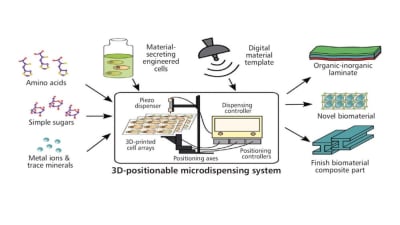
NASA has developed a novel approach for macroscale biomaterial production by combining synthetic biology with 3D printing. This innovation provides modern design and fabrication techniques for custom-designed organic or organic-inorganic composite biomaterials produced from limited resources. Read on to learn more.
Briefs: Energy
A team of researchers from ETH Zurich investigated a new approach to passive dehumidification of indoor spaces. Read on to learn more about it.

Briefs: Materials
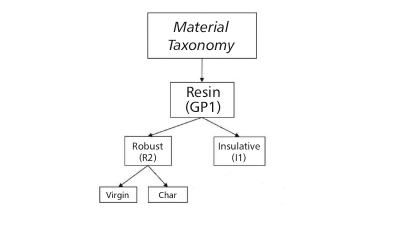
Innovators at NASA Johnson Space Center have developed additively manufactured thermal protection system (AMTPS) comprised of two printable heat shield material formulations. This technology could significantly decrease heat shield or thermal protection system (TPS) fabrication cost and time. Read on to learn more.
Briefs: Materials
Finding the next groundbreaking polymer is always a challenge, but now Georgia Tech researchers are using artificial intelligence (AI) to shape and transform the future of the field. Read on to learn more.

Briefs: Sensors/Data Acquisition
A team of Caltech engineers has developed a technique for inkjet printing arrays of special nanoparticles that enables the mass production of long-lasting wearable sweat sensors. These sensors could be used to monitor a variety of biomarkers, such as vitamins, hormones, metabolites, and medications, in real time. Read on to learn more.

Briefs: Manufacturing & Prototyping
NASA researchers are eliminating complex joints by manufacturing a 1-piece TCA utilizing 3D printing and large-scale additive manufacturing technologies to directly deposit the nozzle onto the combustion chamber. And, by replacing a traditional solid metal jacket with a composite overwrap for support, the overall weight is reduced by over 40 percent. Read on to learn more.

Briefs: Materials
Researchers at the Department of Energy’s Oak Ridge National Laboratory are using advanced manufacturing techniques to revitalize the domestic production of very large metal parts that weigh at least 10,000 pounds each and are necessary for a variety of industries, including clean energy. Read on to learn more.
Briefs: Manufacturing & Prototyping
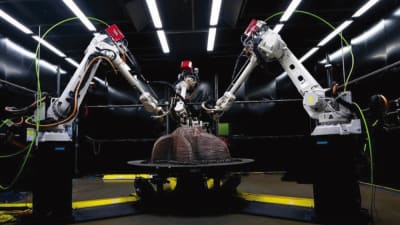
MIT researchers have used 3D printing to produce self-heating microfluidic devices, demonstrating a technique which could someday be used to rapidly create cheap, yet accurate, tools to detect a host of diseases. Read on to learn more.

Briefs: Manufacturing & Prototyping
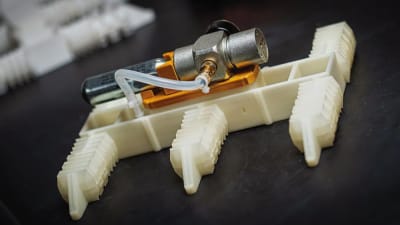
Imagine a robot that can walk, without electronics, and only with the addition of a cartridge of compressed gas, right off the 3D printer. It can also be printed in one go, from one material. That is exactly what roboticists have achieved in robots developed by the Bioinspired Robotics Laboratory at the University of California San Diego. Read on to learn more.
Briefs: Energy
A team led by Kelsey Hatzell, Associate Professor of Mechanical and Aerospace Engineering and the Andlinger Center for Energy and the Environment, has uncovered insights that could help power a new type of battery, called an anode-free solid-state battery, past lithium-ion’s limitations.

Briefs: Energy
To create the new batteries needed for EVs, mobile devices, and renewable energy storage, researchers have explored new materials, new designs, new configurations, and new chemistry. But one aspect — the texture of the metals used — has been historically overlooked. Read on to learn more.

Briefs: Design
The piezoelectric “meta-bot” is capable of propulsion, movement, sensing, and decision-making.

Briefs: Materials
Innovators at the NASA Glenn Research Center have developed a toughened hybrid reinforcement material made from carbon fiber and carbon nanotube (CNT) yarn for use in polymer matrix composites (PMCs). The new material improves toughness and damping properties of PMCs, enhancing impact resistance, fatigue life, as well as structural longevity. Read on to learn more.

Briefs: Materials
In a new study, researchers from the University of Illinois Urbana-Champaign reported that automated high-resolution electron imaging can capture the nanoscale deformation events that lead to metal failure and breakage at the origin of metal failure. Read on to learn more.

Briefs: Design
Changing the shape of the blade will expand the possibilities of using the laser in medicine.
Briefs: Manufacturing & Prototyping
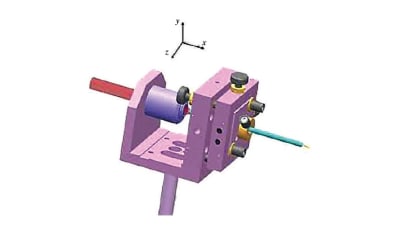
Researchers at Universidad Carlos III de Madrid have developed a new soft joint model for robots with an asymmetrical triangular structure and an extremely thin central column. This breakthrough, recently patented, allows for versatility of movement, adaptability and safety, and will have a major impact in the field of robotics. Read on to learn more.

Briefs: Manufacturing & Prototyping
Purdue University material engineers have created a patent-pending process to develop ultrahigh-strength aluminum alloys that are suitable for additive manufacturing because of their plastic deformability. Read on to learn more.

Briefs: Manufacturing & Prototyping
An innovator at NASA Langley Research Center has developed a novel method for making thin, lightweight radiation shielding that can be sprayed or melted onto common textiles used in clothing such as cotton, nylon, polyester, Nomex, and Kevlar. Read on to learn more about it.

Briefs: Manufacturing & Prototyping
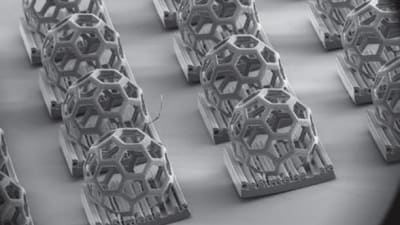
Researchers at Stanford University have introduced a more efficient processing technique that can print up to 1 million highly detailed and customizable microscale particles a day. Read on to learn more about it.
Briefs: Semiconductors & ICs
Manufacturing More Efficient Spintronics Devices
Researchers have developed a breakthrough process for making spintronic devices that has the potential to become the new industry standard for semiconductors chips that make up computers, smartphones, and many other electronics. The new process will allow for faster, more efficient spintronics devices that can be scaled down smaller than ever before. Read on to learn more about it.
Briefs: Manufacturing & Prototyping
Researchers have demonstrated the ability to engineer materials that are both stiff and capable of insulating against heat. This combination of properties is extremely unusual and holds promise for a range of applications, such as the development of new thermal insulation coatings for electronic devices. Read on to learn more.

Briefs: Manufacturing & Prototyping
This advance could enable quantum computers that use programmable optical qubits or “spin-photon qubits” to connect quantum nodes across a remote network. It could also advance a quantum internet that is not only more secure but could also transmit more data than current optical-fiber information technologies. Read on to learn more.
Briefs: Manufacturing & Prototyping
Researchers in the emerging field of spatial computing have developed a prototype augmented reality headset that uses holographic imaging to overlay full-color, 3D moving images on the lenses of what would appear to be an ordinary pair of glasses. Read on to learn more about it.

Top Stories
 Blog: Lighting

A Stretchable OLED that Can Maintain Most of Its Luminescence
 Blog: Energy

Batteries that Can Withstand the Cold
 INSIDER: Energy

Advancing All-Solid-State Batteries
 Blog: Power

My Opinion: We Need More Power Soon — Is Nuclear the Answer?
 Quiz: Power

 Blog: Data Acquisition

Webcasts
 Upcoming Webinars: Test & Measurement

From Spreadsheets to Insights: Fast Data Analysis Without Complex...
 Upcoming Webinars: Aerospace

Cooling a New Generation of Aerospace and Defense Embedded...
 Upcoming Webinars: Sensors/Data Acquisition

Beyond AI-Copy-Paste Engineering: Advanced AI-Integration Success...
 Upcoming Webinars: Energy

Battery Abuse Testing: Pushing to Failure
 Upcoming Webinars: Power

A FREE Two-Day Event Dedicated to Connected Mobility
 Upcoming Webinars: RF & Microwave Electronics

Choosing the Right N-Port Strategy: Multiport VNAs vs. Switch...