8,33,42,44,45,47,52,54,68
-1
2340
30
Briefs: Physical Sciences
Analytical Expression of Elevation-Dependent Relative Air Mass for Atmospheric Extinction Simulations
This software enables one to calculate elevation-dependent relative air mass. When imaging a setting or rising Sun on the ground or from space, the shape and the intensity distribution of a captured image are affected by the following three...
Briefs: Physical Sciences
Quantification of Trace Chemicals Using the Vehicle Cabin Atmosphere Monitor
A software program analyzes data measured by the Vehicle Cabin Atmosphere Monitor (VCAM) and quantifies the concentrations of trace chemicals detected by VCAM. The software contains a unique way to quantify the signal measured by VCAM, to establish the concentration curve,...
Briefs: Physical Sciences
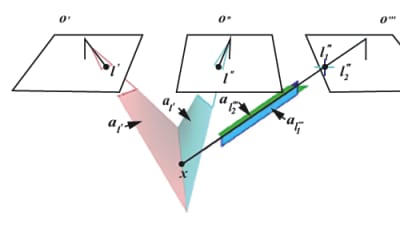
The bundle adjustment, or more specifically, the colinearity math model it is based on, is undisputedly the most accurate method to perform 3D scene reconstruction from multiple images. It...
Briefs: Software
Multipurpose Attitude and Pointing System (MAPS) Version 6.2
MAPS is a suite of software tools used for pre-flight planning, real-time support, and post-flight analysis of spacecraft attitude and pointing for the International Space Station (ISS), HII Transfer Vehicle (HTV), Automated Transfer Vehicle (ATV), and other low Earth orbit (LEO)...
Briefs: Software
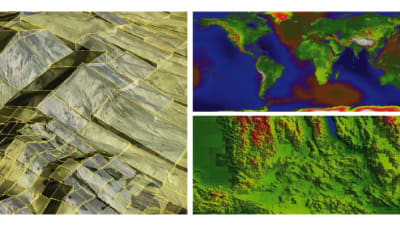
The Global Elevation Data Adaptive Compression Algorithms (GEDACA) were developed to provide compression and rapid decompression of digital terrain maps (DTMs) in constrained computing...
Briefs: Information Technology
Cassini Science Planning and Sequencing Team Final Sequence Approval Document Generator (Autodoc)
Documents, such as reports that are consistent in format, are excellent candidates for automation. Autodoc was designed as a means to automate such reports in order to reduce the amount of labor necessary to produce reports, and to improve the accuracy...
Briefs: Information Technology
Exploration Visualization Environment
The Exploration Visualization Environment (EVE) is a graphical environment for the visualization, analysis, and simulation of engineering data, specializing in aerospace and aeronautic concepts. EVE is based on the history and successful application of the Synergistic Engineering Environment (SEE) and provides...
Briefs: Software
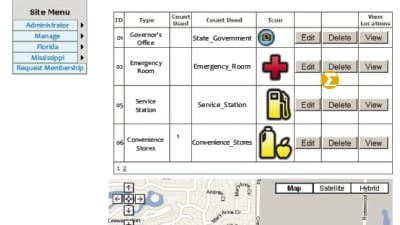
The Mississippi Evacuation and Traveler’s Assistance (MSETA) system provides public assistance for emergency evacuation and tourism/travel. The MSETA system is composed of...
Briefs: Software
In a crisis, up-to-date information is one of the most important commodities for decision-makers. Remote sensing data have been instrumental in regional scale damage...
Briefs: Information Technology
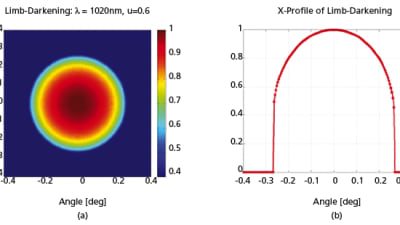
This software simulates Sun images observed on the ground and from space with an easy-to-use analytical approach and with high accuracy. It is a simple, analytical approach with the accuracy of a...
Briefs: Information Technology
Partition Level Application Test for Orion (PLATO)
For Orion Exploration Flight Test One (EFT-1), the unit-under-test for flight software verification has been chosen as the entire integrated flight software load. At the time of this reporting, the unit test tool, while powerful, operates on very small units, usually classes. This leaves a sizable...
Briefs: Electronics & Computers
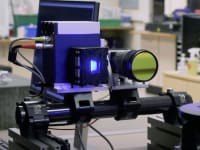
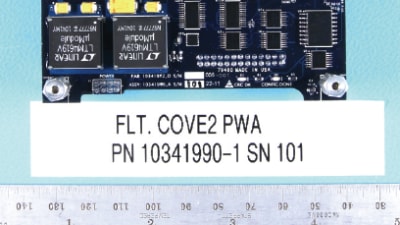
The COVE (CubeSat Onboard processing Validation Experiment) Payload Processor is JPL’s first on-orbit demonstration with the Xilinx Virtex-5 FPGA (field-programmable gate array). The electronics payload is...
Briefs: Electronics & Computers
Dynamic Range Enhancement of High-Speed Data Acquisition Systems
The innovation is a technique to overcome hardware limitations of common high-speed data acquisition systems in order to be able to measure electronic signals with high dynamic range, wide bandwidth, and high frequency.
Briefs: Electronics & Computers
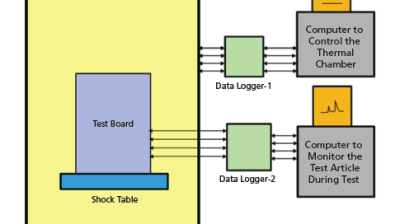
The Highly Accelerated Life Testing (HALT) process subjects test articles to accelerated combined environments of thermal, dynamic, voltage, and current to find...
Briefs: Electronics & Computers
GaN Schottky Diode-Based Frequency Multiplier
State-of-the-art GaAs Schottky diode technology, which is being used for local oscillators (LOs) in heterodyne receivers and transmitters for radar applications, has limitations in terms of power-handling capabilities. That makes it difficult to generate necessary LO power to drive multi-pixel...
Briefs: Information Technology
Computer Modeling for Generation of Synthetic Radio Reflection-Transmission Tomography (RRTT) Data
Numerical algorithms capable of generating synthetic radio tomography data (reflection transmission data) for asteroids, comets, and other near-Earth orbits (NEOs) were developed. Future missions to main asteroid belt objects, NEOs, and other small...
Briefs: Information Technology
Designing Planning Information for Automation into PRL
Automation and autonomy are key elements in realizing the vision for space exploration. The NASA Exploration Technology Development Program (ETDP) has been developing several core autonomy capabilities, one of which is called a procedure representation language (PRL). PRL can be automatically...
Briefs: Information Technology
The OCO-2 Level 2 Retrieval Algorithm
The Orbiting Carbon Observatory (OCO) strives for trace gas observations with unprecedented accuracy and precision. This requires a retrieval algorithm with many major improvements over existing retrieval software in the representation of the transfer of solar radiation through the atmosphere and instrument,...
Briefs: Information Technology
Ionospheric Slant TEC Analysis Using GNSS-Based Estimation (IonoSTAGE)
As signals emitted by global navigation satellite systems (GNSS) propagate toward users on or near the surface of the Earth, they experience delay due to the presence of charged particles in the ionosphere. Currently, ionospheric delay is the largest source of GNSS positioning...
Briefs: Information Technology
Implementation of a Terrain Radiometric Correction for UAVSAR
A paper discusses a calibration method suited to correct variations of UAVSAR (unmanned aerial vehicle synthetic aperture radar) backscatter with topography. To use radar backscatter to estimate forest biomass on terrain with slopes, it is necessary to remove the effect of topography....
Briefs: Information Technology
Picoradian Staring Astrometry Using a Simple Staring Telescope
A document describes solutions to problems of astrometry at the microarc-second (picoradian) level using a simple staring telescope. The problems include field-dependent beam-walk on the telescope’s mirrors, pixel position irregularity and distortion over time, non-flat intra-pixel...
Briefs: Information Technology
Missing Value Imputation in Astronomical Time-Series Data
A document describes a solution to missing flux values in time-domain optical and radio astronomical survey data that form “light curves.” The technique incorporates a priori astronomical knowledge into a missing value imputation technique. It is assumed that missing values in...
Briefs: Lighting
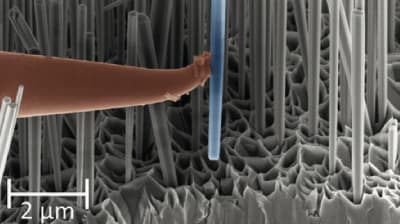
A team of researchers has demonstrated that atomic force microscope (AFM) probe tips made from its near-perfect gallium nitride nanowires are superior in many respects to standard silicon or...
Briefs: Lighting
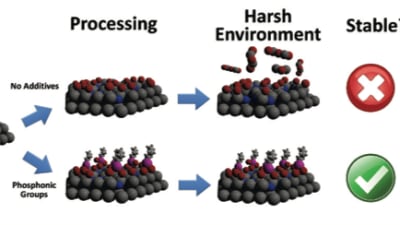
Researchers from North Carolina State University have developed a new processing technique that makes light emitting diodes (LEDs) brighter and more resilient by coating the semiconductor...
Briefs: Information Technology
Automatic Lunar Rock Detection and Mapping
Safe spacecraft landing on planetary and small body surfaces is of primary concern. Estimation of landing risk is a critical task when evaluating and certifying potential landing sites. Such analyses require the detection and mapping of all potential landing hazards such as rocks and boulders, craters,...
Briefs: Information Technology
Technique for Finding the Center of an Image of a Rising or Setting Sun Based on Simulated Images
A new JPL project requires that the center of the images of a rising or setting Sun be determined with certain accuracy — for example, within 1 km — when the Sun is observed from the International Space Station (ISS). This center-finding technique...
Briefs: Electronics & Computers
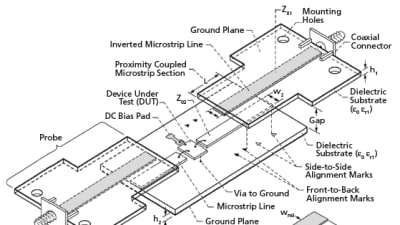
Low-temperature, contactless radio-frequency (RF) probing systems are necessary for characterizing sensors operating at liquid nitrogen or...
Briefs: Electronics & Computers
Multi-Tone, High-Frequency Synthesizer for CubeSat-Borne Beacon Transmitter for Radio Wave Atmospheric Propagation Studies
This report presents the design, construction, and test results of a novel multitone, multi-band, high-frequency synthesizer for application in a space-borne (including a CubeSat) beacon transmitter for radio wave atmospheric...
Briefs: Electronics & Computers
Dynamic Response Determination of an Electronic Printed Circuit Board
Most of today’s automotive electronic systems are composed of two major mechanical elements: an equipment chassis or enclosure, and a printed circuit board (PCB) assembly. The PCB is composed of laminated copper and FR-4 glass epoxy. These systems often operate in severe...
Top Stories
 Blog: Lighting

A Stretchable OLED that Can Maintain Most of Its Luminescence
 Blog: Energy

Batteries that Can Withstand the Cold
 INSIDER: Energy

Advancing All-Solid-State Batteries
 Blog: Power

My Opinion: We Need More Power Soon — Is Nuclear the Answer?
 Quiz: Power

 Blog: Data Acquisition

Webcasts
 Upcoming Webinars: Test & Measurement

From Spreadsheets to Insights: Fast Data Analysis Without Complex...
 Upcoming Webinars: Defense

Cooling a New Generation of Aerospace and Defense Embedded...
 Upcoming Webinars: AR/AI

Beyond AI-Copy-Paste Engineering: Advanced AI-Integration Success...
 Upcoming Webinars: Automotive

Battery Abuse Testing: Pushing to Failure
 Upcoming Webinars: Connectivity

A FREE Two-Day Event Dedicated to Connected Mobility
 Upcoming Webinars: RF & Microwave Electronics

Choosing the Right N-Port Strategy: Multiport VNAs vs. Switch...