36,38
-1
360
30
Briefs: Aerospace
Ultra-efficient catalysts were developed that are cost-effective to make and simple to scale.

Briefs: Motion Control
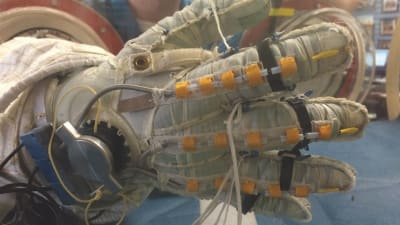
NASA is developing the next generation of spacesuits for future missions.
Briefs: Imaging
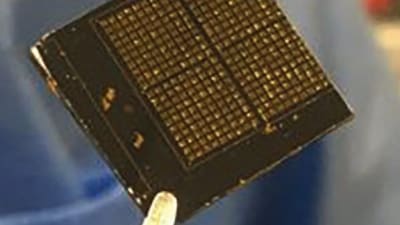
Researchers at University of Central Florida have developed an artificial intelligence device that mimics the retina of the eye.
Briefs: Robotics, Automation & Control
A new robotic system fuses visual information and radio-frequency signals to efficiently find hidden items buried under a pile of objects.

Briefs: Robotics, Automation & Control
Instead of adding soft materials to a rigid robot body, researchers have taken a soft body and added rigid features to key components.

Briefs: Materials
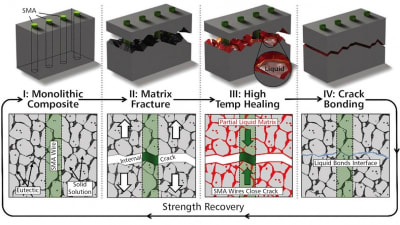
NASA has developed a new metal matrix composite (MMC) that can repair itself from large fatigue cracks that occur during the service life of a structure.
Briefs: Manufacturing & Prototyping
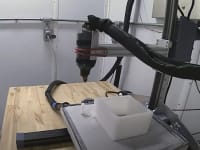
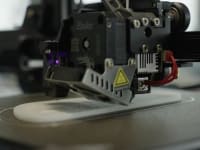
Manufacturing on Mars with 3D Printing
High-Martian content materials would be useful in making coatings to protect equipment from rust or radiation damage.
Briefs: Research Lab
Researchers have developed a shape-shifting material that can take and hold any possible shape.
Briefs: Semiconductors & ICs
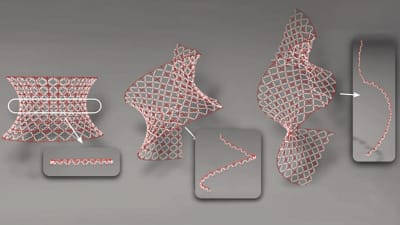
Researchers produced a soft, mechanical metamaterial that can “think” about how forces are applied to it and respond via programmed reactions.

Briefs: Energy
Computer-Implemented Energy Depletion Radiation Shielding
Radiation shielding for space as well as some terrestrial applications is challenging due to the wide variety and energy ranges of radiation particles.
Briefs: Communications
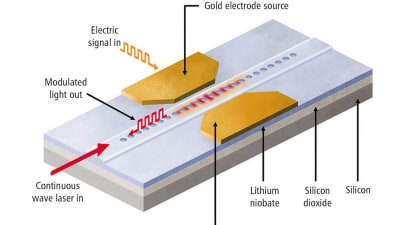
This device could pave the way to higher-bandwidth wireless communications.

Briefs: AR/AI
Companies in many industries are completely revamping the way in which their manufacturing arms are designing, building, producing, and servicing their goods.

Briefs: Manufacturing & Prototyping
Compact, Temperature-Tuned OFDR Laser
NASA has focused on OFDR, an alternative FBG interrogation technique based on laser interferometry.
Briefs: Medical
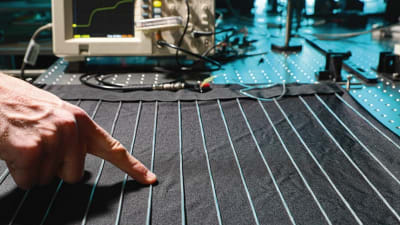
The fibers measure subtle and complex fabric deformations.
Briefs: Materials
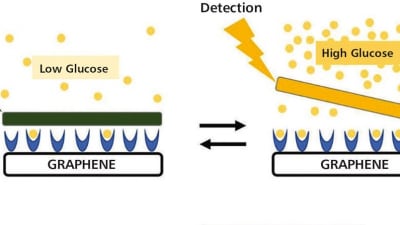
Since it is a chemical sensor instead of being enzyme-based, the new technology is robust, has a long shelf-life and can be tuned to detect lower glucose concentrations than current systems.
Briefs: Data Acquisition
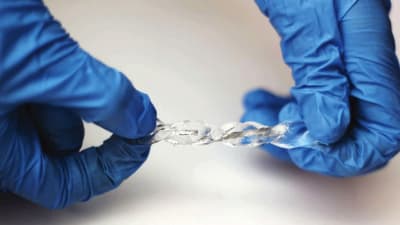
The flexible, stretchable sensor biodegrades into materials that are absorbed by the body.

Briefs: Materials
This new approach is useful for building radiation shields via the Z-grading method, the process of layering metal materials with different atomic numbers to provide radiation protection for protons, electrons, and x-rays.

Briefs: Materials
"The potential of harnessing the combined benefits of additive manufacturing and HEAs for achieving novel properties remains largely unexplored."

Briefs: Materials
MIT researchers have developed a way of making even the most unlikely pairings of materials take on a desired level of wettability.

Briefs: Mechanical & Fluid Systems
The researchers created these sensing structures using just one material and a single run on a 3D printer.

Briefs: Energy
The soft and stretchable device converts movement into electricity and can work in wet environments.
Briefs: Transportation
This below-the-hook device enables gentle crane placement to decrease the risk of property damage.

Briefs: Motion Control
The integrated tool eliminates the need for manual operators or additional custom fixtures.

Briefs: Materials
The coating is customizable to individuals and requires less than 10 minutes to prepare and use.

Briefs: Robotics, Automation & Control
Made from 3D graphene foam, the sensors use a piezoresistive approach, meaning when the material is put under pressure it dynamically changes its electric resistance, easily detecting and adapting to the range of pressure required, from light to heavy.

Briefs: Electronics & Computers
An open-access study in Advanced Science outlines the process by which Preston and lead author Faye Yap harnessed a spider’s physiology in a first step toward a novel area of research they call “necrobotics.”

Briefs: Manufacturing & Prototyping
The technology allows for higher surface conductivity, improved impedance control, expanded design and application potential, and greater choice of materials for optimized performance.

Briefs: Lighting
But they’re not yet small enough to compete in computing and other applications where electric circuits continue to reign.
Briefs: Electronics & Computers
To benchmark performance of printed sensors against the state of the art, NASA has developed a low-power flexible sensor platform.

Top Stories
 Blog: Lighting

A Stretchable OLED that Can Maintain Most of Its Luminescence
 Blog: Energy

Batteries that Can Withstand the Cold
 INSIDER: Energy

Advancing All-Solid-State Batteries
 Quiz: Energy

 Blog: Physical Sciences

 Blog: Materials

Webcasts
 Upcoming Webinars: Test & Measurement

From Spreadsheets to Insights: Fast Data Analysis Without Complex...
 Upcoming Webinars: Electronics & Computers

Cooling a New Generation of Aerospace and Defense Embedded...
 Upcoming Webinars: Test & Measurement

Beyond AI-Copy-Paste Engineering: Advanced AI-Integration Success...
 Upcoming Webinars: Automotive

Battery Abuse Testing: Pushing to Failure
 Upcoming Webinars: Internet of Things

A FREE Two-Day Event Dedicated to Connected Mobility
 Upcoming Webinars: Test & Measurement

Choosing the Right N-Port Strategy: Multiport VNAs vs. Switch...