36,38
-1
60
30
Briefs: Materials
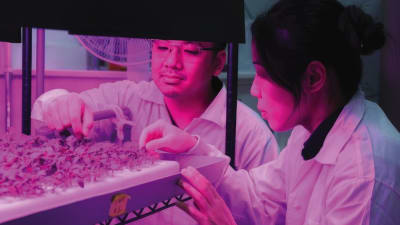
Researchers have developed a groundbreaking near-infrared fluorescent nanosensor capable of simultaneously detecting and differentiating between iron forms — Fe(II) and Fe(III) — in living plants. Read on to learn more about it.
Briefs: Nanotechnology
Magnets generate invisible fields that attract certain materials. Far more important to our everyday lives, magnets also can store data in computers. Exploiting the direction of the magnetic field, microscopic bar magnets each can store one bit of memory as a zero or a one — the language of computers.

Briefs: Electronics & Computers
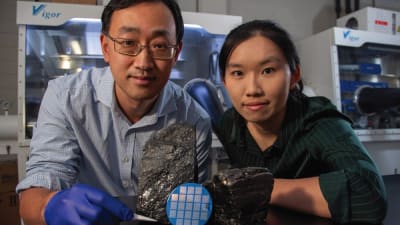
A joint research effort led by the University of Illinois Urbana-Champaign has shown how coal can play a vital role in next-generation electronic devices. Read on to learn more about it.
Briefs: Semiconductors & ICs
Researchers have designed and synthesized a unique material with controllable capabilities that make it promising for future electronics including cellphones and computers. Read on to learn more.

Briefs: Photonics/Optics
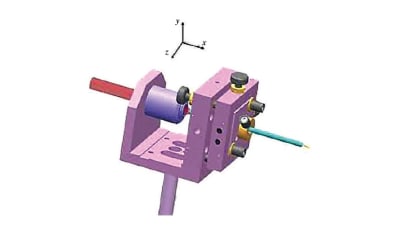
Changing the shape of the blade will expand the possibilities of using the laser in medicine.
Briefs: RF & Microwave Electronics
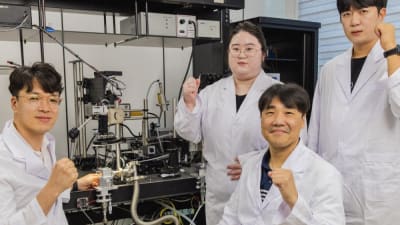
A research team led by Dr. Daeho Kim and Dr. Jong Hwan Park at the Nano Hybrid Technology Research Center of the Korea Electrotechnology Research Institute has developed a groundbreaking process technology that enables ultrafast, 30-second preparation of hard carbon anodes for sodium-ion batteries, using microwave induction heating. Read on to learn more.
Briefs: Energy
The triple-layer solid electrolyte features a robust middle layer that boosts the battery’s mechanical strength, while its soft outer surface ensures an excellent electrode contact, facilitating an easy movement of lithium ions. Read on to learn more.

Briefs: Robotics, Automation & Control
Researchers at Universidad Carlos III de Madrid have developed a new soft joint model for robots with an asymmetrical triangular structure and an extremely thin central column. This breakthrough, recently patented, allows for versatility of movement, adaptability and safety, and will have a major impact in the field of robotics. Read on to learn more.

Briefs: Materials
Purdue University material engineers have created a patent-pending process to develop ultrahigh-strength aluminum alloys that are suitable for additive manufacturing because of their plastic deformability. Read on to learn more.

Briefs: Physical Sciences
An innovator at NASA Langley Research Center has developed a novel method for making thin, lightweight radiation shielding that can be sprayed or melted onto common textiles used in clothing such as cotton, nylon, polyester, Nomex, and Kevlar. Read on to learn more about it.

Briefs: Manufacturing & Prototyping
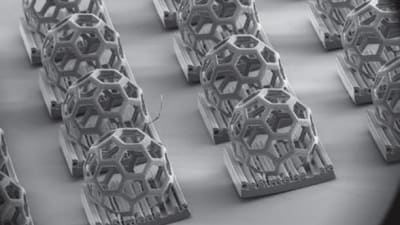
Researchers at Stanford University have introduced a more efficient processing technique that can print up to 1 million highly detailed and customizable microscale particles a day. Read on to learn more about it.
Briefs: Electronics & Computers
A Duke University team's approach takes a metallic nanotube, which always lets current through, and transforms it into a semiconducting form that can be switched on and off. Read on to learn more.

Briefs: Manufacturing & Prototyping
Manufacturing More Efficient Spintronics Devices
Researchers have developed a breakthrough process for making spintronic devices that has the potential to become the new industry standard for semiconductors chips that make up computers, smartphones, and many other electronics. The new process will allow for faster, more efficient spintronics devices that can be scaled down smaller than ever before. Read on to learn more about it.
Briefs: Energy
A PNNL research team used a simple mixed-salt water-based solution and their knowledge of metal properties to separate valuable minerals in continuously flowing reaction chambers. Read on to learn more.

Briefs: Semiconductors & ICs
Researchers have developed a strategy to design luminescent polymers with high light-emitting efficiencies from the start that are both biodegradable and recyclable. Read on to learn more.

Briefs: Materials
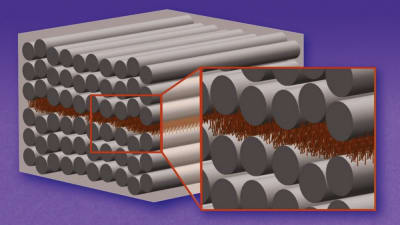
MIT engineers have shown they can prevent cracks from spreading between composite’s layers, using an approach they developed called “nanostitching,” in which they deposit chemically grown microscopic forests of carbon nanotubes between composite layers. Read on to learn more about it.
Briefs: RF & Microwave Electronics
A future quantum network may become less of a stretch thanks to researchers at the Argonne National Laboratory, the University of Chicago, and Cambridge University. By “stretching” thin films of diamond, they created quantum bits that can operate with significantly reduced equipment and expense. Read on to learn more.

Briefs: Manufacturing & Prototyping
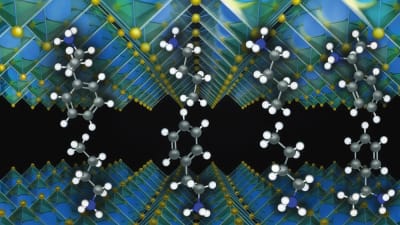
Researchers have demonstrated the ability to engineer materials that are both stiff and capable of insulating against heat. This combination of properties is extremely unusual and holds promise for a range of applications, such as the development of new thermal insulation coatings for electronic devices. Read on to learn more.
Briefs: Green Design & Manufacturing
Worldwide, glass manufacturing produces at least 86 million tons of carbon dioxide every year. A new type of glass aims to cut this carbon footprint in half. Read on to learn more about the invention: LionGlass, engineered at Penn State.

Briefs: Software
This advance could enable quantum computers that use programmable optical qubits or “spin-photon qubits” to connect quantum nodes across a remote network. It could also advance a quantum internet that is not only more secure but could also transmit more data than current optical-fiber information technologies. Read on to learn more.
Briefs: AR/AI
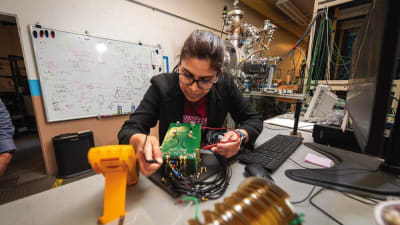
Researchers in the emerging field of spatial computing have developed a prototype augmented reality headset that uses holographic imaging to overlay full-color, 3D moving images on the lenses of what would appear to be an ordinary pair of glasses. Read on to learn more about it.
Briefs: Manufacturing & Prototyping
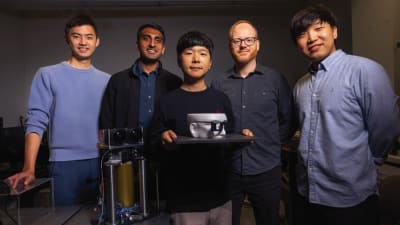
A research team led by Associate Professor Tao Sun has made new discoveries that can expand additive manufacturing in aerospace and other industries that rely on strong metal parts. Read on to learn more.
Briefs: Electronics & Computers
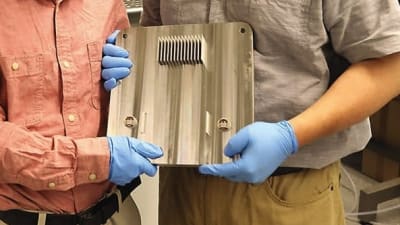
A recent study demonstrates that soft skin pads doubling as sensors made from thermoplastic urethane can be efficiently manufactured using 3D printers. Read on to learn more.
Briefs: Materials
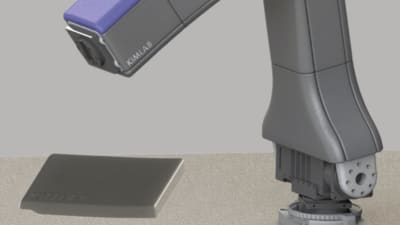
NASA’s Cryogenic Flux Capacitor capitalizes on the energy storage capacity of liquefied gases. By exploiting a unique attribute of nano-porous materials, aerogel in this case, fluid commodities such as oxygen, hydrogen, methane, etc. can be stored in a molecular surface-adsorbed state. Read on to learn more.
Briefs: Manufacturing & Prototyping
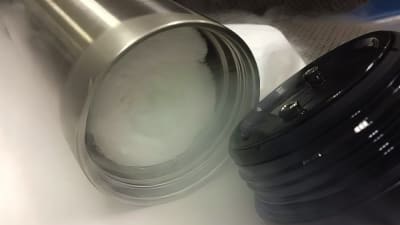
NASA Kennedy Space Center engineers developed a Cryogenic Oxygen Storage Module to store oxygen in solid-state form and deliver it as a gas to an end-use environmental control and/or life support system. Read on to learn more about it.
Briefs: Manufacturing & Prototyping
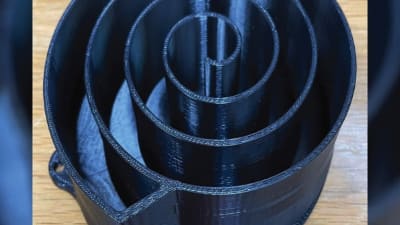
A team at MIT has moved beyond traditional trial-and-error methods to create materials with extraordinary performance through computational design. Their new system integrates physical experiments, physics-based simulations, and neural networks to navigate the discrepancies often found between theoretical models and practical results. Read on to learn more.
News: Design
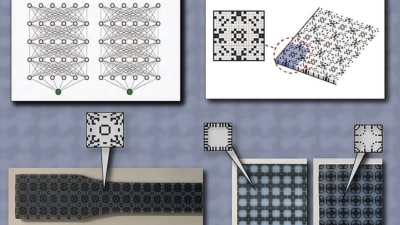
In this video, we provide an overview of the Nancy Grace Roman Space Telescope’s mission, capabilities and timeline to launch.

Briefs: Electronics & Computers
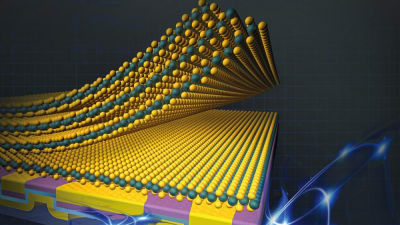
Researchers from MIT and elsewhere have developed a new technique to integrate 2D materials into devices in a single step while keeping the surfaces of the materials and the resulting interfaces pristine and free from defects. Read on to learn more.
Briefs: Electronics & Computers
Researchers have fabricated the world’s highest-performing HTS wire segment while making the price-performance metric significantly more favorable. Read on to learn more.

Top Stories
 Blog: Lighting

A Stretchable OLED that Can Maintain Most of Its Luminescence
 Blog: Energy

Batteries that Can Withstand the Cold
 INSIDER: Energy

Advancing All-Solid-State Batteries
 Quiz: Energy

 Blog: Physical Sciences

 Blog: Materials

Webcasts
 Upcoming Webinars: Sensors/Data Acquisition

From Spreadsheets to Insights: Fast Data Analysis Without Complex...
 Upcoming Webinars: Electronics & Computers

Cooling a New Generation of Aerospace and Defense Embedded...
 Upcoming Webinars: Sensors/Data Acquisition

Beyond AI-Copy-Paste Engineering: Advanced AI-Integration Success...
 Upcoming Webinars: Power

Battery Abuse Testing: Pushing to Failure
 Upcoming Webinars: Connectivity

A FREE Two-Day Event Dedicated to Connected Mobility
 Upcoming Webinars: Test & Measurement

Choosing the Right N-Port Strategy: Multiport VNAs vs. Switch...