-1
1740
30
Briefs: Semiconductors & ICs
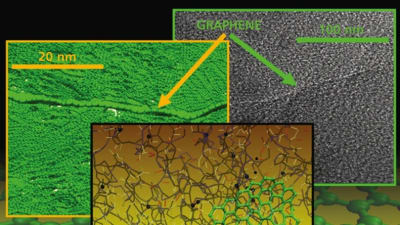
A new encapsulation technique protects electronic properties of sensitive materials.

Briefs: Sensors/Data Acquisition
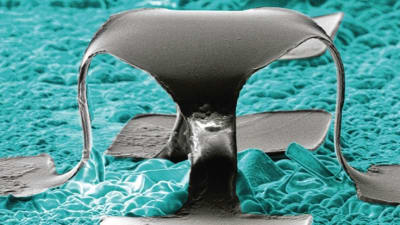
Pop-up miniature electronics based on the Japanese art of kirigami can be repeatedly compressed.
Briefs: Motion Control
This material could be used for artificial muscles that power bio-inspired robots.

Briefs: Electronics & Computers
Aerogels based on cellulose nanofibers can effectively shield electromagnetic radiation over a wide frequency range.

Briefs: Robotics, Automation & Control
This process could lead to tiny, self-powered devices for environmental, industrial, or medical monitoring.

Briefs: Medical
Inspired by parasites, the tiny needles could help eliminate painful shots.

Briefs: Transportation
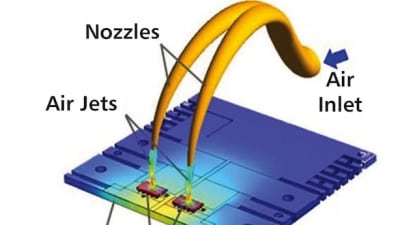
Additive manufacturing creates cooling solutions with sizes and shapes not previously possible.
Briefs: Sensors/Data Acquisition
This method provides a key step toward quantum computers, sensors, and distributed quantum information.

Briefs: Photonics/Optics
This system encodes information in twisting beams of light.

Briefs: Internet of Things
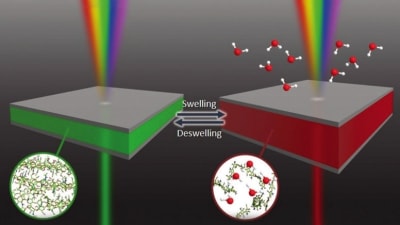
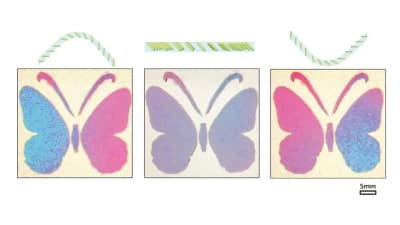
Self-powering, color-changing humidity sensors are applicable to various fields including smart windows, health care, and safety management.
Briefs: Mechanical & Fluid Systems
Empa researchers were able to demonstrate real-time acoustic monitoring of laser weld seams.

Briefs: Energy
A remote forest fire detection and alarm system is powered by nothing but the movement of trees in the wind.

Briefs: Sensors/Data Acquisition
Designed to assist in robotic surgeries, biomedical devices can be printed in and on the human body.

Briefs: Sensors/Data Acquisition
A new type of motion capture technology accurately tracks an athlete during the push start phase of performance.

Briefs: Data Acquisition
Researchers tackled the problem using a geophysical measurement called seismic anisotropy.

Briefs: Materials
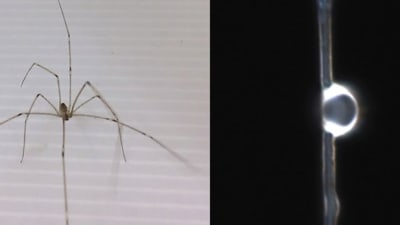
One unexpected application for spider silk is its use in the creation of biocompatible lenses.
Briefs: Sensors/Data Acquisition
University of Colorado researchers have described a new silicon chip that improves the resolution and scanning speed needed for a lidar system.

Briefs: Materials
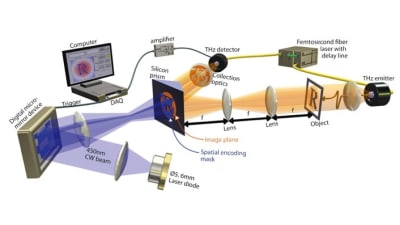
Real-time terahertz imaging with a single-pixel detector.
Briefs: Software
This high-strength material could be used to improve safety and reduce the cost of producing cars.
Briefs: Robotics, Automation & Control
The robots could fly silently for covert operations and stay steady through turbulence.

Briefs: Test & Measurement
Ultra-Sensitive Device Detects Magnetic Fields
The magnetic device is inexpensive to make, works on minimal power, and is 20 times more sensitive than many traditional devices.
Briefs: Robotics, Automation & Control
Features include unusual color changes and high touch sensitivity.
Briefs: Sensors/Data Acquisition
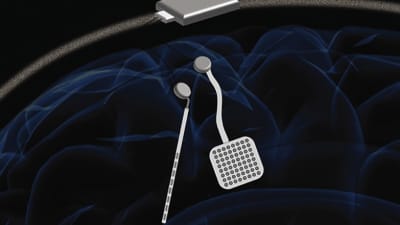
This neurostimulator could deliver fine-tuned treatments to patients with diseases such as epilepsy and Parkinson’s.
Briefs: Materials
Liquid-Repelling Substance Works on All Surfaces
The new coating can eliminate complex disinfectant procedures for protective face shields.
Briefs: Medical
The “E-dermis” will enable amputees to perceive through prosthetic fingertips.

Briefs: Test & Measurement
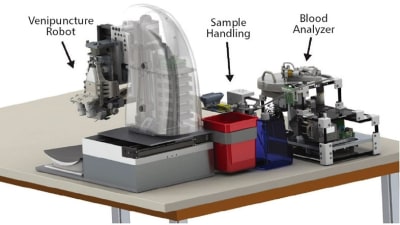
This technology provides rapid results, improving hospital workflow and patient care.
Briefs: Wearables
The material was designed specifically for biomedical or wearable technologies, since sweat and volatile organic compounds evaporate away from the skin.
Briefs: Test & Measurement
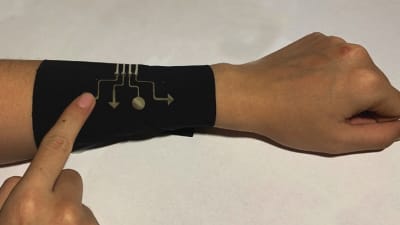
Bioactive inks printed on wearable textiles can map conditions over the entire surface of the body.

Briefs: Nanotechnology
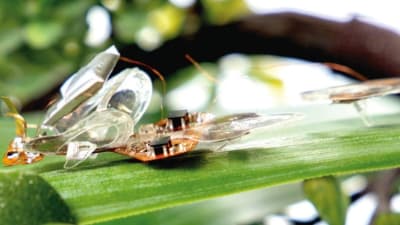
The ultra-light robotic insect can be folded or crushed, yet continues to move.
Top Stories
 Blog: Design

A Stretchable OLED that Can Maintain Most of Its Luminescence
 INSIDER: Design

Advancing All-Solid-State Batteries
 Blog: Power

My Opinion: We Need More Power Soon — Is Nuclear the Answer?
 Blog: Energy

Batteries that Can Withstand the Cold
 Quiz: Power

 Blog: Robotics, Automation & Control

Microscopic Swimming Machines that Can Sense, Respond to Surroundings
Webcasts
 On-Demand Webinars: Transportation

Advantages of Smart Power Distribution Unit Design for Automotive &...
 Upcoming Webinars: Unmanned Systems

Quiet, Please: NVH Improvement Opportunities in the Early Design...
 Upcoming Webinars: AR/AI

From Spreadsheets to Insights: Fast Data Analysis Without Complex...
 Upcoming Webinars: Electronics & Computers

Cooling a New Generation of Aerospace and Defense Embedded...
 Upcoming Webinars: AR/AI

Beyond AI-Copy-Paste Engineering: Advanced AI-Integration Success...
 Upcoming Webinars: Energy