-1
420
30
Briefs: Materials
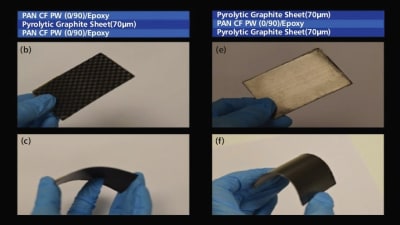
Inventors from NASA Langley and NASA Ames have created a new type of carbon fiber polymer composite that has a high thermal conductivity.
Briefs: Nanotechnology
A promising, more durable fuel cell design could help transform heavy-duty trucking and other clean fuel cell applications.

Briefs: Energy
UC Santa Cruz Assistant Professor of Electrical and Computer Engineering Yu Zhang and his lab are leveraging tools to improve the efficiency, reliability, and resilience of power systems, and have developed an artificial intelligence (AI)-based approach for the smart control of microgrids for power restoration when outages occur.

Briefs: Power
Researchers at Lawrence Berkeley National Laboratory (Berkeley Lab) have developed a conductive polymer coating — called HOS-PFM — that could enable longer lasting, more powerful lithium-ion (Li-ion) batteries for electric vehicles.
Briefs: Manufacturing & Prototyping
Recognizing the need for in-situ resource utilization (ISRU) to support long-duration human missions to the Moon and Mars, NASA’s Kennedy Space Center and Sidus Space have developed a novel three-dimensional print head apparatus using regolith-polymer mixtures as a building material.

Briefs: Electronics & Computers
A multi-institutional project led by a Penn State researcher is focused on developing an all-in-one semiconductor device that can both store data and perform computations. The project recently received $2 million in funding over three years as part of the new National Science Foundation Future of Semiconductors (FuSe) program.

Briefs: Software
Researchers at Universidad Carlos III de Madrid (UC3M) have created software and hardware for a 4D printer with applications in the biomedical field.

Briefs: Electronics & Computers
A research team led by Lawrence Berkeley National Laboratory (Berkeley Lab) has developed “supramolecular ink,” a new technology for use in OLED (organic light-emitting diode) displays or other electronic devices.

Briefs: Medical
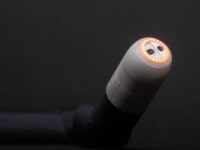
Usually developing slowly over time, many cases of glaucoma are only picked up during routine eye tests, by which time lasting damage may already have been caused. But this could change in the future as academics from the U.K. and Türkiye have developed a contact lens which can detect changes in eye pressure which signal possible glaucoma.

Briefs: Green Design & Manufacturing
Researchers at Kennedy Space Center have developed a technology that generates plasma activated water in pH ranges that allow for the addition of nitrates and other nutrients to the water while maintaining a healthy pH for plants.

Briefs: Medical
Taking inspiration from origami, MIT engineers have now designed a medical patch that can be folded around minimally invasive surgical tools and delivered through airways, intestines, and other narrow spaces, to patch up internal injuries.

Briefs: Medical
Researchers at the Georgia Institute of Technology have developed low-cost, painless, and bloodless tattoos that can be self-administered and have many applications, from medical alerts to tracking neutered animals to cosmetics.

Briefs: Electronics & Computers
MIT researchers have developed a quantum computing architecture that aims to enable extensible, high-fidelity communication between superconducting quantum processors.

Briefs: RF & Microwave Electronics
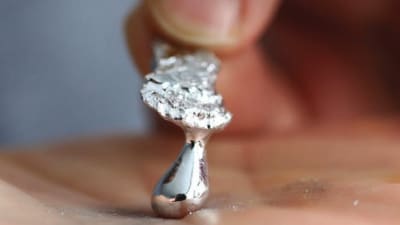
Researchers at the University of Birmingham have developed a new type of high-performance “phase shifter” using a liquid gallium alloy — which varies the phase angle of microwave and millimeter-wave radio signals — for use in advanced phase array antenna systems.
Briefs: Photonics/Optics
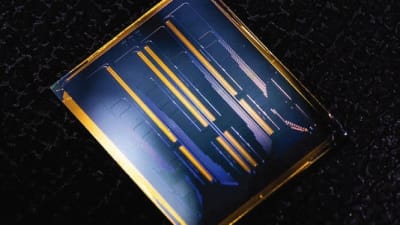
RMIT University’s Arnan Mitchell and University of Adelaide’s Dr. Andy Boes led an international team to review lithium niobate’s capabilities and potential applications in the journal Science. The team is working to make navigation systems that help rovers drive on the Moon — where GPS is unable to work — later this decade.
Briefs: RF & Microwave Electronics
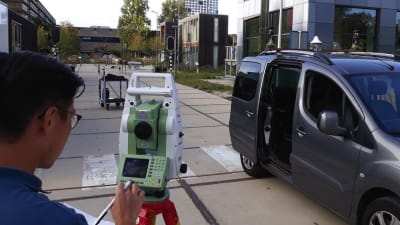
This new technology — developed by engineers at Delft University of Technology, Vrije Universiteit Amsterdam, and VSL, and which can achieve an accuracy of 10 centimeters — is important for the implementation of a range of location-based applications, such as automated vehicles, quantum communication, and next-generation mobile communication systems.
Briefs: Information Technology
IO-Link is a digital advancement combining the essential electrical and electronic characteristics of other connectivity methods. The resulting devices and architecture are enabling designers to create more intelligent equipment, streamline installation, and reduce overall costs.

Briefs: Physical Sciences
The nanoscale electronic parts in devices like smartphones are solid, static objects that once designed and built cannot transform into anything else. But a team from University of California Irvine has reported the discovery of nanoscale devices that can transform into many different shapes and sizes even though they exist in solid states.

Briefs: Energy
This advancement, one of the first of its kind, enables a useful new capability for a variety of applications, including improved prostheses, haptics for new modalities in augmented reality (AR), and thermally modulated therapeutics for applications such as pain management. The technology also has a variety of potential industrial and research applications.

Briefs: Electronics & Computers
The miniscule wires — the size of transistors on silicon chips or one thousandth of the breadth of the finest human hair — are made completely of natural amino acids and heme molecules, found in proteins such as hemoglobin, which transports oxygen in red blood cells.

Briefs: Electronics & Computers
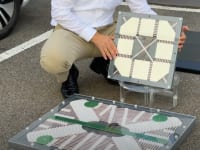
Engineers at the University of California San Diego have developed electronic “stickers” that measure the force exerted by one object upon another. The force stickers are wireless, run without batteries and fit in tight spaces. That makes them versatile for a wide range of applications.

Briefs: Robotics, Automation & Control
A research team has successfully overcome the limitations of soft strain sensors by integrating computer vision technology into optical sensors. The team developed a sensor technology known as computer vision-based optical strain (CVOS) during its study. Unlike conventional sensors reliant on electrical signals, CVOS sensors employ computer vision and optical sensors to analyze microscale optical patterns, extracting data regarding changes.

Briefs: Sensors/Data Acquisition
Monitoring the success of surgery on blood vessels is challenging, as the first sign of trouble often comes too late. A new device could make it easier for doctors to monitor the success of blood vessel surgery.

Briefs: Medical
Researchers at The Ohio State University have fabricated the first wearable sensor designed to detect and monitor muscle atrophy. This new study published in the journal IEEE Transactions on Biomedical Engineering suggests that an electromagnetic sensor made out of conductive “e-threads” could be used as an alternative to frequent monitoring using MRI.

Briefs: Manned Systems
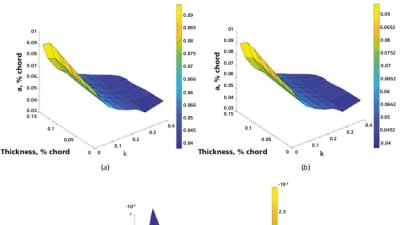
NASA’s Ames Research Center has developed a novel closed-form solution to model wing flutter aerodynamics for any aircraft wing (within a certain thickness regime and without camber). This closed-form solution can be readily extended to wing sections with camber.
Briefs: RF & Microwave Electronics
Northrop Grumman Corporation is developing AN/APG-85, an advanced Active Electronically Scanned Array (AESA) radar for the F-35 Lightning II.

Briefs: Propulsion
A Sustainable Engine with Reduced Assembly Costs
Boom Supersonic, the company building supersonic planes, is developing Symphony, a new propulsion system designed and optimized for its Overture supersonic airliner.
Briefs: Manned Systems
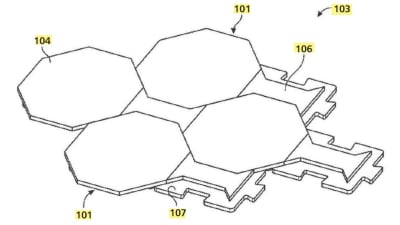
Engineers at NASA’s Kennedy Space Center and Sidus Space developed a novel interlocking paver system enabling the robotic construction of high-stability vertical takeoff and landing pads.
Briefs: Aerospace
Meet Air-Guardian: A system developed by researchers at the MIT Computer Science and Artificial Intelligence Laboratory (CSAIL). As modern pilots grapple with an onslaught of information from multiple monitors, especially during critical moments, Air-Guardian acts as a proactive co-pilot; a partnership between human and machine, rooted in understanding attention.

Top Stories
 Blog: Design

A Stretchable OLED that Can Maintain Most of Its Luminescence
 INSIDER: Design

Advancing All-Solid-State Batteries
 Blog: Power

My Opinion: We Need More Power Soon — Is Nuclear the Answer?
 Blog: Energy

Batteries that Can Withstand the Cold
 Quiz: Power

 Blog: Robotics, Automation & Control

Microscopic Swimming Machines that Can Sense, Respond to Surroundings
Webcasts
 On-Demand Webinars: Transportation

Advantages of Smart Power Distribution Unit Design for Automotive &...
 Upcoming Webinars: Unmanned Systems

Quiet, Please: NVH Improvement Opportunities in the Early Design...
 Upcoming Webinars: AR/AI

From Spreadsheets to Insights: Fast Data Analysis Without Complex...
 Upcoming Webinars: Electronics & Computers

Cooling a New Generation of Aerospace and Defense Embedded...
 Upcoming Webinars: AR/AI

Beyond AI-Copy-Paste Engineering: Advanced AI-Integration Success...
 Upcoming Webinars: Energy