-1
360
30
Briefs: Energy
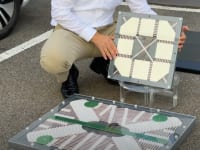
In a recent study published in the journal ACS Applied Energy Materials, researchers have utilized poly(vinylphosphonic acid) (PVPA) as a binder for a micro-SiO electrodes, achieving superior performance compared to conventional cells. Read on to learn more.

Briefs: Energy
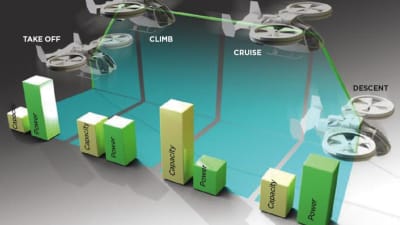
Researchers at the Department of Energy’s Oak Ridge National Laboratory are taking cleaner transportation to the skies by creating and evaluating new batteries for airborne electric vehicles that take off and land vertically. Read on to learn more.
Briefs: Manufacturing & Prototyping
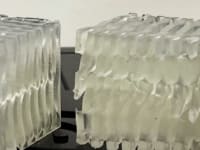
A global team of researchers and industry collaborators led by RMIT University has invented recyclable ’water batteries’ that won’t catch fire or explode. Read on to learn more.

Briefs: Power
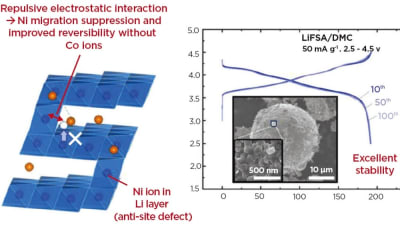
A team of researchers from Japanese and French universities has developed a practical nickel-based electrode material that opens new avenues to cobalt-free batteries for electric vehicles. Read on to learn more.
Briefs: Robotics, Automation & Control
ANYmal has for some time had no problem coping with the stony terrain of Swiss hiking trails. Now researchers at ETH Zurich have taught this quadrupedal robot some new skills: it is proving rather adept at parkour. ANYmal is also proficient at dealing with the tricky terrain commonly found on building sites or in disaster areas. Read on to learn more.

Briefs: Software
Professor Angela Schoellig from the Technical University of Munich uses ChatGPT to develop choreographies for swarms of drones to perform along to music. An additional safety filter prevents mid-air collisions. Read on to learn more.

Briefs: Robotics, Automation & Control
In bringing bio-inspired robots to life, scientists must first create soft matter counterparts that match the softness and functionality of biological tissue. University of Nebraska–Lincoln engineer Eric Markvicka is at the forefront of these efforts. Read on to learn more.

Briefs: Electronics & Computers
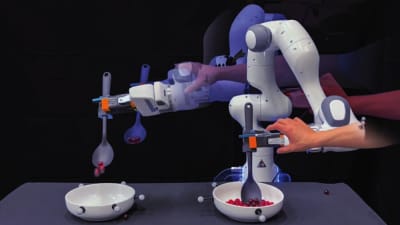
MIT engineers are aiming to give robots a bit of common sense when faced with situations that push them off their trained path. They’ve developed a method that connects robot motion data with the “common sense knowledge” of large language models, or LLMs.
Briefs: Robotics, Automation & Control
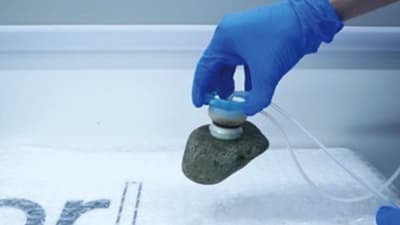
A new robotic suction cup which can grasp rough, curved, and heavy stone, has been developed by scientists at the University of Bristol. The team, based at Bristol Robotics Laboratory, studied the structures of octopus biological suckers, which have superb adaptive suction abilities enabling them to anchor to rock.
Briefs: Materials
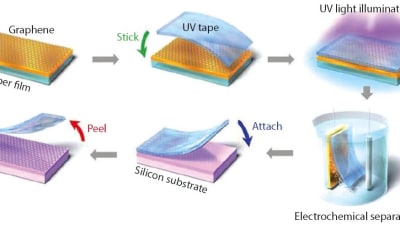
A research team from Kyushu University, in collaboration with Japanese company Nitto Denko, has developed a tape that can be used to stick 2D materials to many different surfaces, in an easy and user-friendly way.
Briefs: Manufacturing & Prototyping
Innovators have developed a method and apparatus to multiplex Radio Frequency Identification (RFID) signals efficiently. The resulting Hyper-Distributed RFID Antenna (HYDRA) system enhances distribution of the RFID reader signal, providing improved coverage for large areas as well as for small, fixed regions requiring a high density of reader antennas.

Briefs: Software
Because it requires no battery that must be recharged or replaced, and because it requires no special wiring, such a sensor could be embedded in a hard-to-reach place, like inside the inner workings of a ship’s engine. There, it could automatically gather data on the machine’s power consumption and operations for long periods of time.

Briefs: Sensors/Data Acquisition
Researchers have found ways to develop soft OECTs for wearable pressure sensors. They first experimented with a solid type of gating substance: a charged, gelatinous substance called an ionic hydrogel. Read on to learn more.

Briefs: Electronics & Computers
Microelectronics face a key challenge because of their small size. To avoid overheating, microelectronics need to consume only a fraction of the electricity of conventional electronics while still operating at peak performance. Researchers have achieved a breakthrough that could allow for a new kind of microelectronic material to do just that.

Briefs: Electronics & Computers
Modern PLC+HMI platforms have overcome weaknesses of older devices and now provide a top-performing and space-optimized option for designers to implement control and visualization for a variety of diverse applications.

Briefs: Energy
The improved method for fabricating battery electrodes may lead to high-performance batteries that would enable more energy-efficient EVs, as well as such benefits as enhancing power grid storage, according to Hongtao Sun, Assistant Professor of Industrial and Manufacturing Engineering at Penn State.

Briefs: Materials
Researchers at the Department of Energy’s Oak Ridge National Laboratory have improved on approaches that dissolve a battery in a liquid solution in order to reduce the amount of hazardous chemicals used in the process.
Briefs: Power
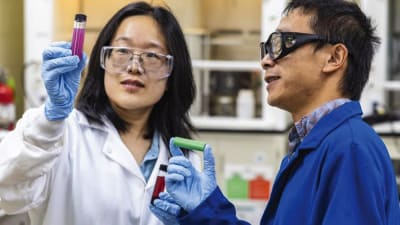
Flow batteries can serve as backup generators for the electric grid. Flow batteries are one of the key pillars of a decarbonization strategy to store energy from renewable energy resources. Their advantage is that they can be built at any scale, from the lab-bench scale, as in this PNNL study, to the size of a city block.

Briefs: Sensors/Data Acquisition
An innovative approach to artificial intelligence (AI) enables reconstructing a broad field of data, such as overall ocean temperature, from a small number of field-deployable sensors using low-powered edge computing, with broad applications across industry, science, and medicine.
Briefs: RF & Microwave Electronics
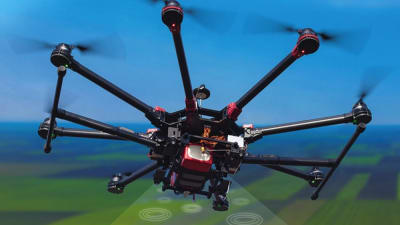
To help improve the safety and security of AVs, researchers have devised a novel algorithm designed to mimic an attacking device. The algorithm lets researchers identify areas for improvement in autonomous vehicle security.

Briefs: Information Technology
The team, led by Data Scientist Sumit Purohit, is trying to create a tool that sorts and prioritizes cyber threats on the fly. The idea is to give grid operators a clear blueprint to identify and address the biggest threats first and to protect against them without a mad scramble for resources down the road.

Briefs: Sensors/Data Acquisition
An international team of researchers from Japan and Austria has invented new ultraflexible patches with a ferroelectric polymer that can not only sense a patient’s pulse and blood pressure, but also power themselves from normal movements. The key was starting with a substrate just 1-μm thick.

Briefs: Medical
When attached to an organ, the soft, tiny sticker changes in shape in response to the body’s changing pH levels, which can serve as an early warning sign for post-surgery complications such as anastomotic leaks. Clinicians then can view these shape changes in real time through ultrasound imaging.

Briefs: Test & Measurement
The stent delivers regenerative stem cell-derived therapy to blood-starved tissue.

Briefs: Energy
Modine Targets Off-Highway EVs with ‘Plug-and-Play’ BTMS
Deutronic is not alone in developing and integrating thermal-management solutions to meet the specific demands of off-highway EVs. Modine, for example, in 2023 launched a new edition of its EVantage battery thermal-management system with a liquid-cooled condenser (L-CON BTMS). Read on to learn more.
Briefs: Photonics/Optics
There are times when scientific progress comes in the form of discovering something completely new. Other times, progress boils down to doing something better, faster, or more easily. New research from the lab of Caltech’s Lihong Wang, the Bren Professor of Medical Engineering and Electrical Engineering, is the latter. Read on to learn more.

Briefs: Photonics/Optics
Mimicking the easy, instantaneous image processing power of the human eye, Penn State electrical engineering researchers created a metasurface, an optical element akin to a glass slide that uses tiny nanostructures, placed at different angles to control light.
Briefs: Materials
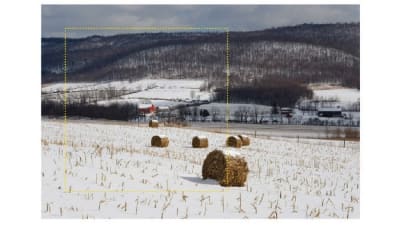
A new approach has allowed researchers at Aalto University to design a kind of metamaterial that has so far been beyond the reach of existing technologies. Unlike natural materials, metamaterials and metasurfaces can be tailored to have specific electromagnetic properties, which means scientists can create materials with features desirable for industrial applications.
Briefs: Sensors/Data Acquisition
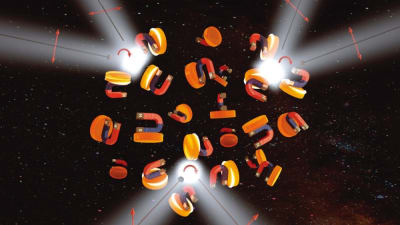
Researchers from Japan have developed DPPFA–Net, an innovative network that overcomes challenges related to occlusion and noise introduced by adverse weather.

Top Stories
 Blog: Design

A Stretchable OLED that Can Maintain Most of Its Luminescence
 INSIDER: Energy

Advancing All-Solid-State Batteries
 Blog: Power

My Opinion: We Need More Power Soon — Is Nuclear the Answer?
 Blog: Energy

Batteries that Can Withstand the Cold
 Quiz: Power

 Blog: Communications

Microscopic Swimming Machines that Can Sense, Respond to Surroundings
Webcasts
 On-Demand Webinars: Semiconductors & ICs

Advantages of Smart Power Distribution Unit Design for Automotive &...
 Upcoming Webinars: Transportation

Quiet, Please: NVH Improvement Opportunities in the Early Design...
 Upcoming Webinars: Sensors/Data Acquisition

From Spreadsheets to Insights: Fast Data Analysis Without Complex...
 Upcoming Webinars: Aerospace

Cooling a New Generation of Aerospace and Defense Embedded...
 Upcoming Webinars: Test & Measurement

Beyond AI-Copy-Paste Engineering: Advanced AI-Integration Success...
 Upcoming Webinars: Energy