-1
300
30
Briefs: Test & Measurement
Capacitive Microgravity Fluid Mass Gauge
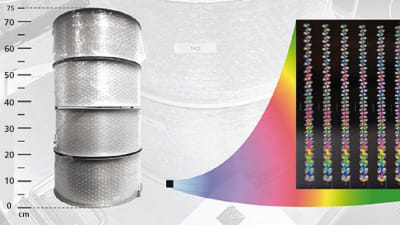
Measuring fluid mass in microgravity, where fluid behavior is dominated by fluid properties, is a challenging problem. To address this problem, engineers at NASA are developing a capacitance-based, mass-fraction gauge for vessels containing two-phase fluids. Read on to learn more.
Briefs: Medical
A new coronavirus test can get accurate results from a saliva sample in less than 30 minutes. Many of the components of the handheld device used in this technology can be 3D printed, and the test can detect as little as one viral particle per 1-μL drop of fluid. Read on to learn more.

Briefs: Materials
University of Waterloo Chemical Engineering Researcher Dr. Elisabeth Prince teamed up with researchers from the University of Toronto and Duke University to design the synthetic material made using cellulose nanocrystals, which are derived from wood pulp. The material is engineered to replicate the fibrous nanostructures and properties of human tissues. Read on to learn more.
Briefs: Sensors/Data Acquisition
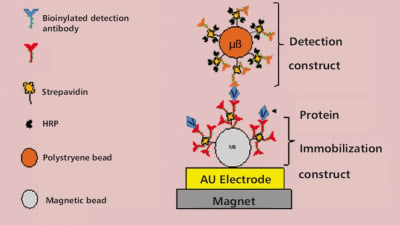
Researchers at NASA Ames Research Center developed an electrochemical, bead-based biological sensor based on Enzyme-Linked Immunosorbent Assay (ELISA) combining a magnetic concentration of signaling molecules and electrochemical amplification using wafer-scale fabrication of microelectrode arrays. Read on to learn more.
Briefs: Medical
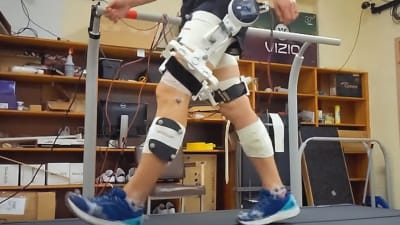
New research from the University of Massachusetts Amherst pushes forward the bounds of stroke recovery with a unique robotic hip exoskeleton, designed as a training tool to improve walking function. This invites the possibility of new therapies that are more accessible and easier to translate from practice to daily life. Read on to learn more.
Briefs: Energy
American drivers have long been accustomed to quickly filling up at a gas station with plenty of fuel available, and electric vehicle drivers want their pit stops to mimic this experience. Researchers are working to make EV charging more resilient. Read on to learn more about it.

Briefs: Energy
Researchers have been developing batteries with higher energy storage density, and thus, longer driving range. Other goals include shorter charging times, greater tolerance to low temperatures, and safer operation. One of the more promising such batteries has a lithium-containing cathode supplemented with nickel, manganese, and cobalt (NMC). Read on to learn more.

Briefs: Energy
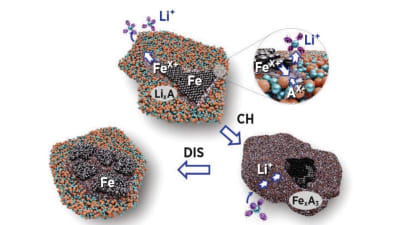
Researchers are hoping to spark a green battery revolution by showing that iron instead of cobalt and nickel can be used as a cathode material in lithium-ion batteries. Read on to learn more.
Briefs: Power
A team has created the world’s first anode-free sodium solid-state battery. This research has brought the reality of inexpensive, fast-charging, high-capacity batteries for electric vehicles and grid storage closer than ever. Read on to learn more.
Briefs: Energy
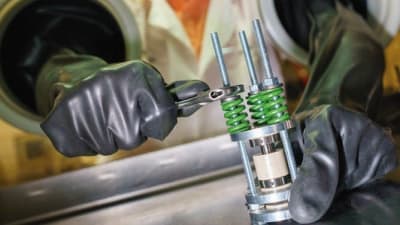
Researchers have developed a new technique to solve the problem of how to increase the capacity of sodium-ion batteries. Read on to learn more about it.

Briefs: Software
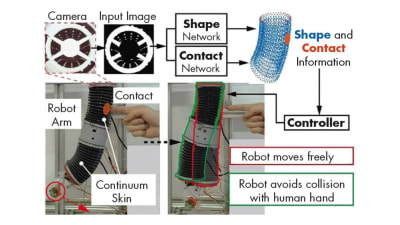
The sensing and control principles used in this framework could lead to new tactile sensors that can be attached to any existing robotics system, offering new sensing and control paradigms for safe human-robot interaction without altering the robot’s original design. Read on to learn more.
Briefs: Photonics/Optics
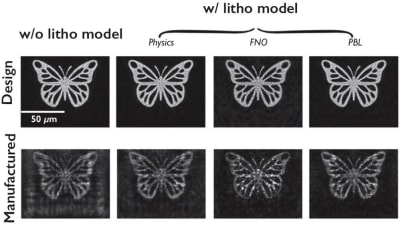
A new method enables optical devices that more closely match their design specifications, boosting accuracy and efficiency. Read on to learn more.
Briefs: Photonics/Optics
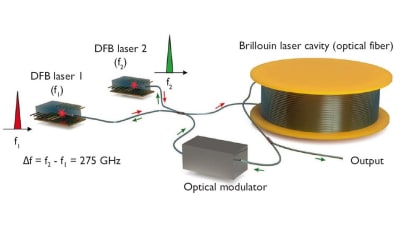
The researchers anticipate that with multiplexing techniques (where more than one channel can be used) and more sensitive receivers, the data rate can be increased to 1 terabit per second, ushering in a new era of near-instantaneous global communication. Read on to learn more.
Briefs: Sensors/Data Acquisition
The palm-sized light field camera could improve autonomous driving, classification of recycled materials, and remote sensing. Read on to learn more about it.
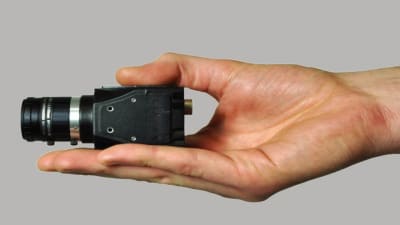
Briefs: Robotics, Automation & Control
The camera mimics the involuntary movements of the human eye to create sharper, more accurate images for robots, smartphones, and other image-capturing devices. Read on to learn more about it.
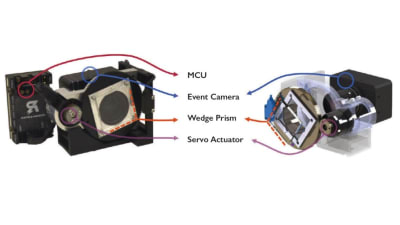
Briefs: Imaging
This innovative camera technology represents a significant advance in object detection, offering numerous potential applications across various industries. Read on to learn more.

Briefs: Sensors/Data Acquisition
Engineers have developed a new technique for making wearable sensors that enables medical researchers to prototype and test new designs much faster and at a far lower cost than existing methods. Read on to learn more.

Briefs: Medical
Researchers have developed a method to detect bacteria, toxins, and dangerous chemicals in the environment with a biopolymer sensor that can be printed like ink on a wide range of materials — including wearables. Read on to learn more.

Briefs: Medical
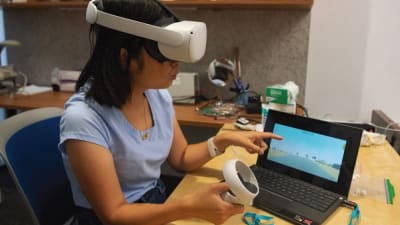
A research team created a noninvasive electroencephalogram (EEG) sensor that was installed in a Meta VR headset that can be worn comfortably for long periods. The EEG measures the brain’s electrical activity during the immersive VR interactions. Read on to learn more.
Briefs: Communications
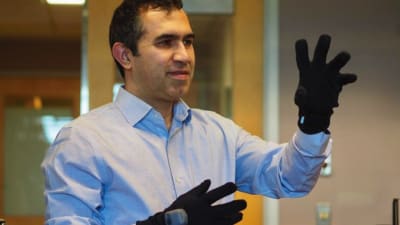
A new groundbreaking “smart glove” is capable of tracking the hand and finger movements of stroke victims during rehabilitation exercises. The glove incorporates a sophisticated network of highly sensitive sensor yarns and pressure sensors that are woven into a comfortable stretchy fabric. Read on to learn more about the smart glove.
Briefs: RF & Microwave Electronics
With a goal to revolutionize cellular communications, Penn engineers have developed an adjustable filter that can successfully prevent interference, even in higher-frequency bands of the electromagnetic spectrum. Read on to learn more about the matter.
Briefs: Connectivity
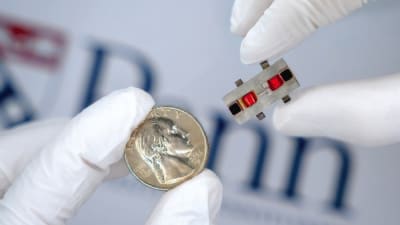
Scientists have pioneered a method for using semiconductor technology to manufacture processors that significantly enhance the efficiency of transmitting vast amounts of data across the globe. The innovation is poised to transform the landscape of wireless communication. Read on to learn more.
Briefs: Communications
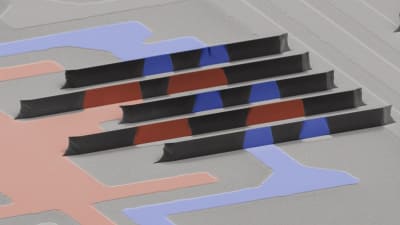
After announcing a ferroelectric semiconductor at the nanoscale thinness required for modern computing components, a University of Michigan team has demonstrated a reconfigurable transistor using that material. Read on to learn more.

Briefs: Materials
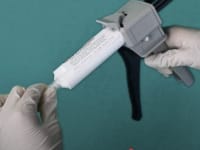
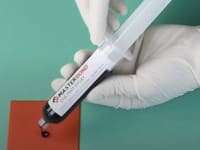
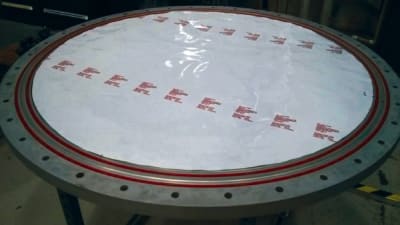
The RTV sealing method may benefit terrestrial applications that may demand cure-in-place internal seals. The method could also innovate manufacturing processes for components by enhancing the speed of assembly while increasing seal integrity. Read on to learn more.
Briefs: Materials
This research could help to reduce the environmental impact of additive manufacturing, which typically relies on nonrecyclable polymers and resins derived from fossil fuels. Read on to learn more.
Briefs: Wearables
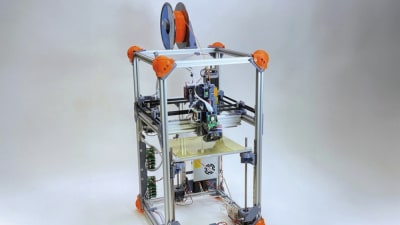
Eva Baur, a Ph.D. student, used 3D-printed double network granular elastomers (DNGEs) to print a prototype ‘finger,’ complete with rigid ‘bones’ surrounded by flexible ‘flesh.’ The finger was printed to deform in a pre-defined way, demonstrating the technology’s potential to manufacture devices that are sufficiently supple to bend and stretch, while remaining firm enough to manipulate objects. Read on to learn more.

Briefs: AR/AI
Penn Engineers have developed a new chip that uses light waves, rather than electricity, to perform the complex math essential to training AI. The chip has the potential to radically accelerate the processing speed of computers while also reducing their energy consumption. Read on to learn more.

Briefs: Aerospace
Researchers at Chalmers University of Technology have developed an optical amplifier that they expect will revolutionize both space and fiber communication.
Briefs: Photonics/Optics
Researchers have developed standards and calibrations for optical microscopes that allow quantum dots to be aligned with the center of a photonic component to within an error of 10 to 20 nanometers (about one-thousandth the thickness of a sheet of paper). Such alignment is critical for chip-scale devices that employ the radiation emitted by quantum dots to store and transmit quantum information. Read on to learn more.

Top Stories
 Blog: Design

A Stretchable OLED that Can Maintain Most of Its Luminescence
 INSIDER: Design

Advancing All-Solid-State Batteries
 Blog: Power

My Opinion: We Need More Power Soon — Is Nuclear the Answer?
 Blog: Energy

Batteries that Can Withstand the Cold
 Quiz: Power

 Blog: Robotics, Automation & Control

Microscopic Swimming Machines that Can Sense, Respond to Surroundings
Webcasts
 On-Demand Webinars: Transportation

Advantages of Smart Power Distribution Unit Design for Automotive &...
 Upcoming Webinars: Unmanned Systems

Quiet, Please: NVH Improvement Opportunities in the Early Design...
 Upcoming Webinars: AR/AI

From Spreadsheets to Insights: Fast Data Analysis Without Complex...
 Upcoming Webinars: Electronics & Computers

Cooling a New Generation of Aerospace and Defense Embedded...
 Upcoming Webinars: AR/AI

Beyond AI-Copy-Paste Engineering: Advanced AI-Integration Success...
 Upcoming Webinars: Energy