-1
150
30
Briefs: Electronics & Computers
Magnets generate invisible fields that attract certain materials. Far more important to our everyday lives, magnets also can store data in computers. Exploiting the direction of the magnetic field, microscopic bar magnets each can store one bit of memory as a zero or a one — the language of computers.

Briefs: Physical Sciences
A joint research effort led by the University of Illinois Urbana-Champaign has shown how coal can play a vital role in next-generation electronic devices. Read on to learn more about it.

Briefs: Semiconductors & ICs
Researchers have designed and synthesized a unique material with controllable capabilities that make it promising for future electronics including cellphones and computers. Read on to learn more.

Briefs: Electronics & Computers
The mass production of conventional silicon chips relies on a successful business model with large “semiconductor fabrication plants” or “foundries.” New research by KU Leuven and imec shows that this “foundry” model can also be applied to the field of flexible, thin-film electronics. Read on to learn more.

Briefs: Sensors/Data Acquisition
A team of researchers has developed self-powered, wearable, triboelectric nanogenerators (TENGs) with polyvinyl alcohol (PVA)-based contact layers for monitoring cardiovascular health. TENGs help conserve mechanical energy and turn it into power. Read on to learn more.

Briefs: Manufacturing & Prototyping
Changing the shape of the blade will expand the possibilities of using the laser in medicine.

Briefs: Medical
Using an array of tiny needles that are almost too small to see, researchers have developed a minimally invasive technique for sampling a largely unexplored human bodily fluid that could potentially provide a new source of information for routine clinical monitoring and diagnostic testing. Read on to learn more.

Briefs: Medical
Innovators at NASA Johnson Space Center have developed a handheld digital microscope to fill the critical microscopy needs of human space exploration by providing flight crews in situ hematological diagnostic and tracking ability to assess and monitor crew health in the absence of gravity. Read on to learn more.

Briefs: Green Design & Manufacturing
In an important step toward bringing transparent solar cells to home windows, researchers at the University of Michigan have developed a way to manufacture highly efficient and semitransparent solar cells. Read on to learn more about it.

Briefs: Green Design & Manufacturing
Researchers have found a way to tease hydrogen out of the ocean by funneling seawater through a double-membrane system and electricity. The design successfully generated hydrogen gas without producing large amounts of harmful byproducts. Read on to learn more.

Briefs: Energy
A Northwestern University-led team of researchers has developed a new fuel cell that harvests energy from microbes living in dirt. About the size of a standard paperback book, the completely soil-powered technology could fuel underground sensors used in precision agriculture and green infrastructure. Read on to learn more.

Briefs: Energy
A research team led by Dr. Daeho Kim and Dr. Jong Hwan Park at the Nano Hybrid Technology Research Center of the Korea Electrotechnology Research Institute has developed a groundbreaking process technology that enables ultrafast, 30-second preparation of hard carbon anodes for sodium-ion batteries, using microwave induction heating. Read on to learn more.

Briefs: Energy
The triple-layer solid electrolyte features a robust middle layer that boosts the battery’s mechanical strength, while its soft outer surface ensures an excellent electrode contact, facilitating an easy movement of lithium ions. Read on to learn more.

Briefs: Energy
A team of researchers from Japan has developed a non-flammable quasi-solid-state LIB that can overcome the limitations of conventional batteries. Read on to learn more.

Briefs: Green Design & Manufacturing
A research team has developed a novel technology for directly recycling spent cathode materials from lithium-ion batteries through a simple process that addresses the limitations of conventional recycling methods. This innovative approach restores the spent cathode to its original state. Read on to learn more.

Briefs: Motion Control
A team of MIT engineers has developed a training method for multiagent systems that can guarantee their safe operation in crowded environments. Read on to learn more about it.

Briefs: Robotics, Automation & Control
Researchers at Universidad Carlos III de Madrid have developed a new soft joint model for robots with an asymmetrical triangular structure and an extremely thin central column. This breakthrough, recently patented, allows for versatility of movement, adaptability and safety, and will have a major impact in the field of robotics. Read on to learn more.

Briefs: Robotics, Automation & Control
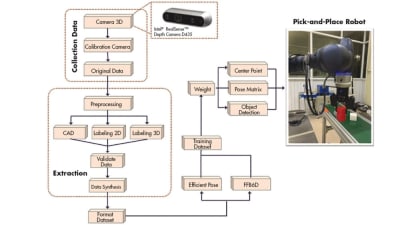
A new study, published in the journal Results in Engineering, introduced a meticulously designed dataset aimed at enhancing the performance of 6D pose estimation algorithms. Read on to learn more.
Briefs: Power
Researchers at Rice University have found a new way to improve a key element of thermophotovoltaic systems, which convert heat into electricity via light. Read on to learn more about it.
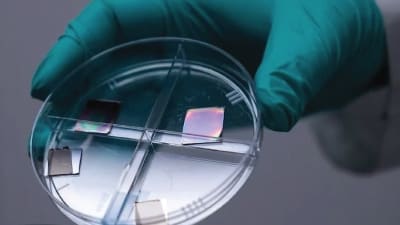
Briefs: Energy
Batteries in electric vehicles can fail quickly, sometimes catching fire without much warning. Sandia National Laboratories is working to detect these failures early and provide sufficient warning time to vehicle occupants. Read on to learn more about it.
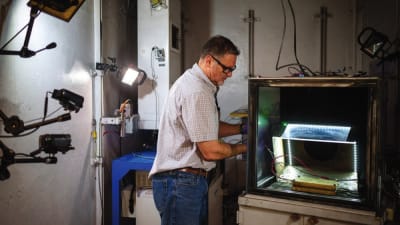
Briefs: Energy
Innovators at NASA Johnson Space Center have designed a pneumatic nail penetration trigger system that drives a Li-ion battery cell into thermal runaway using a tungsten nail. Read on to learn more.
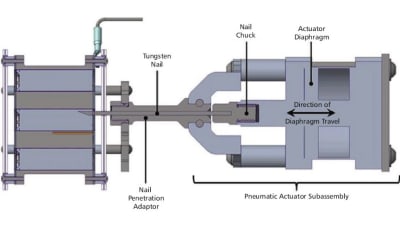
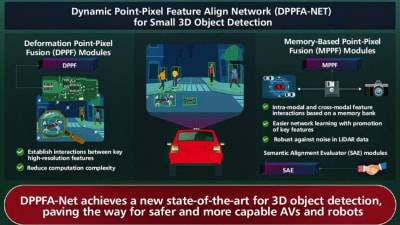
Briefs: Robotics, Automation & Control
Scientists have developed multi-modal 3D object detection methods that combine 3D LiDAR data with 2D RGB images taken by standard cameras. While the fusion of 2D images and 3D LiDAR data leads to more accurate 3D detection results, it still faces its own set of challenges, with accurate detection of small objects remaining difficult. Read on to learn more about it.
Briefs: Photonics/Optics
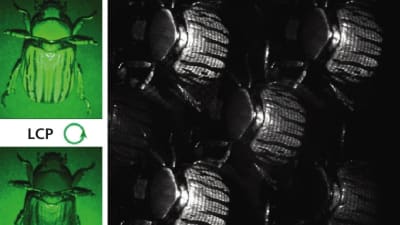
Researchers at the Harvard John A. Paulson School of Engineering and Applied Sciences have developed a compact, single-shot polarization imaging system that can provide a complete picture of polarization. Read on to learn more about it.
Briefs: Imaging
Daniel Gehrig and Davide Scaramuzza from the Department of Informatics at the University of Zurich have combined a novel bio-inspired camera with AI to develop a system that can detect obstacles around a car much quicker than current systems and using less computational power. Read on to learn more about the study, which is published in Nature.

Briefs: Sensors/Data Acquisition
New research unlocks the power of exceptional points (EPs) for advanced optical sensing. In a study published in Science Advances , a team showed that these unique EPs — specific conditions in systems where extraordinary optical phenomena can occur — can be deployed on conventional sensors to achieve a striking sensitivity to environmental perturbations. Read on to learn more.

Briefs: Sensors/Data Acquisition
Researchers from Skoltech and the University of Texas at Austin have presented a proof-of-concept for a wearable sensor that can track healing in sores, ulcers, and other kinds of chronic skin wounds, even without the need to remove the bandages. Read on to learn more.

Briefs: Manufacturing & Prototyping
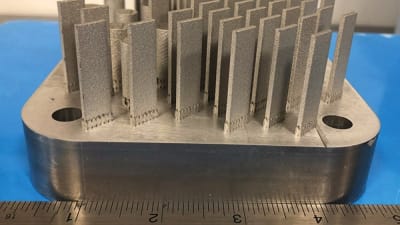
Purdue University material engineers have created a patent-pending process to develop ultrahigh-strength aluminum alloys that are suitable for additive manufacturing because of their plastic deformability. Read on to learn more.
Briefs: Materials
An innovator at NASA Langley Research Center has developed a novel method for making thin, lightweight radiation shielding that can be sprayed or melted onto common textiles used in clothing such as cotton, nylon, polyester, Nomex, and Kevlar. Read on to learn more about it.

Briefs: Mechanical & Fluid Systems
Researchers at Stanford University have introduced a more efficient processing technique that can print up to 1 million highly detailed and customizable microscale particles a day. Read on to learn more about it.

Top Stories
 Blog: Lighting

A Stretchable OLED that Can Maintain Most of Its Luminescence
 INSIDER: Energy

Advancing All-Solid-State Batteries
 Blog: Power

My Opinion: We Need More Power Soon — Is Nuclear the Answer?
 Quiz: Energy

 Blog: Lighting Technology

Microscopic Swimming Machines that Can Sense, Respond to Surroundings
 Blog: Data Acquisition

Webcasts
 On-Demand Webinars: Electronics & Computers

Advantages of Smart Power Distribution Unit Design for Automotive &...
 Upcoming Webinars: Automotive

Quiet, Please: NVH Improvement Opportunities in the Early Design...
 Upcoming Webinars: Test & Measurement

From Spreadsheets to Insights: Fast Data Analysis Without Complex...
 Upcoming Webinars: Defense

Cooling a New Generation of Aerospace and Defense Embedded...
 Upcoming Webinars: Sensors/Data Acquisition

Beyond AI-Copy-Paste Engineering: Advanced AI-Integration Success...
 Upcoming Webinars: Power