-1
810
30
Briefs: Aerospace
Concept Development for Advanced Spaceborne Synthetic Aperture Radar
Spaceborne Synthetic Aperture Radar (SAR) can globally monitor dynamic processes on the Earth’s Surface. The last SAR to be developed and deployed by NASA was in the year 2000.
Briefs: Imaging
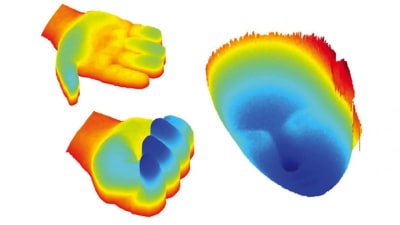
Traditional time-of-flight LiDAR has many drawbacks that make it difficult to use in many 3D vision applications.
Briefs: Lighting Technology
The imaging system tested in NASA wind tunnels can reduce or eliminate shadows that occur when using many existing BOS and photogrammetric measurement systems.
Briefs: Imaging
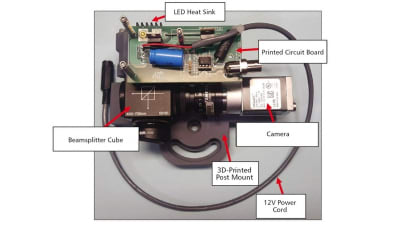
The assembly can simply be mounted in front of a camera to enable focusing schlieren imaging capability.

Briefs: Software
Statistical Audibility Prediction Algorithm
Predicting the extent that one sound is heard over another is difficult, yet could help engineers to better design for sound management.
Briefs: Medical
Companies in many industries are completely revamping the way in which their manufacturing arms are designing, building, producing, and servicing their goods.

Briefs: AR/AI
The new method could slash the energy cost of AI.

Briefs: Design
MMS was developed as an add-on to NASA Ames-patented Inductive Monitoring System (IMS), which estimates deviation from normal system operations.

Briefs: Motion Control
Equipment and test system designers need Ethernet devices that outperform consumer-grade components, while remaining easy to use.

Briefs: Medical
The new microscope is called a hybrid open-top light-sheet (OTLS) microscope.

Briefs: Energy
Two-dimensional MXene has become popular in the energy world because of its fast energy storage capability. But unstable voltage output limits applications.
Briefs: Energy
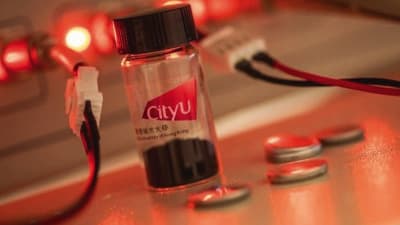
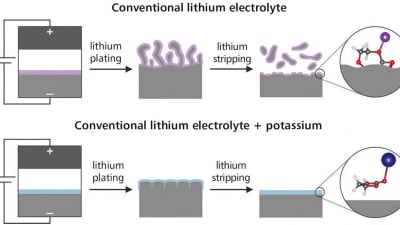
The discovery could enable lightweight, low-cost, long-lasting energy storage for electric vehicles, houses, and more.
Briefs: Energy
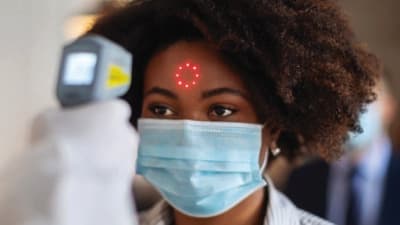
Public temperature checks have become common practice during the COVID-19 pandemic. Researchers at Texas A&M University hope to make it possible to check the temperatures of large groups of people more quickly and at a less expensive cost than allowed by current methods.
Briefs: Photonics/Optics
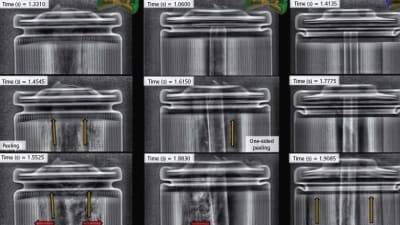
Inducing TR in a battery cell allows engineers to test and improve the safety performance of overheated batteries that can potentially catch fire or explode.
Briefs: Power
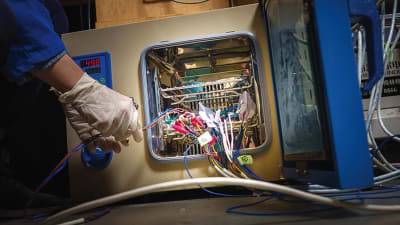
In tests, the proof-of-concept batteries retained 87.5 percent and 115.9 percent of their energy capacity at -40 °C and 50 °C (-40 °F and 122 °F), respectively.
Briefs: Sensors/Data Acquisition
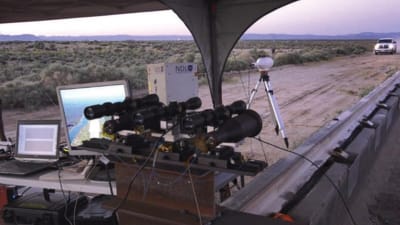
The LiDAR sensor utilizes Frequency Modulated Continuous Wave (FMCW) technique to determine the distance to the target and the velocity between the sensor and target.
Briefs: Manufacturing & Prototyping
Compact, Temperature-Tuned OFDR Laser
NASA has focused on OFDR, an alternative FBG interrogation technique based on laser interferometry.
Briefs: Medical
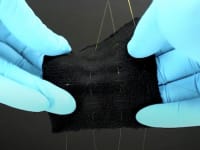
The fibers measure subtle and complex fabric deformations.

Briefs: Materials
Since it is a chemical sensor instead of being enzyme-based, the new technology is robust, has a long shelf-life and can be tuned to detect lower glucose concentrations than current systems.

Briefs: Materials
The flexible, stretchable sensor biodegrades into materials that are absorbed by the body.
Briefs: Materials
This new approach is useful for building radiation shields via the Z-grading method, the process of layering metal materials with different atomic numbers to provide radiation protection for protons, electrons, and x-rays.

Briefs: Manufacturing & Prototyping
"The potential of harnessing the combined benefits of additive manufacturing and HEAs for achieving novel properties remains largely unexplored."

Briefs: Materials
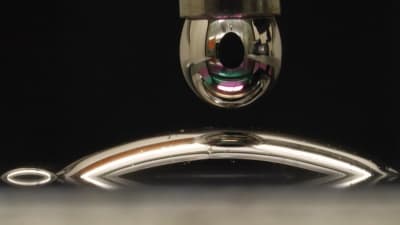
MIT researchers have developed a way of making even the most unlikely pairings of materials take on a desired level of wettability.
Briefs: Manufacturing & Prototyping
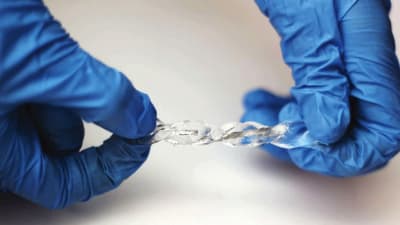
The researchers created these sensing structures using just one material and a single run on a 3D printer.

Briefs: Materials
The soft and stretchable device converts movement into electricity and can work in wet environments.
Briefs: Aerospace
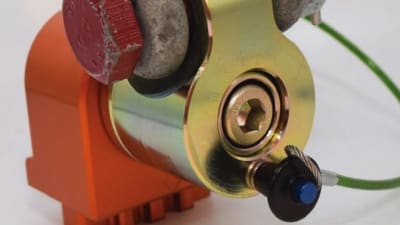
This below-the-hook device enables gentle crane placement to decrease the risk of property damage.

Briefs: Motion Control
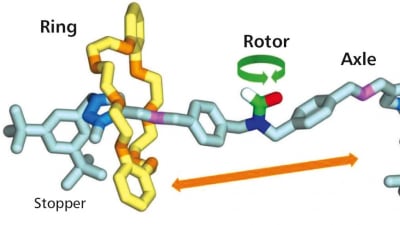
Oscillatory and rotational motions of different parts are combined to pave the way to developing super-miniaturized mechanical devices.
Briefs: Manufacturing & Prototyping
The integrated tool eliminates the need for manual operators or additional custom fixtures.
Briefs: Materials
The coating is customizable to individuals and requires less than 10 minutes to prepare and use.
Top Stories
 Blog: Design

A Stretchable OLED that Can Maintain Most of Its Luminescence
 INSIDER: Design

Advancing All-Solid-State Batteries
 Blog: Power

My Opinion: We Need More Power Soon — Is Nuclear the Answer?
 Blog: Energy

Batteries that Can Withstand the Cold
 Quiz: Power

 Blog: Robotics, Automation & Control

Microscopic Swimming Machines that Can Sense, Respond to Surroundings
Webcasts
 On-Demand Webinars: Transportation

Advantages of Smart Power Distribution Unit Design for Automotive &...
 Upcoming Webinars: Unmanned Systems

Quiet, Please: NVH Improvement Opportunities in the Early Design...
 Upcoming Webinars: AR/AI

From Spreadsheets to Insights: Fast Data Analysis Without Complex...
 Upcoming Webinars: Electronics & Computers

Cooling a New Generation of Aerospace and Defense Embedded...
 Upcoming Webinars: AR/AI

Beyond AI-Copy-Paste Engineering: Advanced AI-Integration Success...
 Upcoming Webinars: Energy