-1
180
30
Briefs: Materials
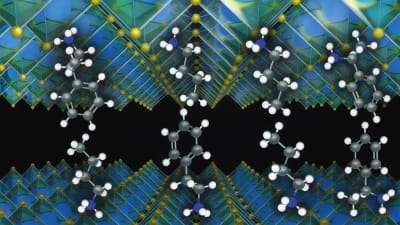
A Duke University team's approach takes a metallic nanotube, which always lets current through, and transforms it into a semiconducting form that can be switched on and off. Read on to learn more.

Briefs: Semiconductors & ICs
Manufacturing More Efficient Spintronics Devices
Researchers have developed a breakthrough process for making spintronic devices that has the potential to become the new industry standard for semiconductors chips that make up computers, smartphones, and many other electronics. The new process will allow for faster, more efficient spintronics devices that can be scaled down smaller than ever before. Read on to learn more about it.
Briefs: Information Technology
The Brown University research team created a novel approach for a wireless communication network that can efficiently transmit, receive, and decode data from thousands of microelectronic chips that are each no larger than a grain of salt. Read on to learn more about it.
Briefs: Robotics, Automation & Control
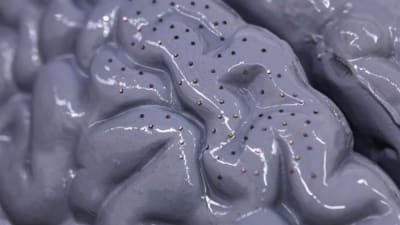
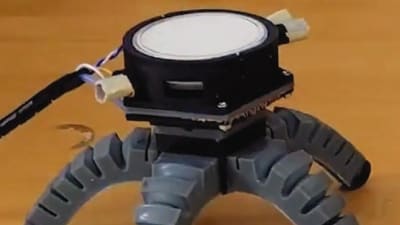
Jamie Paik and colleagues in the Reconfigurable Robotics Lab in EPFL’s School of Engineering have developed a sensor that can perceive combinations of bending, stretching, compression, and temperature changes, all using a robust system that boils down to a simple concept: color. Read on to learn more about it.

Briefs: Software
Innovators at NASA Johnson Space Center have developed an adaptable RFID system that optimizes transmission for priority data as targets move in and out of passive coverage areas. The method extends the range, and reduces data latency, of ultra-low power battery-assisted passive RFID sensor tags. Read on to learn more.
Briefs: Robotics, Automation & Control
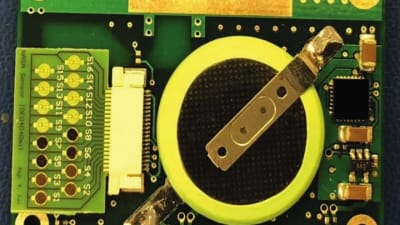
In a recent study published in the journal eLife, an international research group has studied the relationship between electrical stimulation in stick insects’ leg muscles and the resultant torque (the twisting force that makes the leg move). Read on to learn what they found.

Briefs: Physical Sciences
In creating a pair of new robots, Cornell researchers cultivated an unlikely component: fungal mycelia. By harnessing mycelia’s innate electrical signals, the researchers discovered a new way of controlling “biohybrid” robots that can potentially react to their environment better than their purely synthetic counterparts. Read on to learn more.
Briefs: Electronics & Computers
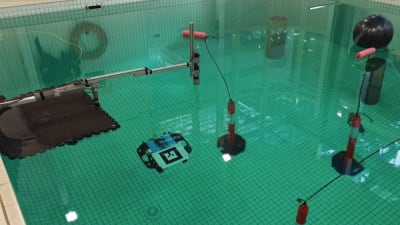
A new study led by Flinders University and French researchers has used a novel bio-inspired computing artificial intelligence solution to improve the potential of UUVs and other adaptive control systems to operate more reliability in rough seas and other unpredictable conditions. Read on to learn more.
Briefs: Electronics & Computers
A PNNL research team used a simple mixed-salt water-based solution and their knowledge of metal properties to separate valuable minerals in continuously flowing reaction chambers. Read on to learn more.

Briefs: Green Design & Manufacturing
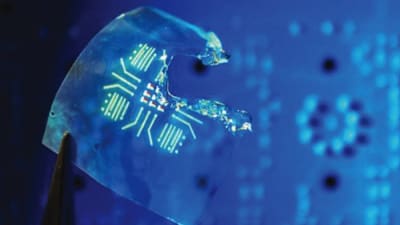
Researchers have developed a strategy to design luminescent polymers with high light-emitting efficiencies from the start that are both biodegradable and recyclable. Read on to learn more.
Briefs: Manned Systems
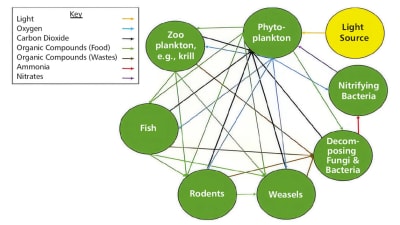
NASA Ames Research Center presents a novel, patent-pending adjustable-autonomous intelligent systems approach for developing sustainable, small-scale reproductions of subsets of the Earths biosphere that can be distributed both on and beyond Earth, for improving the quality of life for all life, expanding the diversity of life, studying and protecting life, as well as enabling life to permanently extend beyond Earth. Read on to learn more.
Briefs: Software
The technology has the potential for many applications including enhancing pilot training for peak performance and alertness, developing software, training programs, and services for well-being and healthcare, as well as revolutionize the gaming industry by creating interactive video games. Read on to learn more.

Briefs: Manned Systems
A team has programmed a robotic spacecraft simulator with what it calls s-FEAST: Safe Fault Estimation via Active Sensing Tree Search. Read on to learn more.

Briefs: Nanotechnology
MIT engineers have shown they can prevent cracks from spreading between composite’s layers, using an approach they developed called “nanostitching,” in which they deposit chemically grown microscopic forests of carbon nanotubes between composite layers. Read on to learn more about it.

Briefs: Materials
A future quantum network may become less of a stretch thanks to researchers at the Argonne National Laboratory, the University of Chicago, and Cambridge University. By “stretching” thin films of diamond, they created quantum bits that can operate with significantly reduced equipment and expense. Read on to learn more.

Briefs: Materials
Researchers have demonstrated the ability to engineer materials that are both stiff and capable of insulating against heat. This combination of properties is extremely unusual and holds promise for a range of applications, such as the development of new thermal insulation coatings for electronic devices. Read on to learn more.
Briefs: Materials
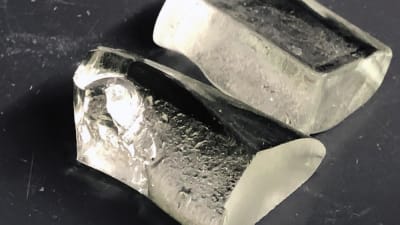
Worldwide, glass manufacturing produces at least 86 million tons of carbon dioxide every year. A new type of glass aims to cut this carbon footprint in half. Read on to learn more about the invention: LionGlass, engineered at Penn State.
Briefs: Manufacturing & Prototyping
This advance could enable quantum computers that use programmable optical qubits or “spin-photon qubits” to connect quantum nodes across a remote network. It could also advance a quantum internet that is not only more secure but could also transmit more data than current optical-fiber information technologies. Read on to learn more.

Briefs: Photonics/Optics
Researchers in the emerging field of spatial computing have developed a prototype augmented reality headset that uses holographic imaging to overlay full-color, 3D moving images on the lenses of what would appear to be an ordinary pair of glasses. Read on to learn more about it.

Briefs: Manufacturing & Prototyping
A research team led by Associate Professor Tao Sun has made new discoveries that can expand additive manufacturing in aerospace and other industries that rely on strong metal parts. Read on to learn more.

Briefs: Electronics & Computers
A recent study demonstrates that soft skin pads doubling as sensors made from thermoplastic urethane can be efficiently manufactured using 3D printers. Read on to learn more.

Briefs: Data Acquisition
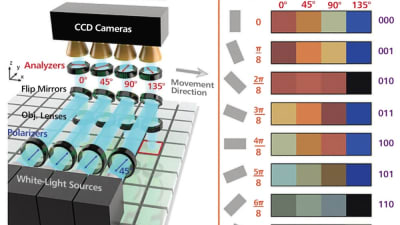
Purdue researchers have created technology aimed at replacing Morse code with colored “digital characters” to modernize optical storage. They are confident the advancement will help with the explosion of remote data storage during and after the COVID-19 pandemic. Read on to learn more.
Briefs: Photonics/Optics
Researchers have designed a way to levitate and propel objects using only light by creating specific nanoscale patterning on the objects' surfaces. The work could be a step toward developing a spacecraft that could reach the nearest planet outside of our solar system in 20 years, powered and accelerated only by light. Read on to learn more.

Briefs: Semiconductors & ICs
Researchers have created visible lasers of very pure colors from near-ultraviolet to near-infrared that fit on a fingertip. The colors of the lasers can be precisely tuned and extremely fast — up to 267 petahertz per second, which is critical for applications such as quantum optics. Read on to learn more.

Briefs: Photonics/Optics
A Bristol-led team of physicists has found a way to operate mass manufacturable photonic sensors at the quantum limit. This breakthrough paves the way for practical applications such as monitoring greenhouse gases and cancer detection. Read on to learn more.
Briefs: Energy
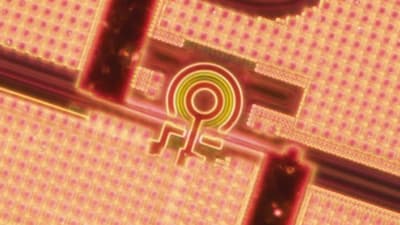
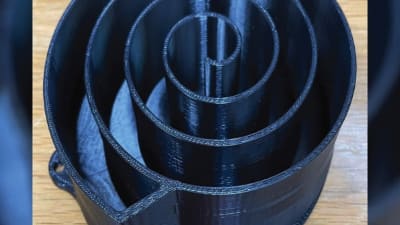
NASA engineers have developed a new approach to mitigating unwanted motion in floating structures. Ideally suited to applications including offshore wind energy platforms and barges, the innovation uses water ballast as a motion damping fluid.

Briefs: Mechanical & Fluid Systems
Researchers have introduced a microfluidic system that utilizes porous “inverse colloidal crystal” structures to dramatically improve the efficiency of microdroplet generation. Read on to learn more about it.

Briefs: Physical Sciences
NASA’s Cryogenic Flux Capacitor capitalizes on the energy storage capacity of liquefied gases. By exploiting a unique attribute of nano-porous materials, aerogel in this case, fluid commodities such as oxygen, hydrogen, methane, etc. can be stored in a molecular surface-adsorbed state. Read on to learn more.

Briefs: Manufacturing & Prototyping
NASA Kennedy Space Center engineers developed a Cryogenic Oxygen Storage Module to store oxygen in solid-state form and deliver it as a gas to an end-use environmental control and/or life support system. Read on to learn more about it.
Top Stories
 Blog: Lighting

A Stretchable OLED that Can Maintain Most of Its Luminescence
 INSIDER: Energy

Advancing All-Solid-State Batteries
 Blog: Power

My Opinion: We Need More Power Soon — Is Nuclear the Answer?
 Quiz: Energy

 Blog: Lighting Technology

Microscopic Swimming Machines that Can Sense, Respond to Surroundings
 Blog: Data Acquisition

Webcasts
 On-Demand Webinars: Electronics & Computers

Advantages of Smart Power Distribution Unit Design for Automotive &...
 Upcoming Webinars: Automotive

Quiet, Please: NVH Improvement Opportunities in the Early Design...
 Upcoming Webinars: Test & Measurement

From Spreadsheets to Insights: Fast Data Analysis Without Complex...
 Upcoming Webinars: Defense

Cooling a New Generation of Aerospace and Defense Embedded...
 Upcoming Webinars: Sensors/Data Acquisition

Beyond AI-Copy-Paste Engineering: Advanced AI-Integration Success...
 Upcoming Webinars: Power