Blog: Medical
It’s a mistake to focus on AI without thinking about how it is used by the people working with it.
Products: Software
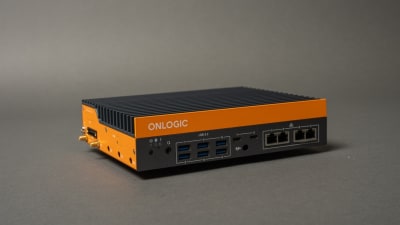
See the product of the month: OnLogic's new edge computer series, the Karbon 520.
Articles: Robotics, Automation & Control
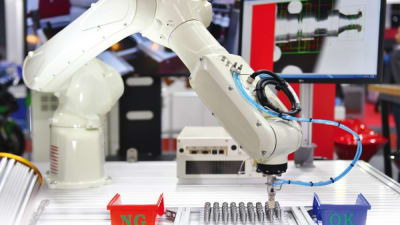
Without integrated vision, robots can only perform tasks in precisely the same way every time. If a part is even slightly out of position or rotated differently, the robot may fail to complete its task, or worse, cause an error in the process. Read on to learn more.
Products: Power
See what's new on the market, including the new ImageIR® 9800 from infraTec; Instron's new 100 kN table model for the 6800 and 3400 Series universal testing systems; Sumida Corporation's CIUH10D46 and CIUH10D47 pulse transformers; and much more.
Briefs: Energy
Mechanical engineering researchers in the Harvard John A. Paulson School of Engineering and Applied Sciences think there’s another way to design robots: Programming intended functions directly into a robot’s physical structure, allowing the robot to react to its surroundings without the need for extensive on-board electronics. Read on to learn more.
Briefs: Robotics, Automation & Control
Robots may soon have a new way to communicate with people. Not through words or screens, but with light and images projected directly onto the world around them. University of South Florida's Zhao Han is developing technology that could transform how people interact with robots in both emergencies and everyday life. Read on to learn more.
Briefs: Software
Researchers have successfully demonstrated the U.K.’s first long-distance ultra-secure transfer of data over a quantum communications network, including the U.K.’s first long-distance quantum-secured video call. Read on to learn more.
Articles: Design
Multi-Path is a new audio digital-to-analog conversion (DAC) architecture that improves today’s best DAC performance by 100X (40dB) or more. Noise, linearity, and dynamic range are so advanced that today’s finest test equipment cannot fully measure it (40nVrms broadband noise floor). Read on to learn more about the 2025 Create the Future Design Contest Electronics finalist.
INSIDER: Unmanned Systems
Introducing X1: The world's first multirobot system that integrates a humanoid robot with a transforming drone that can launch off the humanoid's back and, later, drive away. The versatile team can...
Blog: Software
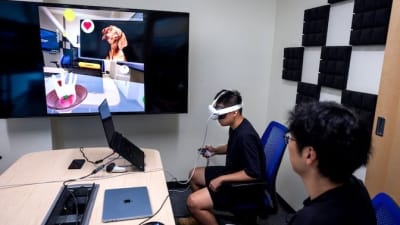
A digital, voice-controlled hand could improve the convenience and accessibility of virtual and augmented reality by enabling hands-free use of games and apps. The prototype software was developed by computer scientists at the University of Michigan.
Blog: Electronics & Computers
With increasing demands and requirements for building complex embedded systems that involve complex machines, the demand for resilient embedded systems is even higher today. Building safe and secure embedded systems is paramount in the context of pervasive embedded systems across multiple domains and industries. Read on to learn more.
Products: Software
See the new products, including Kassow Robots' Sensitive Arm technology across its complete range of 7-axis collaborative robots; igus' first humanoid robot, Iggy Rob, designed to support industrial production, service environments, and transport tasks; Weidmuller USA's unmanaged Single Pair Ethernet Switch that enables a seamless networking experience for users in a wide array of industrial environments; BizLink's careDP, an AI-powered condition monitoring system designed to revolutionize maintenance in robotic production lines; and more.
Articles: Communications
Predictive maintenance is based on condition monitoring, anomaly detection, and classification algorithms, and integrates predictive models which can estimate the remaining machine runtime. Read on to learn more about it and how to implement it.
Articles: Software
MIT researchers have developed a method that anyone can use to design an energy management interface between the harvester and the sensor load to minimize the drain on the harvester and maximize the amount of data that can be transmitted by the sensor. Read on to learn more via this Q&A with Daniel Monagle and Steven B. Leeb.
Articles: Software
A new technology closes the gap and combines PCB production into a single process, leveraging the capabilities of SMT. The resulting through-hole reflow (THR) process allows for components to be mounted through those pre-drilled holes — but secured during the same soldering process as the SMT-designed components. Read on to learn more.
Products: Sensors/Data Acquisition
See the product of the month: Phoenix Contact's NearFi, a contactless real-time transmission technology.
Products: Imaging
See what's new on the market, including the eddyNCDT 3005 from Micro-Epsilon; Instron's new iteration of its Bluehill® Central software platform; Novotechnik U.S.'s TE1 Series of absolute linear position sensors; Specialised Imaging's new high-intensity short duration flash designed to freeze motion in aeroballistic applications; and more.
Application Briefs: Robotics, Automation & Control
In an office in Bordeaux, the Pollen Robotics teams are working on an ambitious mission: to imagine and advance useful robotics for humans. Their flagship creation, Reachy, combines accessibility, innovation, and open-source collaboration. Read on to learn more and see where it all started.
Briefs: Robotics, Automation & Control
Researchers from MIT and NVIDIA Research have developed a novel algorithm that dramatically speeds up a robot’s planning process. Their approach enables a robot to “think ahead” by evaluating thousands of possible solutions in parallel and then refining the best ones to meet the constraints of the robot and its environment. Read on to learn more.
Briefs: Imaging
Northwestern engineers have developed a new system for full-body motion capture — and it doesn’t require specialized rooms, expensive equipment, bulky cameras, or an array of sensors. Instead, it requires a simple mobile device. Read on to learn more.
Briefs: Wearables
A research team from Japan has fabricated a flexible multimodal wearable sensor patch and developed edge computing software that is capable of detecting arrhythmia, coughs, and falls in volunteers. Read on to learn more about the sensor, which uses a smartphone as the edge computing device.
Application Briefs: Software
Why should you know the right trigger strategy? Read on to find out.
Articles: Electronics & Computers
This article briefly examines why isolation is required, emphasizing the need in sensor-based circuits. It then looks at various aspects of isolation using state-of-the-art digital isolators from Analog Devices and shows how they can be applied.
Products: Electronics & Computers
See the product of the month: STMicroelectronics' LEOPOL1 point-of-load step-down converter for low-Earth orbit deployments targeting the needs of equipment developers in the space market.
Briefs: Sensors/Data Acquisition
Engineers at the University of California San Diego have achieved a long-sought milestone in photonics: creating tiny optical devices that are both highly sensitive and durable — two qualities that have long been considered fundamentally incompatible. Read on to learn more.
Briefs: Physical Sciences
A research team led by scientists at Lawrence Berkeley National Laboratory (Berkeley Lab) has developed a new fabrication technique that could improve noise robustness in superconducting qubits, a key technology for enabling large-scale quantum computers. Read on to learn more.
Briefs: Imaging
A new computer vision technique developed by MIT engineers significantly speeds up the characterization of newly synthesized electronic materials. The technique automatically analyzes images of printed semiconducting samples and quickly estimates two key electronic properties for each sample. Read on to learn more.
Articles: Motion Control
Retrofitting offers a technically and economically sensible way to adapt existing production facilities to the requirements of modern manufacturing processes. The use of image processing, measurement technology, and deep learning in existing machines and systems can be decisive in this context. Read on to learn more.
Application Briefs: Software
San Francisco startup Canvas has developed a robotic system handling one of the most labor-intensive trades in construction: drywall finishing. Leveraging robotic arms from Universal Robots, Canvas has built a machine that reduces the usual five to seven days of spraying and sanding the drywall to just around two days for both Level 4 and Level 5 finishes. Read on to learn more.