Stories
73
0
0
30
INSIDER: Robotics, Automation & Control
Sea stars are creatures whose movements involve the coordination of hundreds of tiny tube feet to navigate complex environments — despite the lack of a central brain. In other words, it’s as though...

Special Reports: Power

Award–Winning Inventions - February 2026
The Create the Future Design Contest recognizes and rewards engineering innovations that promise a better tomorrow. In this special report, learn about the amazing winners chosen in 2025 from hundreds...Articles: Software
Pinggao Group focuses on the development and production of high-voltage and ultra-high-voltage electrical equipment. Different teams at the company use simulation to explore in depth the factors that affect the performance of high-voltage switches as well as to optimize switch designs and predict the operational status of equipment. Read on to learn more about the work.

INSIDER: Design
Researchers at the University of Pennsylvania and University of Michigan have created the world’s smallest fully programmable, autonomous robots: microscopic swimming machines that can...

INSIDER: Manufacturing & Prototyping
Researchers have created a class of robots made from thin sheets of material that can snap into hundreds of stable shapes — allowing them to execute a wide variety of...

INSIDER: Design
Researchers from UMass Amherst are working to define the primary mathematical components of running. Compared to walking, much less is understood about...

Blog: Design
The 23rd annual Create the Future Design Contest was held November 7 in New York City. Read on to find out who took home the $25,000 grand prize!

INSIDER: Materials
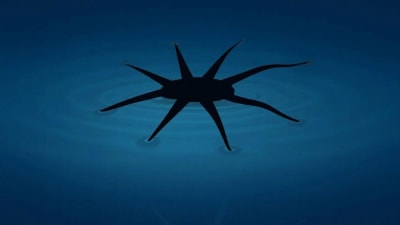
Imagine a tiny robot, no bigger than a leaf, gliding across a pond’s surface like a water strider. One day, devices like this could track pollutants, collect water samples or scout...
White Papers: Aerospace

Maskant Materials
In industries where heat, pressure, and chemistry converge, surface integrity is everything. APV Maskant materials provide targeted protection for industrial applications during high-temperature diffusion coating and chemical...Articles: Aerospace
In this article, you’ll learn about the Create the Future Design Contest finalists in all seven categories chosen from over 600 new product ideas submitted from 67 countries.

Articles: Propulsion
REV Force, a radically new hydrogen-compatible engine platform developed by Alpha-Otto Technologies, combines a patented mode of engine operation with an advanced combustion strategy to redefine what’s possible in clean, distributed power. Read on to learn more about the Energy, Power & Propulsion Finalist from the 2025 Create the Future Contest.

INSIDER: Unmanned Systems
Training humanoid robots to hike could accelerate development of embodied AI for tasks like autonomous search and rescue, ecological monitoring in unexplored places and...

INSIDER: Sensors/Data Acquisition
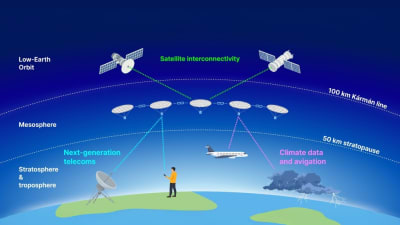
Between 50 and 100 kilometers (30-60 miles) above Earth’s surface lies a largely unstudied stretch of the atmosphere, called the mesosphere. It’s too high for airplanes and weather balloons,...
INSIDER: Unmanned Systems
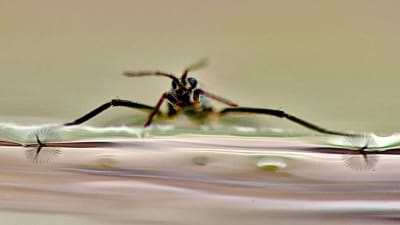
A new study explains how tiny water bugs use fan-like propellers to zip across streams at speeds up to 120 body lengths per second. The researchers then created...
Briefs: Propulsion
NASA researchers are eliminating complex joints by manufacturing a 1-piece TCA utilizing 3D printing and large-scale additive manufacturing technologies to directly deposit the nozzle onto the combustion chamber. And, by replacing a traditional solid metal jacket with a composite overwrap for support, the overall weight is reduced by over 40 percent. Read on to learn more.

Blog: Unmanned Systems
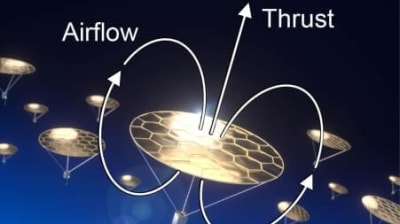
A new study introduces a novel way to reach a largely unstudied stretch of the atmosphere, between 30-60 miles above Earth’s surface, the mesosphere. Researchers have introduced a new way to explore it: lightweight flying structures that can float using nothing but sunlight.
INSIDER: Research Lab
Marine scientists have long marveled at how animals like fish and seals swim so efficiently despite having different shapes. Their bodies are optimized for efficient, hydrodynamic aquatic...

INSIDER: Robotics, Automation & Control
Folding structures are widely used in robot design as an intuitive and efficient shape-morphing mechanism, with applications explored in space and aerospace robots,...

Articles: Propulsion
Occupying a unique space as both an energy vector and a fuel, hydrogen has gained interest for propulsion and power generation applications over the past several years. Hydrogen has been investigated thoroughly throughout the previous decades, but with advances in hydrogen generation and infrastructure, and the increasing need to low-carbon propulsion solutions across all sectors, hydrogen propulsion may be poised for significant market penetration. Read on to learn more.

INSIDER: Physical Sciences
Researchers have created dynamic structures that leap into the air on a predetermined schedule without intervention from computers or external stimuli. Precisely when these...

Articles: Power
Exploration of the Moon and Mars is not only a scientific pursuit; it is also a driver of technological advancement and global cooperation. Deep space missions compel us to address fundamental questions — about life beyond Earth, resilience in extreme environments and the origins of our solar system. Read on to learn more.

Articles: Manned Systems
The Gateway lunar space station is a multi-purpose platform that offers capabilities for long-term exploration in deep space in support of NASA’s Artemis campaign and Moon to Mars objectives. Gateway will feature docking ports for a variety of visiting spacecraft, as well as space for crew to live, work, and prepare for lunar surface missions. Read on to learn more.

INSIDER: Transportation
Specialized robots that can both fly and drive typically touch down on land before attempting to transform and drive away. But when the landing terrain is rough,...

INSIDER: Robotics, Automation & Control
A spherical prototype that can change its surface from smooth to dimpled, cuts through drag and generates lift. Underwater or aerial vehicles with dimples like golf balls...
Briefs: Robotics, Automation & Control
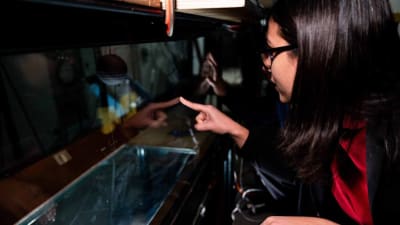
Researchers have developed a compact and versatile robot that can maneuver through tight spaces and transport payloads much heavier than itself. Smaller than a credit card and weighing 6 grams, the nimble swimming robot is ideal for environments with limited space like rice fields, or for performing inspections in waterborne machines. Read on to learn more.
INSIDER: Design
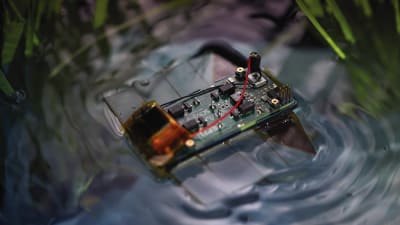
Researchers have created a light-powered soft robot that can carry loads through the air along established tracks, similar to cable cars or aerial trams. The soft robot operates...

INSIDER: Robotics, Automation & Control
The United States population is older than it has ever been. Today, the country’s median age is 38.9, which is nearly a decade older than it was in 1980. And the...

INSIDER: Propulsion
Sound can do more than just provide a nice beat. Sound waves have been used for everything from mapping the seafloor to breaking apart kidney stones. Thanks to a unique material structure,...

Podcasts: Defense
Dr. Ionel Stefan, CTO, Amprius, is the guest on this episode of the Aerospace & Defense Technology podcast.
Top Stories
 Blog: Sensors/Data Acquisition

Going for Gold in Winter Olympic Curling
 Blog: Energy

Batteries that Can Withstand the Cold
 INSIDER: Design

Advancing All-Solid-State Batteries
 Blog: Design

 Blog: Materials

Making Tungsten Carbide a More Viable Alternative
 INSIDER: Power

Webcasts
 Upcoming Webinars: Sensors/Data Acquisition

Beyond AI-Copy-Paste Engineering: Advanced AI-Integration Success...
 Upcoming Webinars: Energy

Battery Abuse Testing: Pushing to Failure
 Upcoming Webinars: Power

A FREE Two-Day Event Dedicated to Connected Mobility
 Upcoming Webinars: Test & Measurement

Choosing the Right N-Port Strategy: Multiport VNAs vs. Switch...
 Upcoming Webinars: Energy

2026 Battery & Electrification Summit (Online)
 Upcoming Webinars: Mechanical & Fluid Systems

The Over-Engineering Trap: Aligning Custom Equipment Specs with...